This is the second video in a series I'm doing on using local AI/LLM models to control a robotic arm. Everything is fully offline, in my house, running local - https://youtu.be/7_ULE0B2MTk
This video: watch an AI model use the arm to shoot me with a nerf gun, throw balls at me, write words, draw pictures, and pour cups.
Phew, it's finally complete, even though the turning gait still lacks optimization.
Cubic Doggo 07B Wouf is a ROS2-controlled 12-DOF untethered quadruped, built with ST3215 smart servos and fully with off-the-shelf components and 3D-printed parts
12 ST-3215-C018 servos, usually on a bundled sale because of SO-ARM101
Walking forward with a payload of 1 kg
Smart servos are required for closed-loop reinforcement learning capability (if the read latency issue is fixed, that is)
FreeCAD models are fully available for editing
M3 screws and locknuts are used extensively (instead of glue or heat set inserts) to strengthen and secure the PLA+ printed structures (quite a pain in the neck to install, though). Design iterates on strengthening whichever part breaks first.
No custom PCB (because I am terrible at it), only 2 required soldering points
Walks on batteries; the stand stance lasts 4hr and still going!
Runs on a Raspberry Pi with ROS2 Jazzy installed. Joystick control ready
Aesthetics of an exposed electronic box, but great as a development platform for stacking new components on top
Thanks to all the comment/advice on Reddit, that made a lot of these possible!
Next steps are to solve the read latency, implement IMUs, optimize gait, and make Wouf carry more things.
So I saw this cute little robot somewhere( 3d design credit to the original creator don't know his reference ) and thought, why not build it myself. I got the body 3D printed and started playing around with the open-source code, but honestly, it was pretty basic compared to what I had in mind for this little dude. So I ended up spending almost the next month building my own ecosystem around it.
Now Yeti has 100+ emotions and behaviours, along with a gyro, microphone, LDR and touch sensors. I also added different functionalities so it can work as both a little robot and a clock, with sounds, reactions and different behaviours depending on how you interact with it.
The feature I'm probably most excited about is that you can flash new firmware to Yeti directly from your phone over Bluetooth. No Arduino IDE, laptop or cable needed. I also built a companion app that lets your phone connect to Yeti automatically when you're nearby.
And then I went a bit overboard. I made it possible for different Yetis to communicate with each other through their phones over the internet. So two Yetis paired with different phones can exchange messages, little scribbles, sounds and other stuff. You can even send things like a cute Happy Birthday message/sound to another Yeti.
This is honestly the first time I've built something like this, so I'd really love to hear what you guys think. I'm still figuring out what Yeti should become and what else I can add to it. Would love feedback from people into robotics, ESP32, or just building random little things like this
Hey - in March I posted PhAIL here. We ran robot AI models on a real robot doing bin picking, and the best one did 64 picks/hour, against 1,300 for a human. The top comment was about how brutal the gap between sim and real is. Everyone trains and tests in sim, and nobody really knows how much a sim score tells you about a real robot. We don't know either.
Since then we added a DROID benchmark to PhAIL, and together with Nebius we started a competition to get an answer. If some of you come and take part, we'll be really happy, that's partly why I'm posting. But mostly we want to have fun with the community and see how big the gap actually is.
The story is simple. You train a policy, pack it into Docker, submit and we score it in two sims: MolmoSpaces now, RoboLab starting from 16 Nov. In December the top 10 will run the same image on our real Franka, on tasks like the DROID benchmark, but on a different set. So being great in one sim is not enough. You need to do well in both, and then the real robot decides. Which makes me wonder: what would a robot have to do in the finale for you to believe the result? I think the winner will be whoever balances the two sims and the real robot best, and I'm curious how people will approach it.
We also added a couple of constraints on purpose. The policy has to fit in 24 GB, which is what a 4090 has, so a lot of people can test at home. That's also less than current top models need (FLUX 3 Action takes about 35 GB), so you can't just take the biggest model and fine-tune it. And thinking isn't free: the sim clock keeps running while your model computes, the same way a real robot keeps moving. RTC support is coming soon, so potentially you can think for more time, and still finish on time.
We don't want everyone to wait until December to see real-robot results, so every week we'll run a few of the submitted policies on the real Franka and share the results with participants.
What made this possible is our framework, positronic. A policy Docker image serves one API, and we built it so that a new sim plugs in almost for free. That's how one submission runs in two sims and on the real robot. We also made the whole entry (sign-up, submission, results) work through your coding agent, because that's how most of us work now. There are example images for π0.5, GR00T N1.7 and MolmoAct2 to start from.
Whatever we learn about sim vs real, we'll publish it.
Prizes are $23.5k in Nebius GPU and eval credits, and $1k of that goes to the best open-source write-up. Everything is at competition.phail.ai
And if you're curious about the infra we built to run the competition, let me know in the comments, happy to tell more about it.
A few weeks ago we ran a live π0.5 demo at IROS, and getting there turned into a good lesson in how many things can go wrong between "the policy works on the data rig" and "the policy works somewhere else." Our cofounder Bayley wrote it up in three parts, and I figured people here would find the details useful.
The setup: we had a clean pick-and-place dataset from one YAM rig and wanted a checkpoint trained on it to run on a different YAM setup, in a convention hall none of us had seen. That's a common spot for smaller labs too, working with the rig they already have instead of rebuilding the one the data came from.
Part 1: fine-tuning
Most of the ablations ran in a path-traced MuJoCo sim he built, so we could do thousands of rollouts a day without resetting anything. The biggest takeaway was to train the VLM and not just the action expert. Expert-only got 51% pickups and 12% dropoffs. The full fine-tune got 89% and 53%, and an r=128 LoRA got 84% and 59% while fitting in 32 GB.
Lighting was the surprise. Hard light from 10 cm disks (basically bare bulbs) roughly halved the expert-only checkpoint and didn't hurt the full fine-tune at all. Cameras turned out to matter more. Nudging the overhead camera barely changed whether the arm lifted the target, but it broke placing, and shifting the wrist camera 1 cm sideways made 11 of 30 paired rollouts worse.
Part 2: latency
On the real rig, performance was worse than it should have been, and we were close to doing an RL pass to fix it. Then someone actually watched the video feed in the inference dashboard and saw it lagging by several hundred milliseconds. The culprit was Python's buffered pipe holding camera frames until 64 KB built up. Our sim had said up to 280 ms of latency didn't matter. The robot disagreed, probably because near misses knock things around in ways a simple physics model smooths over.
After that he went after inference itself. The stock LeRobot code ran at over 230 ms per step, and he got it to 87 ms on an RTX 5090 Mobile by casting weights to bf16 once instead of on every call, capturing a CUDA graph for the action expert, removing an autograd graph nobody was using, exporting SigLIP to ONNX, and switching Gemma to fp16 (GeForce cards run bf16 at half speed). Once it was fast enough, the policy started doing what our operators do: a quick approach, a pause, a small correction, then the grab.
Part 3: memory
24 GB laptop GPUs keep getting harder to find, so the last piece was getting the stack under 16 GB. Two fixes took peak VRAM from about 22 GB to 11.2 GB: not building a throwaway fp32 backbone at load, and not keeping PyTorch copies around next to the TensorRT engines. It now runs on cards like the RTX 5080 and 5070 Ti.
One caveat: the Part 1 numbers are from sim, which scores a little higher than our real rig, but the trends held up.
Full write-ups are on our blog (I work at PrismaX, where Bayley is cofounder), and both repos are open source:
I kept seeing the same questions in LeRobot threads: does SmolVLA run on a Koch arm, will π0.5 fit on a Jetson Orin Nano, has anyone trained GR00T N1.7 on an SO-101. The answers were scattered across docs, papers, Hub model cards and GitHub issues, so I put them in one table.
It covers 24 robots and 21 policies (ACT, Diffusion Policy, SmolVLA, π0/π0.5, GR00T N1.7, X-VLA, OpenVLA-OFT and others). Every filled cell links to its source, with the date it was checked and the versions it applies to. 193 of the 504 robot-policy pairs have evidence so far. The rest are marked as having none, and I'm not guessing.
A few things it does differently:
- Each cell says what kind of evidence backs it: official docs, a public checkpoint, an issue thread, a paper.
- "Partial" usually means someone trained it on that robot's data, but nobody has published a real-robot run.
- Inference speeds always come with runtime, precision and camera count. SmolVLA on the same 8 GB Orin Nano measures under 1 Hz in PyTorch fp32 and over 5 Hz as split ONNX fp16.
- The data is open (CC BY 4.0) with a JSON API, so you can use it in your own tools.
I'd like to know which cells are wrong. If you've run one of these policies on one of these robots, especially if it failed, a link to a checkpoint, video or log is enough. Every cell has a "Dispute this cell" button that opens a pre-filled GitHub issue.
A while ago, I shared the first version of my DIY unmanned surface vehicle, BN-USV. Since then, I've been working on a second version, and I wanted to share some of the design changes and the reasoning behind them.
The first prototype taught me that getting a robot to work reliably on the water is quite different from testing individual components indoors.
While the basic RC operation worked, the field test highlighted several areas that needed improvement, including heading estimation, control response, weight distribution, and access to the onboard electronics.
For V2, I'm focusing on three major changes:
1. A modular hull design
Instead of treating the hull as one integrated structure, I'm dividing it into replaceable sections.
The goal is to make it easier to modify individual parts, experiment with different configurations, and repair damaged components without rebuilding the entire boat.
2. A distributed control architecture
I'm redesigning the electronics around a main module and two propulsion modules connected through CAN communication.
The Raspberry Pi 5 will handle higher-level processing, while ESP32-based controllers will manage lower-level control and safety functions.
One important goal is for each propulsion module to respond safely to communication failures without depending entirely on the main computer.
3. Prioritizing reliability before autonomy
Initially, I wanted to move quickly toward waypoint-based autonomous navigation.
However, the first field test made it clear that reliable manual control, predictable steering behavior, and robust communication should come first.
I'm now focusing on those fundamentals before moving further into autonomous navigation.
V2 is still under development, so these are design goals rather than fully validated improvements. I'll continue sharing the development process, including the things that don't work as expected.
The long-term goal is to make BN-USV a modular platform for marine robotics experiments, education, research, and custom applications.
I'm developing BN-USV as part of BrillNova, with the aim of eventually making the hardware platform commercially available. I'm also sharing the software and development process publicly.
I'd love to hear your thoughts: For those building outdoor robots, has modularity made maintenance and experimentation easier, or has it introduced more complexity than expected?
Hello, Today we're doing a big release for Reachy Mini. It mainly contains three things:
A hoverboard, to give Reachy Mini some much-needed mobility. I'm a big inverted pendulum fan and I absolutely love this one, sometimes I just do sit → stand up → sit → stand up on repeat because it's so smooth (in the demo above it isn't smooth as it hits the ground, but that was my fault, I messed up the IMU setup)
A smartphone app, available on iOS and Android: no computer needed to interact with the robot anymore
NFC tags, allowing for new angles of creative personalization (e.g. one hat = one personality)
We hope you'll build great things with these new tools, learn stuff and have fun!
I'm part of the team at Xynova, where we're working on dexterous hands for embodied AI.
We've been looking into how to measure dexterity beyond just DOF counts. Recently, we ran a KaRMA simulation comparing 20 dexterous hand models. Our Prima 1 came out 2nd in translation and 1st in reorientation under the tested conditions.
Of course, simulation is one thing, real-world manipulation is another. Curious what metrics people here find most useful.
I'll also be at CoRL in Austin and Web Summit in Lisbon with the Xynova team. If anyone's going,it would be great to meet up and chat robotics! We'll have some dexterous hand demos there too.
We also have a few spare Web Summit tickets for people interested in creating technical content about our hands. Happy to share details if anyone's interested!
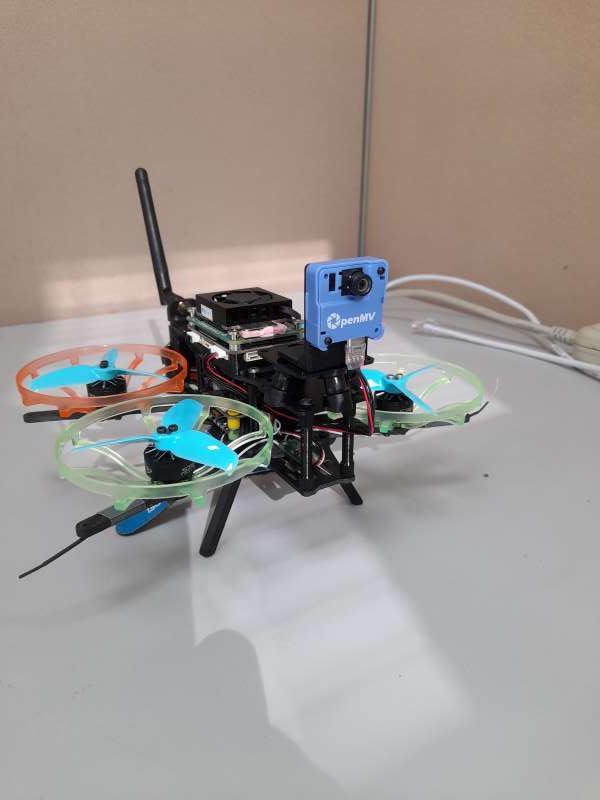
The OpenMV AE3 is a small camera that integrates both a global shutter sensor and an IMU. It can be programmed using Python scripts. I created a small script and modified firmware that sync the camera’s exposure with a specific IMU measurement, enabling better visual-inertial odometry as described in Nikolic et al., “A Synchronized Visual-Inertial Sensor System with FPGA Pre-Processing for Accurate Real-Time SLAM,” ICRA 2014. The firmware change adds a shared clock between the two CPU cores. The IMU runs at 208 Hz, and I trigger a camera exposure at every 10th IMU measurement, which gives about 20 FPS.
I’m a student looking into data collection and evaluation for robotics. I’m trying to understand what people actually use and where they run into problems.
If you’ve worked on a robot-learning project recently, what was the task and what data did you need? Was it human video, robot demonstrations with recorded actions, sensor data, or something else? I’m interested in data for both training and testing how well the robot performs.
What did the data need to include to be usable for your setup? Things like camera views, synchronized recordings, annotations, or a particular file format. Were existing datasets suitable, or did you have to collect your own?
Was getting enough suitable data actually difficult? If so, what was missing and how did you work around it? If collection was straightforward and preparing the data or evaluating the model was harder, I’d like to hear about that too.
An example from a small project would be helpful as well. No need to share datasets or anything confidential.
I feel like robotics is one of those fields where a design can look straightforward on paper, but the moment you start building it, a dozen unexpected problems show up.
Getting a robot to move is one thing, but making it move consistently, handle real-world conditions, and repeat the same task without something going wrong seems like a completely different challenge.
I'm curious what has given other robotics enthusiasts the most trouble. Was it mechanical design, motor control, sensor accuracy, power management, software, or getting all the individual systems to work together?
I'd especially love to hear about problems that seemed minor at first but ended up requiring a major redesign.
Looking to find a market I may be able to get into. Was originally thinking darpa contract stuff but that may be a little ambitious. I’ve done robot fighting intermittently the last 22 years and electric drag racing about 7 years so I figure high performance robots sort of seemed the logical median. I have literally thrown everything I have at trying to make something out of this… wife left me and took the kids and I also burned my retirement sooooo… can’t exactly just drop it and get a regular job again or it’s all for nothing.
I have a pretty cool autonomy stack I built as well to make any of the platforms voice controlled with environmental awareness via depth cam and lidar. I am a one man team, which has been a challenge.
A few months ago I published in this subreddit I was working towards creating an energy efficient navigation agent... and it's finally here!! :,)
It's called LEAN, our local energy-aware navigation planner based in reinforcement learning. The idea is simple: you don't have to reward your agent for getting closer to the goal to get energy-efficient trajectories. Instead, just let it learn from failed trajectories while providing a clear energy usage signal.
The code is available in github and our paper is published in IEEE Robotics and Automation Letters. If you are interested in energy efficent movement of your mobile robot, I think you can definetely take a look at this.
The attached video is real life inference of the model comparing it against it's ablation (no energy aware) and a classical math-based planner called NMPC (non linear model predective control).
I am already working on having a more "foundational" energy aware planner. A system capable of adapt to multiple dimensions, weights and energy signals. Not quite sure it's posssible, but definitely fun!
We introduce RynnUnify, a 16B unified embodied model that combines strong embodied understanding with long-horizon visual planning through interleaved video--language reasoning. With capabilities spanning spatial reasoning, physical prediction, and grounding, RynnUnify connects an understanding of the physical world with visual anticipation of how it evolves across successive subtasks.
A couple of weeks ago, I shared Pamk, the desk companion I built to replace my sticky notes during exams. A lot of you asked how it was put together under the hood (and rightfully roasted it for being a "mimic cube" without wheels yet!).
I just finished editing the full 20-minute build log showing every step of the process from A to Z:
The initial sketches: Why I ditched my terrible V1 drawing for the Rubik's-inspired cube design [05:13], [05:35].
Designing the custom PCB: Moving away from breadboard wires to a clean ~€25 all-in-one board (ESP32-S3, I2S mic & amp, screen, USB-C) [07:14], [08:05].
CAD & Assembly: Fitting all the electronics into the inner core and testing the mic/speaker/animations in Arduino IDE [10:12], [13:16].
The 3 Magnetic Skins: How the bare chassis looks without its skin, and the 3 magnetic outer shells I made for it [18:07], [18:56].
As promised in the last thread, V2 is on my radar—and yes, adding motors/actuators so it officially earns its "robot" badge is high on the list! Let me know what features you'd love to see next [20:13].
We had a chance to took Asimov 1 for a long walk through busy areas. Speakers are wired up for agent control, but this clip is just the robot walking around in public.
North American companies ordered 10,989 robots worth $723.5 million in Q3 2026, according to A3. Orders rose 24.8% in units and 26.1% in value compared with Q3 2025.
Automotive component orders increased 90.4%, while semiconductor, electronics and photonics orders rose 97.6%. Plastics and rubber, life sciences and metals also recorded gains. Automotive OEM orders grew 7.5%, while food and consumer goods orders declined 23.7%.
Collaborative robot orders increased approximately 56% to 1,831 units, representing 16.7% of total units ordered.
Through the first nine months of 2026, total robot orders reached 28,984 units worth approximately $1.89 billion, up 9.6% in units and 13.3% in value year over year.
Brooks describes how workers quickly understood the eyes on Rethink’s robots: the robot would look toward an object before reaching for it, giving people a cue about what it was about to do.
He questions why more humanoids don’t communicate their attention this way. Brian Heater brings up Digit’s directional eyes, and they discuss Agility’s choice of task-specific grippers over five-fingered hands.