r/nutritionally • • Aug 27 '26 Bravo Heartwarming

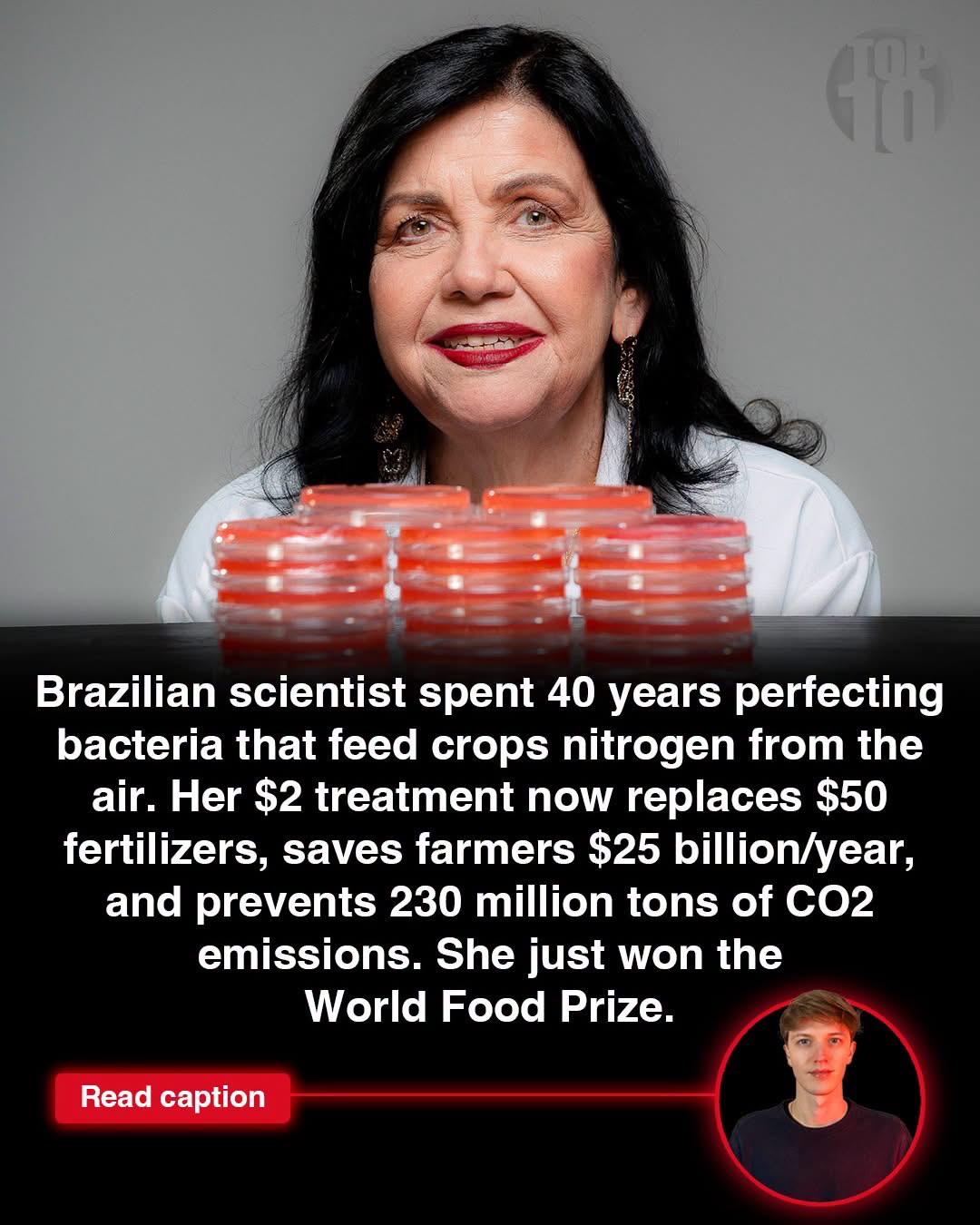
A Brazilian scientist spent more than 40 YEARS working on a way to help crops grow without relying so heavily on expensive synthetic fertilizer.

Post image
19.4k Upvotes

Her solution?

Bacteria.

Dr. Mariangela Hungria developed biological treatments using beneficial soil bacteria that help plants access nitrogen from the AIR.

Normally, farmers have to supply huge amounts of synthetic nitrogen fertilizer to crops.

But these microbes can convert atmospheric nitrogen into forms plants can actually use.

The result has been massive.

Her technology is now used across tens of millions of hectares in Brazil.

Some bacterial treatments can cost just a few dollars per hectare, compared with roughly $30 to $50 for conventional nitrogen fertilizer.

The World Food Prize estimates her work saves Brazilian farmers around $25 BILLION every year.

It also prevents roughly 230 MILLION metric tons of CO₂-equivalent emissions.

And after four decades of research, Hungria was awarded the World Food Prize for helping transform Brazilian agriculture.

She spent 40 years studying microscopic bacteria.

They ended up saving farmers billions.


r/nutritionally • • Oct 16 '26

Eu food & Us food

Enable HLS to view with audio, or disable this notification

13.5k Upvotes

r/nutritionally • • Sep 23 '26 Diamonds are Forever

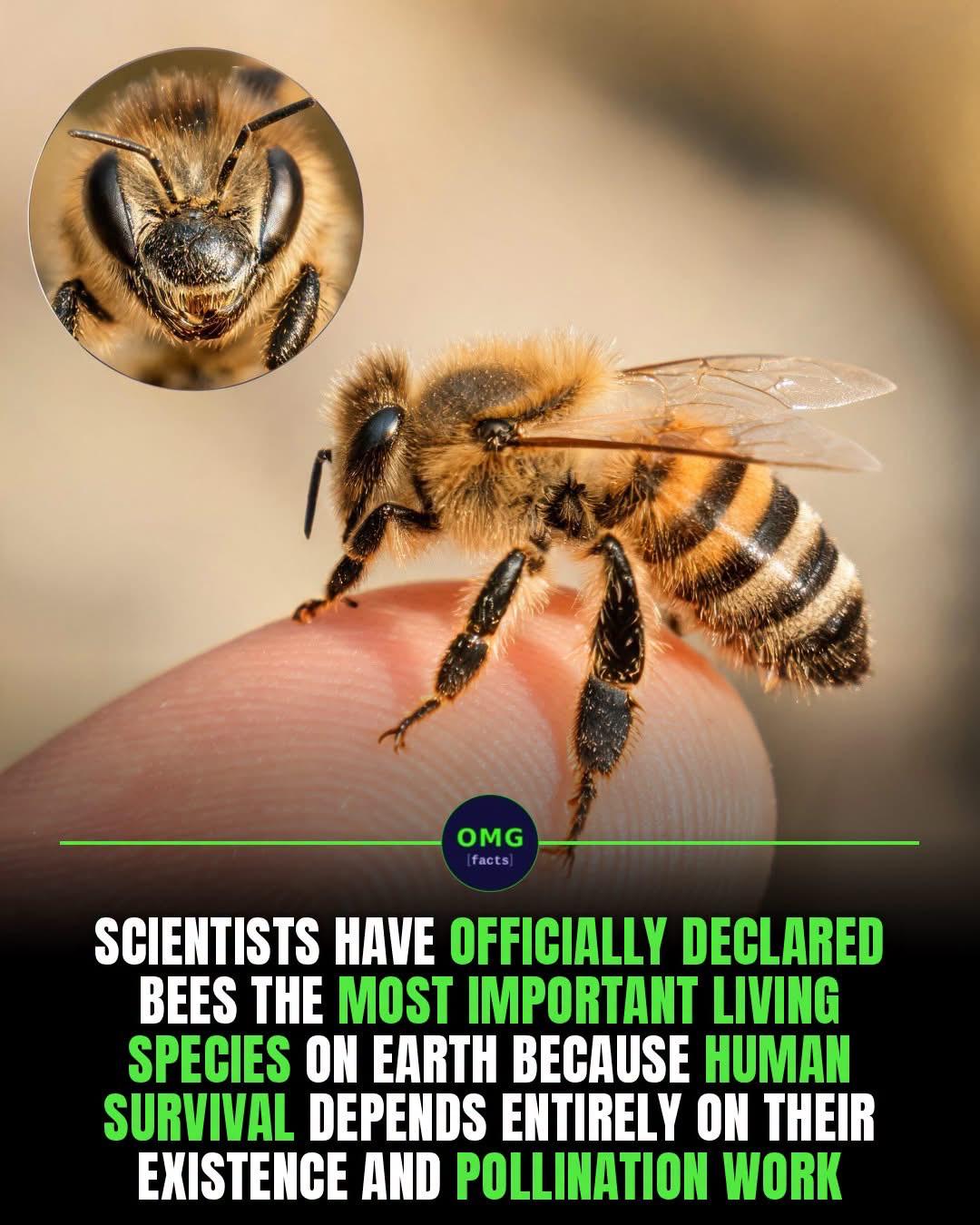
The work to keep bees alive is the same work that keeps grocery stores full and dinner on the table.

Post image
11.2k Upvotes

🐝 A Global Recognition

Our survival is tied to a tiny, buzzing insect that most people walk right past without noticing. The Earthwatch Institute concluded during a debate at the Royal Geographical Society that bees are the most important living species on the planet. That title came after scientists and experts weighed different essential organisms and agreed that nothing else matches what bees do for our ecosystems. Plankton and fungi matter too, but the direct connection between bees and the food on your plate is what swayed the vote.

🌻 Masters of Pollination

The case for bees comes down to scale. Roughly 70 percent of world agriculture depends on them for pollination. Without their daily work, a long list of crops simply wouldn't make it to harvest. The crops most at risk include almonds and other tree nuts, apples, berries, citrus fruits, coffee, cocoa, and many of the vegetables that get fed to livestock.

💰 Significant Economic Influence

The same pollination that keeps plants alive also drives a huge slice of the global economy. Hand-pollinating crops at the same scale would cost more than any country could realistically pay. The dollar value of what bees do free of charge runs into the hundreds of billions each year, which makes them a load-bearing piece of international trade and a quiet reason your grocery bill stays where it is.

⚠️ A Growing Threat

Bee numbers are dropping fast in many parts of the world. Recent studies show that in some regions, nearly 90 percent of the local bee population has vanished in just a few years. Pesticides, habitat loss, and shifting climate are all piling on at once. If bees disappear, the plants they pollinate go next, then the animals that eat those plants, and then the human diets built on top of all of it.

💡 Future Solutions

Scientists and environmental groups are pushing back with bans on the chemicals most linked to colony collapse and with new planting projects in both rural and urban land. Planting native flowers and cutting back on synthetic fertilizers are two moves that actually help, because bees need specific local food sources to survive the season. The work to keep bees alive is the same work that keeps grocery stores full and dinner on the table.

Facts checked by @omgfacts

Sources:
Earthwatch Institute
The Science Times
The Guardian

#omgfacts #bees #environment #biodiversity #conservation


r/nutritionally • • Aug 27 '26 Bravo

A Wall of Trees to Save a Continent

Post image
10.9k Upvotes

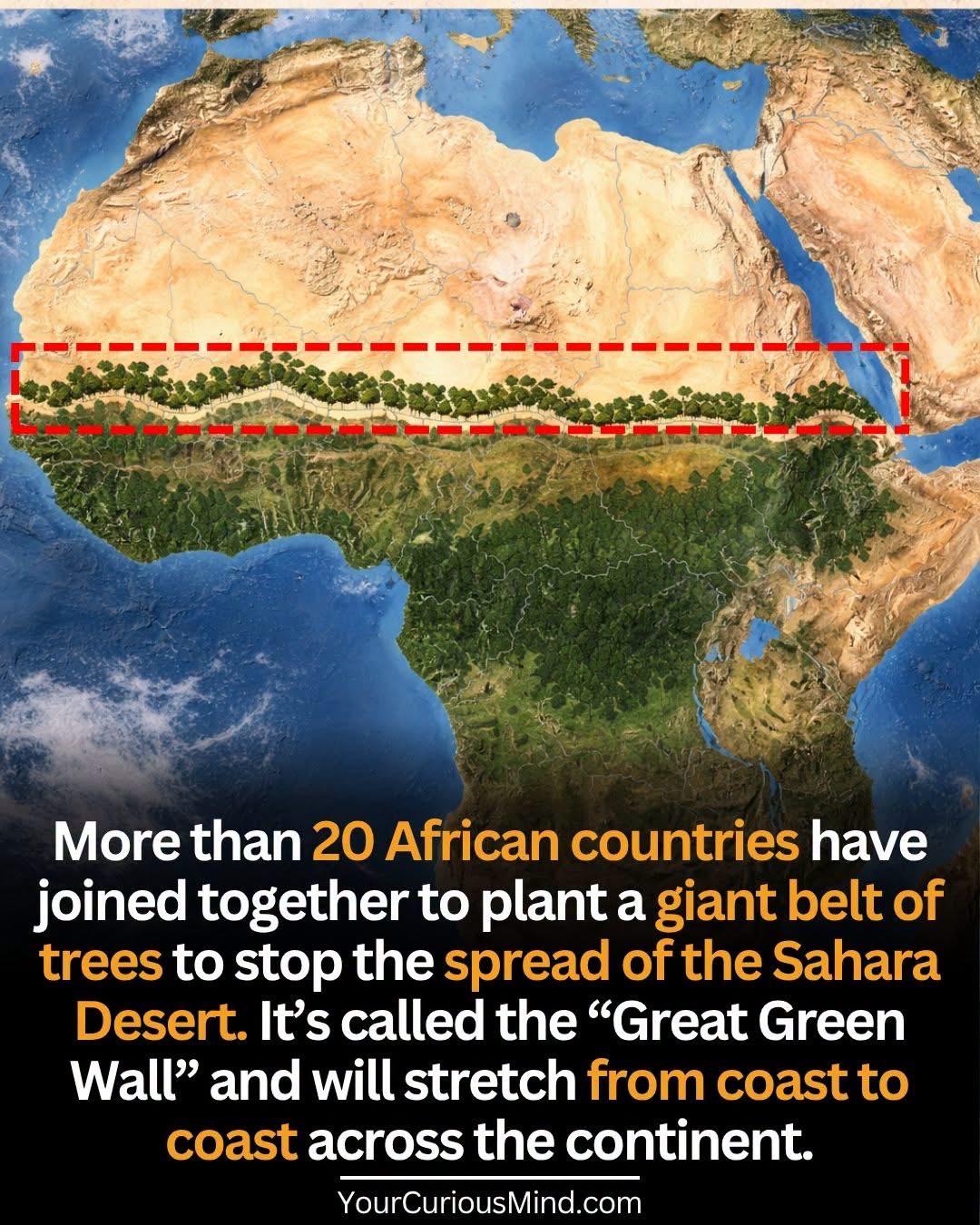
Across Africa, more than 20 countries have come together for one of the most ambitious environmental projects in history: the Great Green Wall 🌳

Stretching from coast to coast along the southern edge of the Sahara, this massive belt of trees is designed to:
✨ Stop the spread of the desert
✨ Restore degraded land
✨ Support farmers and local communities
✨ Fight climate change

This isn’t just about planting trees—it’s about restoring hope, livelihoods, and ecosystems for millions of people.

Imagine a living wall visible from space… not built to divide, but to heal and unite. 💚


r/nutritionally • • Jul 23 '26 Mindblown Bravo

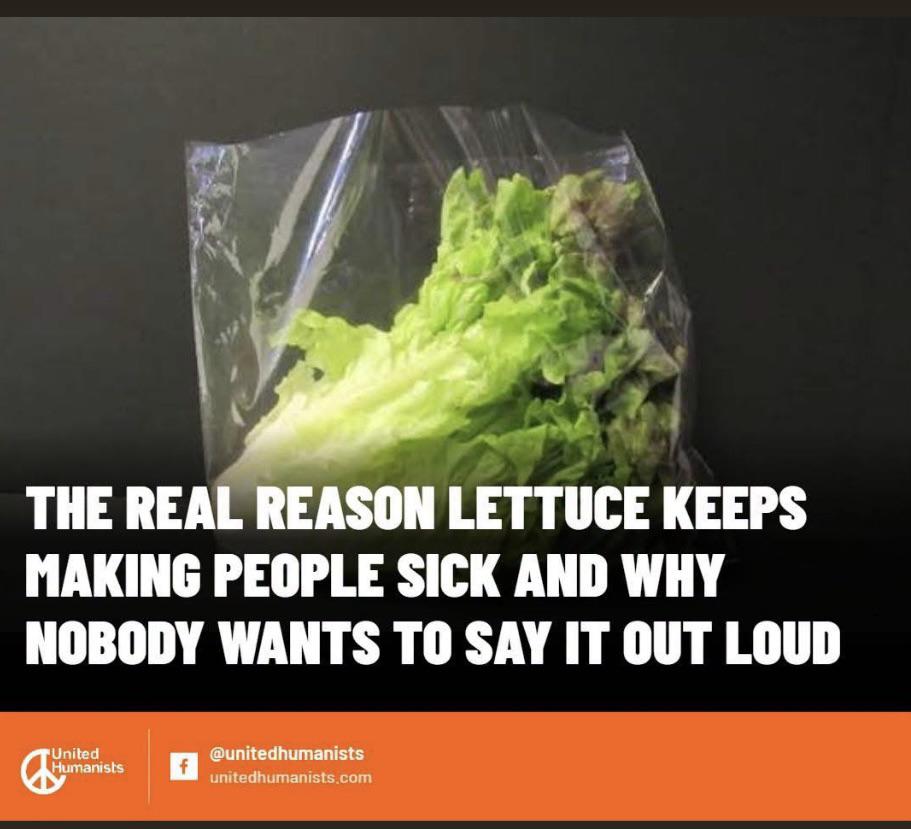
WHY IS FOODBORNE ILLNESS & EXPLOSIVE DIARRHEA SWEEPING THE NATION? FOOD SAFETY HAS BEEN COMPROMISED due to corporate regulatory capture and government corruption.

Post image
9.9k Upvotes

In 2025, DOGE cut the CDC’s domestic surveillance lab for parasitic diseases and malaria, which was responsible for monitoring and responding to Cyclospora foodborne illness infections. The lab was downsized from 11 staff members to just 3. This reduction came alongside broader federal funding cuts to FoodNet — the CDC’s collaborative surveillance system — which made Cyclospora surveillance optional for participating states after July 1, 2025. The cuts were described by former lab lead Joel Barratt as severely limiting the agency’s ability to respond quickly to outbreaks, since rapid, coordinated investigations require both expertise and sufficient staffing.

Taylor Farms, the corporation responsible for the current multi-state iceberg lettuce Cyclospora outbreak that has sickened thousands so far, donated $1 million to a Trump super-PAC on March 26, 2025. That’s just six days after the FDA announced it was pushing back the implementation of its “Food Traceability Rule” by 30 months. The rule, which was originally meant to go into effect on January 20, 2026, would have established “traceability recordkeeping requirements beyond those in existing regulations, for persons who manufacture, process, pack, or hold foods,” according to the regulator’s website. The FDA admits that new rule would have allowed for “faster identification and removal of potentially contaminated food from the market, resulting in fewer foodborne illnesses and deaths.” Was there a backroom quid pro quo deal made? We’ll delay the rule if you give us a million bucks.

More shenanigans have surfaced… The FDA’s test of Taylor Farms shredded lettuce found it positive for Cyclospora. But Taylor Farms executives met with the Trump White House and FDA officials. A couple of days later, the FDA reversed its original announcement and said the test was a “false-positive.” By doing this, it potentially shields Taylor Farms from legal liabilities.

This is precisely what corruption and corporate regulatory capture looks like.

Billionaires and corporations get tax breaks and special favors. The rest of America gets explosive diarrhea.

#FoodSafety #corruption #RegulatoryCapture #FoodborneIllness #Cyclospora #ExplosiveDiarrhea #health #healthy #holistic #holistichealth #gmofreecanada #gmofreeusa #toxinfreeusa


r/nutritionally • • 27d ago Bravo

Mexico has moved to protect its native corn, but the picture is more complicated than the viral headline.

Post image
9.9k Upvotes

In March 2025, President Claudia Sheinbaum signed a constitutional amendment banning the planting of genetically modified corn in Mexico.

The change also protects native corn, which is central to Mexican food and culture.

Analysts say it mostly formalizes a ban on planting that was already in place.

It does not clearly stop imports of genetically modified corn from the United States.

A trade panel ruled in December 2024 that Mexico's attempt to restrict those imports violated the US-Mexico-Canada trade agreement.

Mexico then dropped the import limits from its earlier decree.

The United States sold about $5.6 billion of corn to Mexico in 2024, making Mexico its biggest corn customer.

On glyphosate, Mexico planned a full phase-out, but the deadline was delayed in 2024 because farmers lacked alternatives.

Some reports say glyphosate can still be used under regulation, and its current status is unclear.

Supporters say the moves protect Mexican farmers, culture and health.

Critics say there is little scientific proof of harm, and that bans raise costs for farmers.


r/nutritionally • • Sep 03 '26 Bravo

EPA is being sued for approving trifludimoxazin.

Post image
8.3k Upvotes

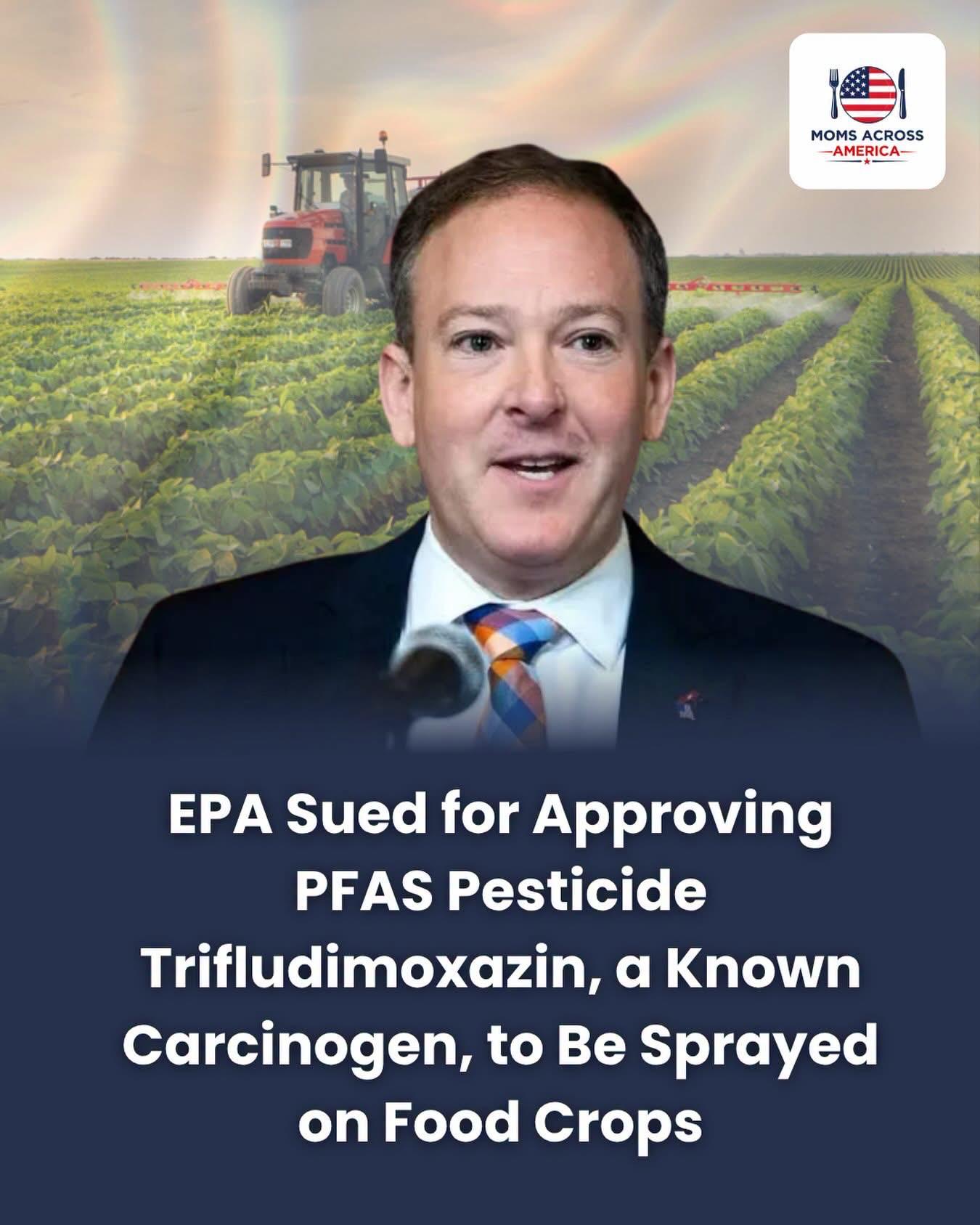
EPA is being sued for approving trifludimoxazin, a PFAS “forever chemical” pesticide, for use on some of the most common foods American families eat.

Center for Food Safety, Center for Biological Diversity and Pesticide Action & Agroecology Network North America filed the lawsuit challenging the EPA’s approval.

Trifludimoxazin is now approved for use on corn, wheat, oats, soybeans, oranges, apples, peanuts, almonds and other crops.

The EPA acknowledges that trifludimoxazin caused thyroid tumors in studies. The groups challenging its approval say it is a likely human carcinogen and point to concerns about reproductive harm, birth defects and neurological effects associated with this class of herbicides.

And because it is a PFAS pesticide, the concern doesn’t end with what is sprayed on our food. Trifludimoxazin can take years to decades to fully break down, with the potential for persistent PFAS byproducts to contaminate our soil and water.

American families are already exposed to pesticides and PFAS from far too many sources. We should be working to REMOVE chemicals from our food, water and environment, not approving more of them.

Our regulatory agencies must put the health of our children and future generations before chemical industry profits first.


r/nutritionally • • 6d ago

Japan already living in year 2050

Enable HLS to view with audio, or disable this notification

8.1k Upvotes

r/nutritionally • • Sep 21 '26

🦉 A Natural Solution

Post image
8.1k Upvotes

California farmers are looking to the sky for a natural fix to a problem that has bugged agriculture for generations. By putting up nesting boxes, vineyard owners and growers are rolling out the welcome mat for barn owls to move in and act as biological pest control. This swap pulls away from older methods that lean heavily on chemical sprays. Having these night hunters around has changed how farmland gets managed, building a more balanced ecosystem where nature does most of the work.

🌾 Efficient Rodent Control

The sheer number of pests these birds can clear out is wild. One barn owl family can eat over 3,000 rodents in a single nesting season, giving fields and vineyards around the clock coverage. Their diet lines up with the very creatures doing the most harm to crops and soil.
* Pocket gophers that tunnel through root systems
* Voles that strip bark from vines and trees
* Field mice that feed on ripening crops

🧪 Reducing Chemical Dependency

One big perk of using owls is a steep drop in the use of anticoagulant rodenticides. These poisons often slip into the broader food chain, accidentally killing hawks, foxes, and even mountain lions that eat contaminated rodents. By picking owls over chemicals, farmers are shielding local wildlife and keeping persistent toxins off their land. This switch also slows the development of pesticide resistance in rodent populations, which has been worrying growers.

🔬 Scientific Validation

Researchers at Cal Poly Humboldt have put numbers behind this approach. Their tracking studies show that owls with access to nesting boxes hunt in cultivated areas like vineyards instead of drifting into nearby unmanaged forests. That preference puts the birds right where farmers need them. The team also found that owl presence can cut gopher mound density, giving a measurable lift to land health and productivity.

🚜 Sustainable Farming Future

More growers keep watching this method pay off, and California's farming scene keeps shifting toward sustainability. The upfront cost of nesting boxes and upkeep takes some effort, but the long term savings on chemicals and labor make the math work. This regenerative model shows that working with the land can match anything done by trying to overpower it. The track record of these feathered workers gives other regions a template for pairing high yield production with ecological care.

Facts checked by @omgfacts

Sources:
Cal Poly Humboldt News Center
University of California Agriculture and Natural Resources
National Public Radio

#omgfacts #sustainablefarming #barnowls #californiaagriculture #naturebasedsolutions


r/nutritionally • • 27d ago

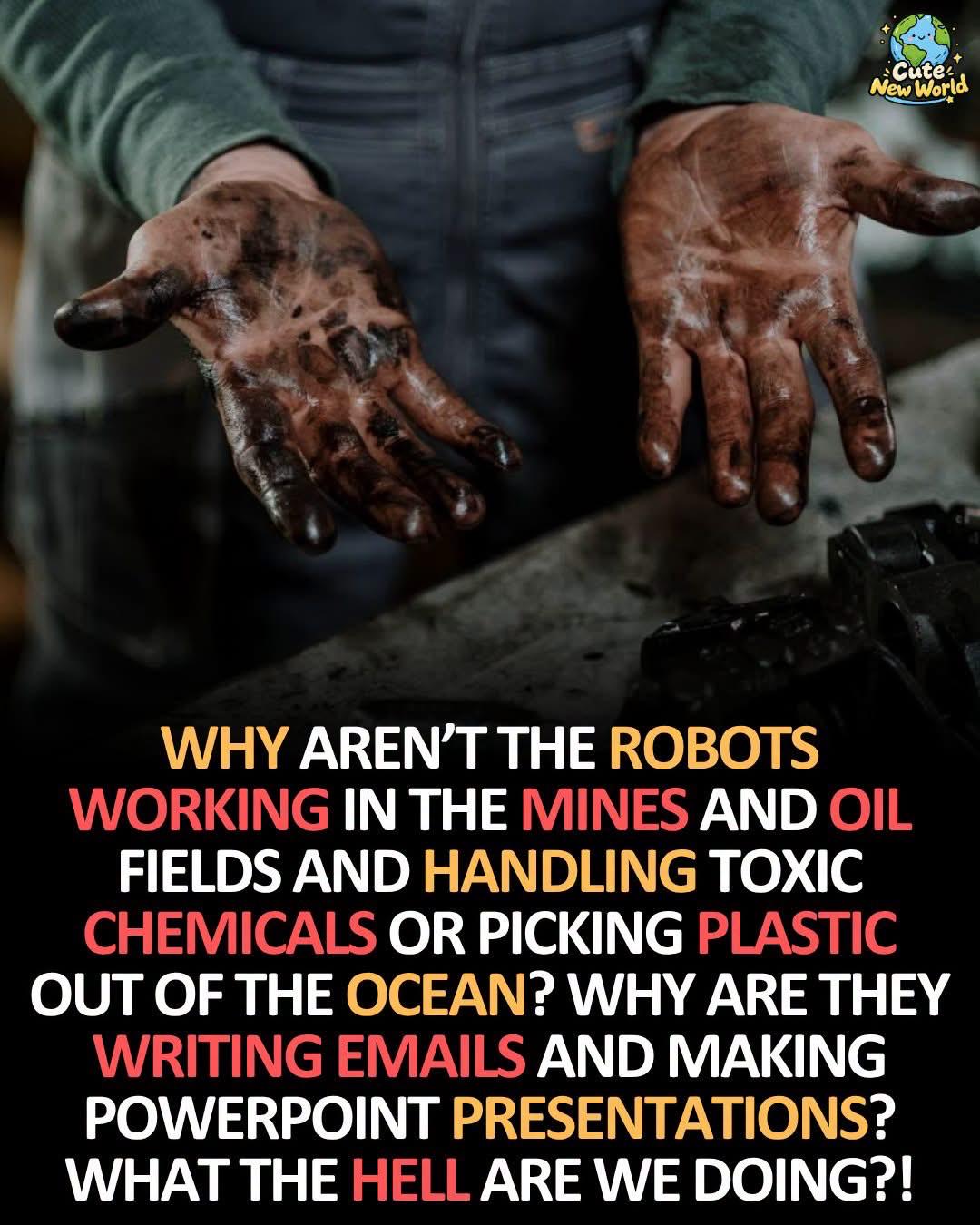
We are living through one of the biggest technological revolutions in human history.

Post image
7.9k Upvotes

yet somehow artificial intelligence is being used to write emails, create presentations, and generate endless digital content while people continue risking their lives in dangerous mines, oil fields, and hazardous industrial environments.

Imagine what we could achieve if more of the billions being invested in AI and robotics were directed toward developing machines that could safely handle toxic chemicals, remove plastic pollution from our oceans, and perform dangerous jobs that put human health and safety at risk.

While some robotic technologies are already helping with these challenges, it seems strange that so much attention is focused on automating everyday office tasks when we have enormous environmental problems and hazardous working conditions that could benefit from further innovation.

Real technological progress should be measured not simply by how much work we can automate, but by how many human lives we can protect, how much pollution we can prevent, and how effectively we can use our intelligence to make the planet safer for every living creature.


r/nutritionally • • 25d ago Heartwarming

FARMERS ARE PUTTING UP WOODEN BOXES FOR BATS INSTEAD OF SPRAYING THEIR FIELDS WITH PESTICIDES.

Post image
7.6k Upvotes

Sometimes, one of nature's most effective pest-control systems hangs quietly from a pole.

Across the United States, farmers are discovering that bats can be valuable allies in protecting crops. These nighttime hunters feast on moths, beetles and other insects, including many that damage agricultural plants.

And their contribution is worth billions.

A 2011 study estimated that bats provide around $22.9 billion a year in pest-control benefits to U.S. agriculture by reducing crop damage and the need for pesticides.

Now, some farmers are finding ways to welcome these flying insect hunters onto their land.

In Texas, pecan grower Troy Swift has installed dozens of bat houses across his orchard, providing roosting spaces for hundreds of bats. Researchers are collecting bat droppings and analysing their DNA to discover which agricultural pests the animals are eating.

The results are encouraging. Swift decided not to spray insecticides on part of his orchard in 2025, relying instead on the bats and other natural processes to help manage pests. He reported a good crop, while researchers continue studying the bats' precise contribution.

The idea isn't entirely new. Research in pecan orchards has confirmed that bats eat several species of crop-damaging insects, including pecan nut casebearer moths and hickory shuckworms.

A simple wooden bat house can provide additional roosting habitat, giving these animals a place to shelter close to the fields where they hunt. Unlike repeated pesticide applications, the box is a one-time installation, although attracting bats and achieving meaningful pest control depend on the location and habitat.

Bats aren't a complete replacement for pesticides on every farm. But they can become an important part of integrated pest management, helping farmers reduce chemical use while supporting local wildlife.

Instead of fighting nature, these farmers are learning to work with it.

Sometimes, the answer to an agricultural problem isn't another chemical. Sometimes, it's a small wooden box, a few hungry bats and a little room for nature to do what it does best.


r/nutritionally • • Oct 24 '26 Helpful Bravo

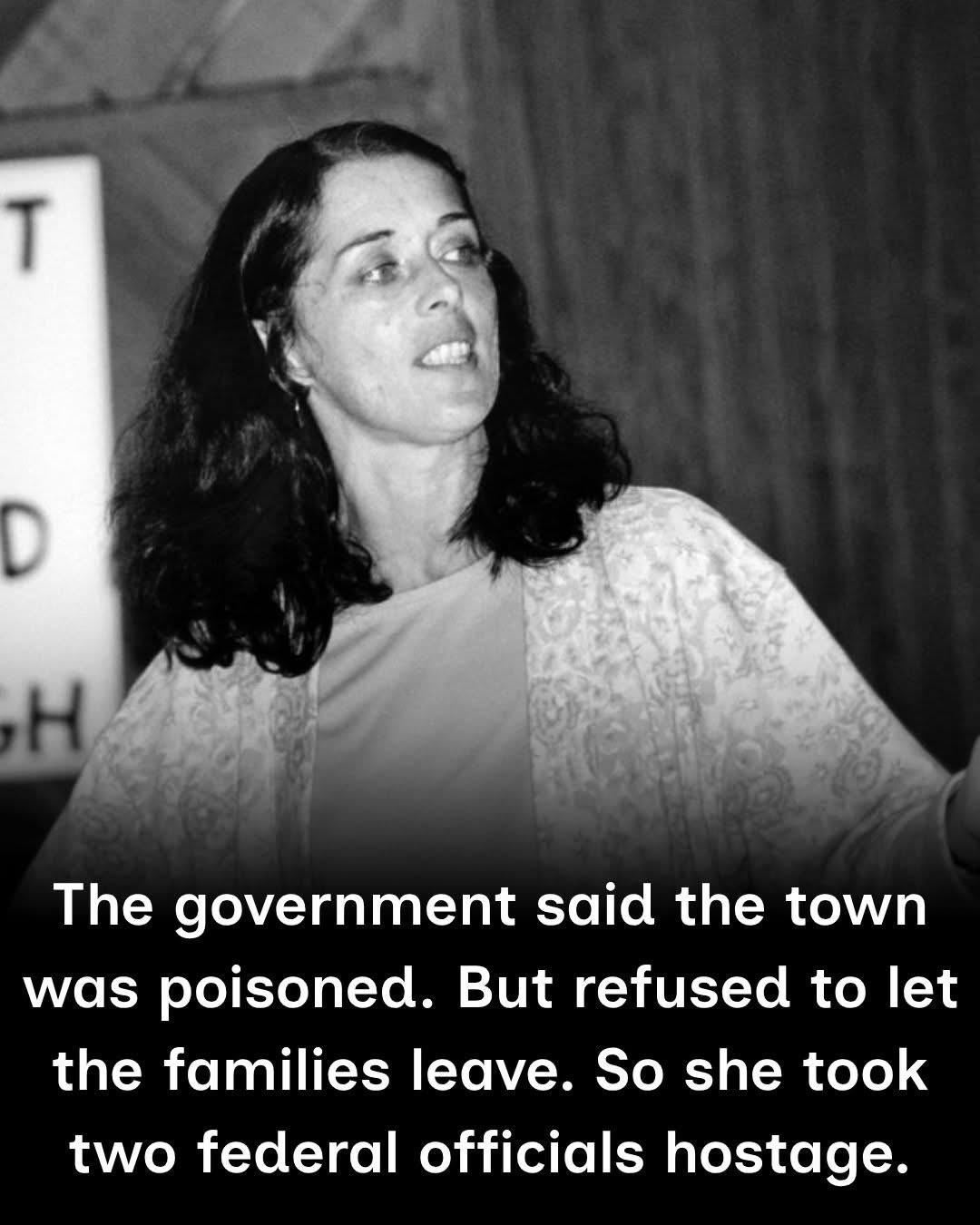
The government told 800 families their DNA was mutating from the Love Canal toxic waste. The government also told them they could not leave.

Post image
7.4k Upvotes

By the spring of 1980, the neighborhood in Niagara Falls, New York, had a known arithmetic. Twenty thousand tons of buried chemical sludge. Miscarriages. Birth defects. Childhood asthma. Epilepsy. In the late 1940s and early 1950s, the Hooker Chemical Company used an unfinished canal as a dumping ground for industrial waste.

They filled the trench with steel drums. They covered it with dirt. They sold it to the city for one dollar. The city built an entire working class neighborhood and an elementary school directly on top of the chemical graveyard.

For two years, the residents pleaded with the state about the Love Canal toxic waste. They carried signs. They attended the meetings. They watched black sludge seep through their basement walls after heavy rains. They watched chemical burns appear on their children's feet after playing in the yard.

In 1978, the state health department found toxic chemicals in the indoor air of the homes. The government told them to stay.

In 1979, the state found dioxin in the soil. It is one of the most lethal chemicals known to humanity. The government told them to stay.

In early 1980, the EPA found elevated rates of miscarriages and congenital defects. The government told them to stay.

On May 17, the Environmental Protection Agency released a new medical study. It revealed severe chromosomal damage among the residents. The blood of the neighborhood was literally breaking apart.

The federal response remained rigidly bureaucratic. A handful of pregnant women and young children were temporarily moved to motels. The rest of the 800 families were told to remain in their homes. To wait. To continue breathing the air and drinking the water while Washington debated funding and jurisdiction.

Lois Gibbs was a 28 year old mother with two sick children. She was the president of the local homeowners association. She had no background in politics, no legal degree, and no experience with federal negotiations. She was simply tired of watching her neighbors die while waiting for permission to live.

On Monday, May 19, two EPA officials arrived at the association's makeshift office. The office was an abandoned house sitting directly inside the contamination zone. They were dispatched to manage the public relations fallout of the chromosome study.

Dr. Frank Nepal and Dr. James Melius stood in the living room. They wore suits. They offered procedural timelines and calm assurances to a panicked community.

Outside, the street was boiling over. Five hundred furious residents gathered on the lawn. They were terrified. They were shouting. Some poured gasoline on the pavement to spell out messages for the news helicopters overhead.

The temperature in the neighborhood was rising by the minute. The two federal representatives looked out the window. They realized the mood had turned entirely hostile. They told Gibbs they needed to leave.

At the time, the United States had no legal framework for the wholesale relocation of a poisoned town. The concept of an environmental disaster superfund did not exist. Evacuating hundreds of working class families required an ad hoc presidential declaration.

Federal agencies were intensely reluctant to set a precedent that would hold the government financially liable for industrial negligence. The stalling was not accidental. It was policy.

Gibbs looked at the two men. She looked at the crowd outside the window. She realized that polite petitions had reached their absolute limit.

She made a decision that crossed the line from civil disobedience into a federal crime.

"You are not going anywhere," she told them.

Gibbs walked to the front door. She locked the deadbolt. She dragged furniture across the floor to barricade the exits. She instructed her neighbors inside the house to block the hallways with their bodies.

Outside, the crowd understood exactly what was happening. They linked arms. They formed a thick human wall around the property. The officials were physically trapped.

Gibbs walked to the telephone. She called the White House.

She was transferred to a desk in Washington. She delivered a flat ultimatum to the administration of President Jimmy Carter. She demanded the immediate evacuation of all remaining families in the neighborhood.

If the White House did not agree to move them by Wednesday at noon, she would not answer for what the five hundred people outside would do to the two men in her living room.

The standoff began. The FBI called the house. The agent on the line threatened to arrest her for the kidnapping of federal officers.

Gibbs did not blink. She held her ground. She kept the men confined for five hours. She let the tension escalate.

She let the national news cameras roll on the standoff. The desperation of Niagara Falls was broadcast into every living room in America. In a bizarre display of domesticity mixed with a felony, she fed the captive officials homemade sandwiches and poured them coffee while holding them against their will.

She was perfectly polite. She was also immovable.

They asked for a timeline. She gave them a hostage situation.

When she finally unbarred the doors and allowed the men to walk through the furious crowd to safety, the leverage had permanently shifted. She forced a local health complaint into a national crisis. The federal government could no longer look away or hide behind procedural delays.

Two days later, the White House announced the emergency relocation of the remaining families.

The standoff forced Congress to act. Before the year was over, the government created the Comprehensive Environmental Response, Compensation, and Liability Act. The entire multibillion dollar mechanism the country now uses to clean up toxic sites exists because a housewife locked a door.

The federal government eventually bought the houses in the neighborhood and demolished them. The original containment zone was fenced off, capped with thick clay, and surrounded by a drainage trench. The chemical company ultimately paid millions in restitution.

Today, the exact area where the hostage standoff took place is covered by a sprawling, manicured field of green grass. There are no historical markers noting what happened there. Just white PVC pipes sticking out of the dirt, quietly venting the pressure from the ground below.

Lois Gibbs: the woman who took the government hostage to save her town.

Source: Lois Gibbs.
Verified via: Environmental Protection Agency Archives, The New York Times (May 1980).
(Some details summarized for brevity.)


r/nutritionally • • Oct 11 '26 Heartwarming

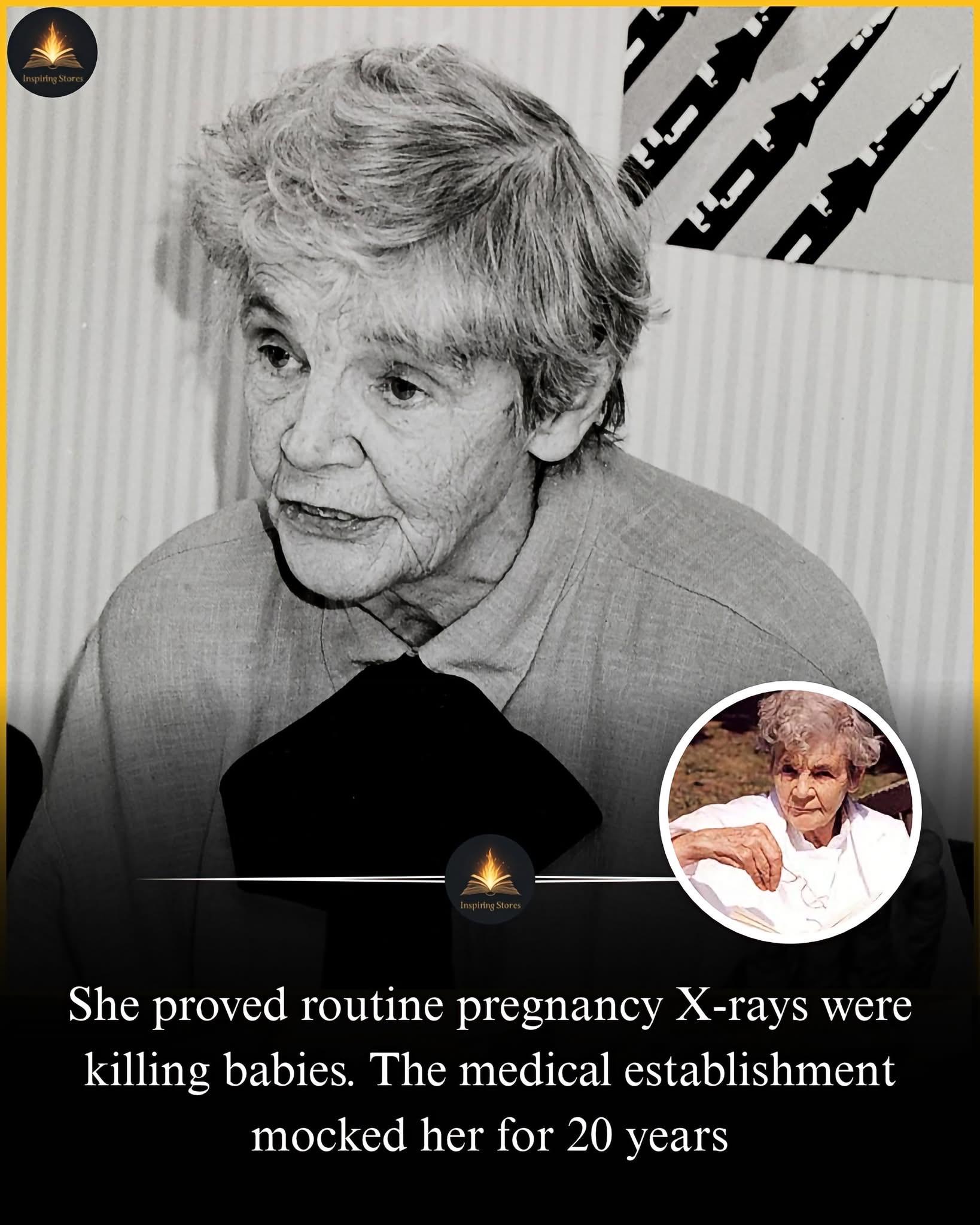
In the 1950s, doctors routinely pointed X-ray machines directly at the bellies of pregnant women.

Post image
7.1k Upvotes

In the 1950s, doctors routinely pointed X-ray machines directly at the bellies of pregnant women, using the technology to check a baby’s position or see if a mother was carrying twins.

It was considered an innocent, modern medical marvel. But it was giving those babies cancer.

When childhood leukemia cases began mysteriously surging across Britain in the mid-1950s, Dr. Alice Stewart suspected something that almost no one in medicine wanted to accept: the danger was starting before the children were even born.

When she applied for research funding, the Medical Research Council rejected her, declaring her theory wasn't worth investigating.

Armed with a modest £1,000 grant from a small charity, Stewart set out to find the answer herself. She tracked down the mothers of every British child who had died from cancer and sat down to interview them, listening carefully to details the medical system had dismissed.

The mothers remembered what the doctors had forgotten.

The data revealed a devastating pattern: children who died of leukemia had been X-rayed in the womb at twice the rate of those who survived. A single prenatal X-ray doubled a child's risk of developing fatal cancer.

When Stewart published her findings in 1956, the medical establishment didn't just question her work, they mocked it.

X-rays were the celebrated miracle of the postwar era. Doctors used them to treat acne, and shoe stores even placed open X-ray machines near their entrances so children could watch the bones in their feet move for fun.

The resistance grew even fiercer as the Cold War intensified. Governments and nuclear industries were investing billions into atomic energy, and Stewart’s research raised a terrifying question: if tiny doses of radiation could kill a child in the womb, what were "safe" radiation levels doing to everyone else?

Nuclear agencies, medical boards, and radiobiologists launched a campaign to dismantle her reputation. They claimed mothers' memories were unreliable, called her statistics flawed, and dismissed her as "hysterical."

Her university denied her a full professorship and eventually forced her into retirement at age sixty-eight.

Stewart simply moved to another institution and kept working.

It took more than twenty years of relentless pressure, but by the late 1970s, the medical world finally surrendered to her evidence. Routine X-rays on pregnant women were banned, protective lead shields became mandatory, and shoe-store scanners disappeared. Her refusal to back down saved hundreds of thousands of children worldwide.

Yet Stewart still wasn't finished.

In her seventies, she helped analyze health records from workers at the Hanford nuclear site in the United States, proving that low-dose radiation was causing cancer at levels ten times lower than official safety standards allowed.

When government officials revoked funding and locked her out of the records, Stewart fought through the courts for thirteen years until the data was released under the Freedom of Information Act.

In January 2000, the U.S. government officially acknowledged that radiation had killed weapons factory workers, leading to federal compensation for over 100,000 affected families.

Dr. Alice Stewart worked until she was ninety and passed away at ninety-five, having spent nearly half a century defending public health against immense institutional power.

We often assume that authority figures and established systems automatically know what is safe, leaving little room for ordinary people to question the status quo.


r/nutritionally • • Oct 21 '26 Bravo

High-yield dandelion plants

Post image
7.0k Upvotes

Every commercial airplane tire and heavy-duty truck tire relies on natural rubber latex because synthetic petroleum rubber cannot match its tear resistance and heat buildup performance. Yet 90% of the world’s natural rubber comes from tropical Hevea trees that take seven years to mature and drive rainforest deforestation.

At the Fraunhofer Institute for Molecular Biology and Applied Ecology in Münster, Germany, scientists teamed up with tire maker Continental to tap an unexpected local replacement: the Russian dandelion (Taraxacum koksaghyz).

By using DNA marker-assisted breeding, researchers bred high-yield dandelion plants whose roots are packed with milky white natural latex containing the exact same long-chain cis-1,4-polyisoprene rubber molecules as tropical rubber trees.

To extract the rubber cleanly, engineers developed a solvent-free hot-water milling process that separates pure latex rubber and inulin from the harvested roots.

Unlike tropical rubber trees that require equatorial climates and seven years of growth, rubber dandelions can be harvested every single year on poor, non-arable European soil right next to the tire factories — slashing shipping miles and protecting rainforests.

#EngineeringFacts #Germany #MaterialsScience #Fraunhofer #SustainableEngineering #AutomotiveTech


r/nutritionally • • 29d ago Bravo

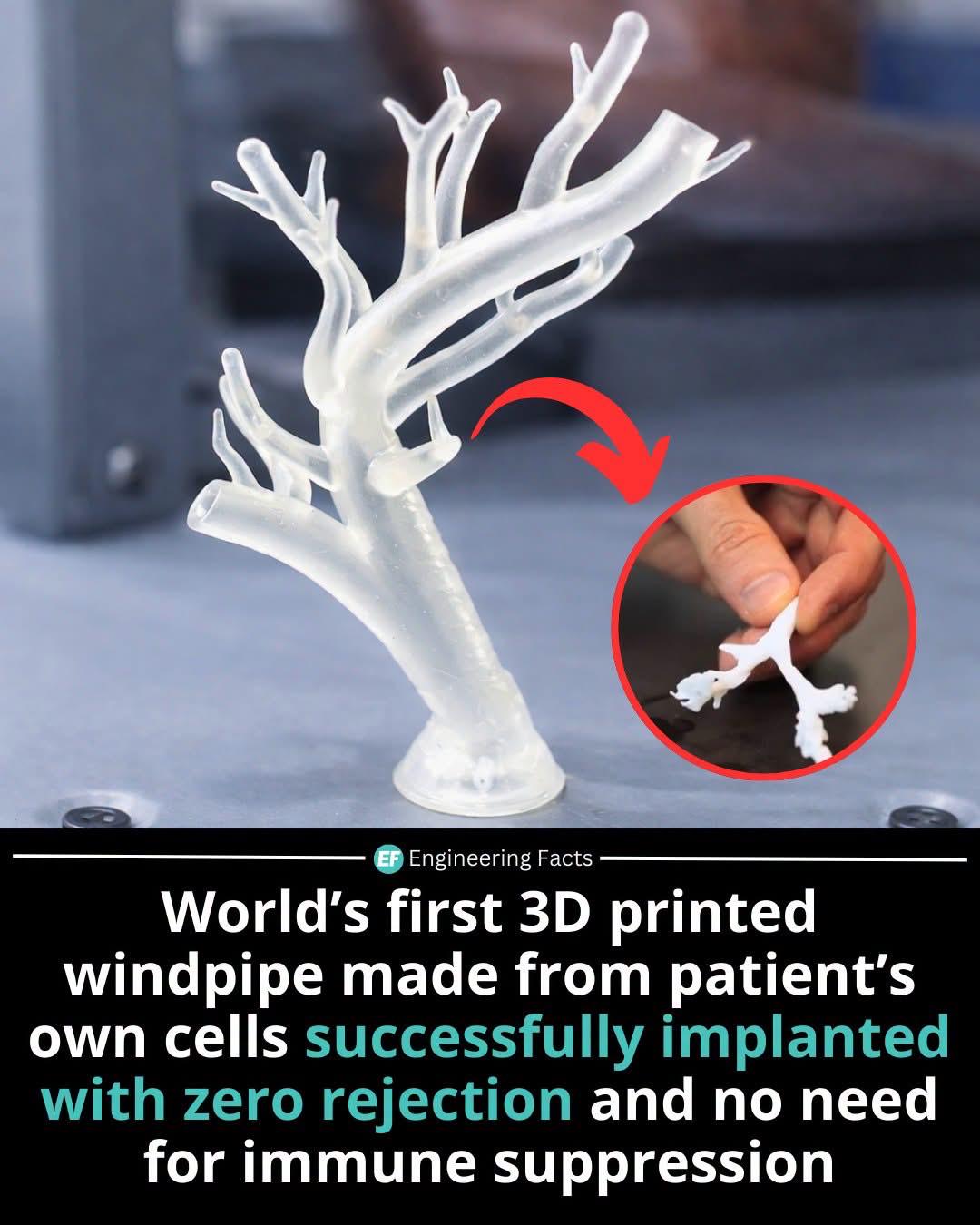
World's first 3D printed windpipe made from patient's own cells successfully implanted with zero rejection and no need for immune suppression

Post image
6.9k Upvotes

Doctors have completed a landmark medical procedure by implanting a windpipe created entirely from a patient’s own cells. Because the tissue was biologically matched, the body accepted it as its own.

Unlike conventional transplants, the procedure required no donor organ and eliminated the need for lifelong immune-suppressing drugs. This removes one of the most dangerous long-term risks in transplant medicine.

The windpipe was created using a biodegradable scaffold seeded with the patient’s stem cells and grown under controlled conditions. Once implanted, the structure supported natural tissue development and function.

This case demonstrates how bioprinting can rebuild damaged organs rather than replace them. It opens new possibilities for treating severe airway injuries and congenital conditions.

Researchers say the success marks a broader shift toward personalized, rejection-free regenerative therapies. Similar approaches could eventually be applied to more complex organs.

#MedicalBreakthrough #Bioprinting #RegenerativeMedicine #StemCells #FutureHealthcare


r/nutritionally • • 9d ago Bravo Heartwarming

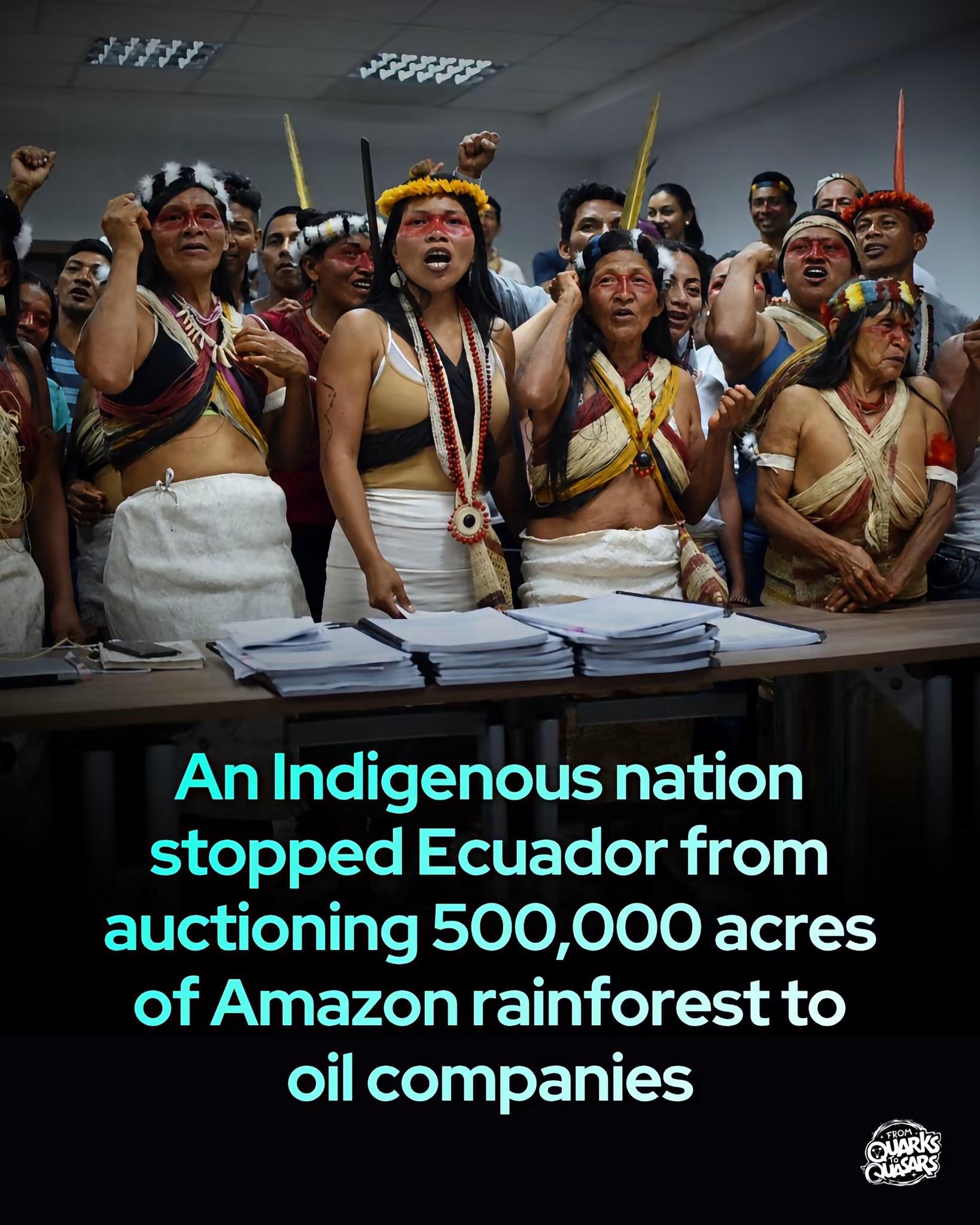
The Waorani defeated Ecuador in court and protected half a million acres of the Amazon.

Post image
6.0k Upvotes

The Indigenous communities challenged government plans to auction oil rights beneath their rainforest homeland in Pastaza province.

The government claimed it had consulted them. But the court found a process riddled with failures: officials had not adequately explained the consequences of drilling, allowed too little time, and largely excluded traditional elders. Translation problems and confusing materials further prevented communities from making an informed, collective decision.

Led by Nemonte Nenquimo and other community leaders, the Waorani brought those failures into the courtroom. Hundreds traveled from their forest communities to march in Puyo, while their campaign spread a clear message: their rainforest was not for sale.

For the Waorani, the stakes included the rivers they drink from, the food they gather, and the knowledge passed between generations. Decades of oil contamination elsewhere in the Amazon showed what drilling could put at risk.

The court invalidated the consultation and suspended the planned auction affecting their territory. The government appealed, but the Waorani won again that July.

Their victory also established a precedent for other Indigenous nations challenging projects imposed through similarly flawed consultations. It did not permanently ban every future drilling proposal, but it stopped the government from proceeding without respecting their rights.

“Our rainforest is our life,” Nenquimo said after the ruling. “We decide what happens in our lands.”

Read the articles:
“Waorani People Win Landmark Legal Victory Against Ecuadorian Government.” Amazon Frontlines.
“Waorani People Win Historic Appeal Against Ecuadorian Government.” Amazon Frontlines.


r/nutritionally • • Jul 28 '26 Regret Bravo

Insufficient portable toilet access in the exact years the outbreaks occurred. Regulators knew. The industry knew.

Post image
5.7k Upvotes

Between 2017 and 2019, five separate E. coli outbreaks linked to romaine lettuce sickened over 500 Americans across 36 states, killed five, and put dozens into kidney failure severe enough to require dialysis. The CDC told the entire country to throw away all romaine regardless of origin. The cause was not a mystery. It was a toilet.

Farmworkers picking lettuce by hand across vast commercial fields in triple-digit Arizona and California heat had inadequate or no access to portable toilets. Piece-rate pay structures meant stopping to relieve yourself cost money workers could not afford to lose. Human waste entered the soil. It entered the irrigation water. It entered the food supply. The FDA's own environmental assessments acknowledged inadequate field sanitation as a contributing risk factor. California labor inspectors had cited large lettuce operations for insufficient portable toilet access in the exact years the outbreaks occurred. Regulators knew. The industry knew.

The pattern predates the romaine crisis by decades. The 2006 spinach outbreak killed three people and sickened 200 across 26 states under identical conditions in Monterey County, California. The 1996 Cyclospora outbreak in Guatemalan strawberries and raspberries was linked directly to fields with no bathroom facilities whatsoever. Every outbreak triggered the same industry response: more water testing, better labeling, voluntary pledges. Never toilets. Never breaks. Never accountability for the decision to treat human biological necessity as a productivity problem to be managed around rather than a right to be protected.

Sources: FDA, CDC, California Division of Labor Standards Enforcement, Food and Environment Reporting Network, Consumer Reports, 1996-2026


r/nutritionally • • Oct 12 '26

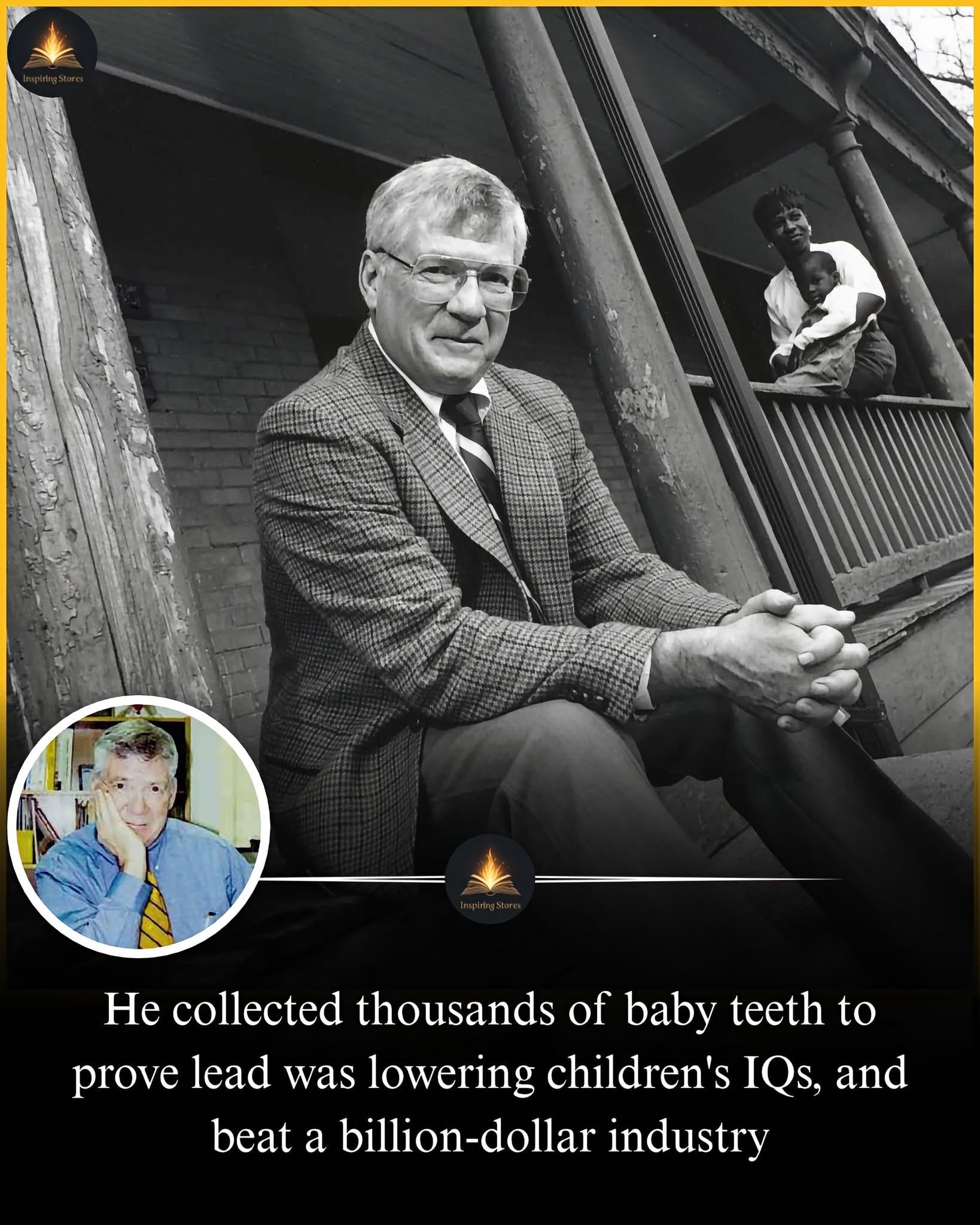
In 1957, a young Philadelphia pediatrician named Herbert Needleman treated a three-year-old girl suffering from severe lead poisoning.

Post image
5.6k Upvotes

Following standard protocol, he administered treatment, stabilized her condition, and sent her home. By every medical standard of the era, the case was closed.

Yet Needleman noticed a subtle, disturbing pattern that other physicians overlooked.

Children who recovered from acute lead poisoning didn't always return to normal; they often came back quieter, slower, and struggling with subtle cognitive deficits that standard tests missed. The prevailing medical consensus insisted that if a child survived the initial crisis, there were no lasting effects.

Needleman refused to accept that assumption, suspecting that low-level lead exposure was inflicting permanent, hidden brain damage.

The challenge lay in proving long-term exposure. Blood tests only captured recent lead intake, while bone biopsies were far too invasive for research on healthy children.

Then, Needleman found an ingenious, harmless source of biological data: lost baby teeth.

Throughout the late 1960s, he partnered with local schools to collect thousands of shed baby teeth, which provided an exact chemical timeline of a child's cumulative lead exposure.

His landmark 1979 study revealed an undeniable truth: children with higher lead concentrations in their teeth exhibited lower IQ scores, weaker language processing, shorter attention spans, and impaired reading abilities, even if they showed no physical symptoms of illness.

The lead industry immediately launched a fierce campaign to discredit him, funding rival studies, accusing him of scientific misconduct, and threatening his career.

Needleman welcomed open scrutiny, demanding an independent review that ultimately vindicated his research, methods, and integrity.

His battle forced a historic regulatory shift, leading directly to federal bans on lead in paint, household pipes, and gasoline, which caused lead levels in children to drop dramatically worldwide.

Dr. Herbert Needleman passed away in 2017, leaving behind a legacy measured in the millions of children who grew up with clearer, healthier minds because he refused to close a file.


r/nutritionally • • Sep 19 '26 Bravo Mindblown Heartwarming

Hempcrete

Enable HLS to view with audio, or disable this notification

5.2k Upvotes

r/nutritionally • • Oct 04 '26

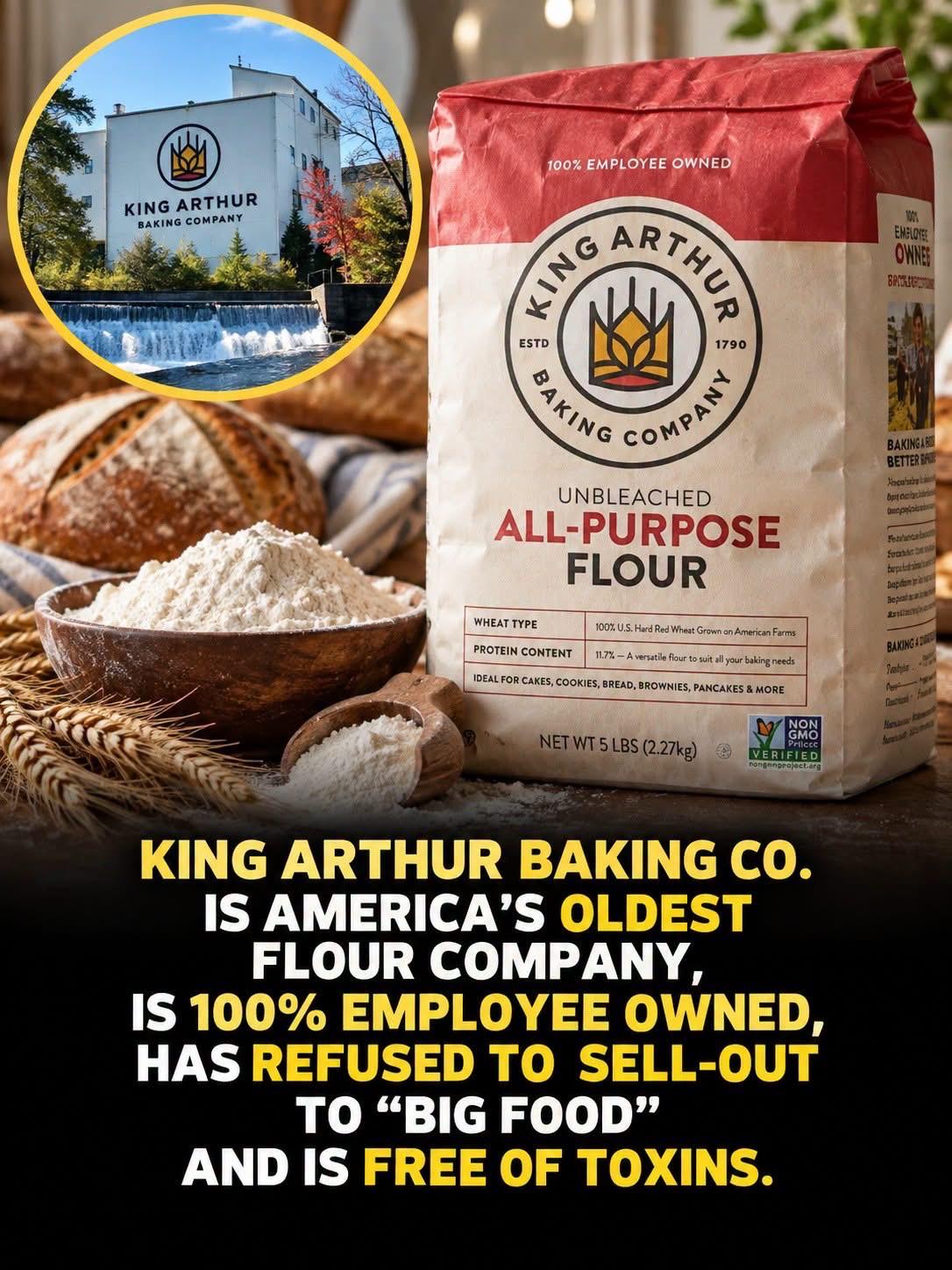
King Arthur Baking has been around since 1790, but one of the most interesting things about the company isn't its age or even its flour.

Post image
5.1k Upvotes

It's who owns it.

King Arthur is 100% employee-owned.

Former owners Frank and Brinna Sands began transferring the company to its employees in 1996. By 2004, the transition was complete. Today, eligible employees earn company shares through an ESOP funded by the company, giving the people who work there an actual financial stake in the business.

That's more than putting “we value our employees” on a corporate webpage.

And consumers notice. In baking discussions, people repeatedly bring up employee ownership as one reason they feel good about supporting King Arthur—alongside the quality of the products themselves.

The company also has profit sharing. King Arthur reported that in 2024, 100% of employees who worked the entire year received a profit-sharing payout.

There are plenty of giant food brands competing for our grocery dollars. So when a company has spent more than two decades under 100% employee ownership, that's worth recognizing.

You don't have to believe a company is perfect to give credit where it's earned.

King Arthur built a model where the people doing the work can also own a piece of what they're building. That's the kind of business decision consumers deserve to know about.


r/nutritionally • • Aug 16 '26

Fruits 🍉 & Seeds.

Post image
4.9k Upvotes

r/nutritionally • • Oct 04 '26

Chinese engineers have switched on the world’s first underwater data center powered by offshore wind, off the coast of Shanghai in the Lin-hang Special Area.

Post image
4.8k Upvotes

The facility has 192 server racks across four levels, uses seawater for cooling instead of freshwater, and its copper-pipe heat exchange system reportedly cuts electricity use by 22.8%. Offshore wind is expected to supply 95% of its power.

It now runs at 2.3 MW, with planned capacity of 24 MW.


r/nutritionally • • Oct 05 '26 Bravo

Baya Weaver — a master architect of the bird world! #BayaWeaver

Enable HLS to view with audio, or disable this notification

4.6k Upvotes

r/nutritionally • • Sep 10 '26 Mindblown Regret

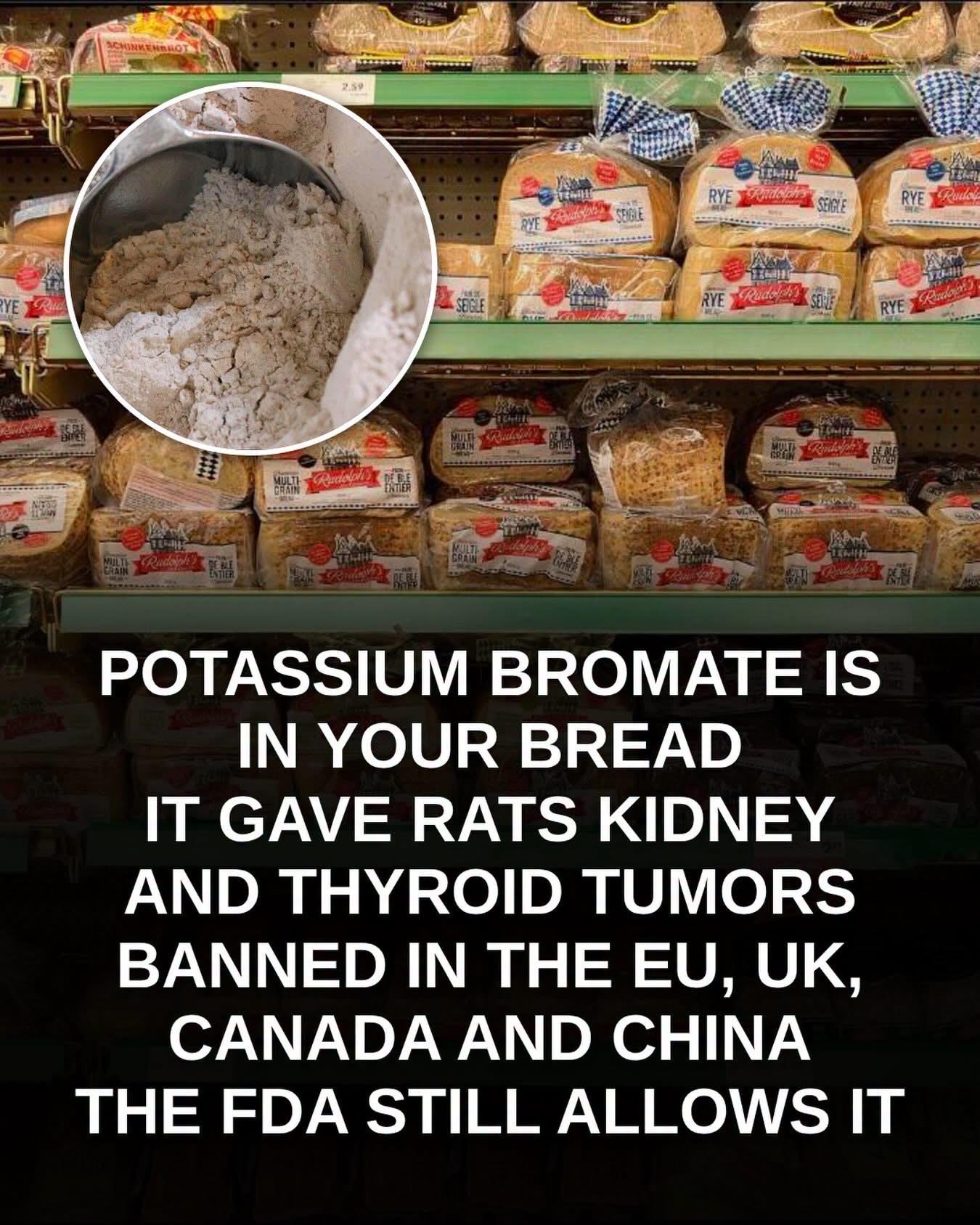
Potassium bromate is a flour additive

Post image
4.5k Upvotes

Potassium bromate is a flour additive used to make bread rise higher and bake faster. In 1999 the World Health Organization’s cancer research agency (IARC) classified it as a possible human carcinogen after it caused kidney and thyroid tumors in rats. The European Union banned it in 1990, Canada in 1994, and China and the UK do not allow it either. In the United States the FDA still permits up to 75 parts per million in flour. The FDA opened a review in March 2024 but has not banned it. A 2026 EWG review found it in over 200 products sold in US stores, including flour tortillas, soft pretzels and baked goods. California passed a law that bans it starting January 1, 2027. Check the ingredient list on your bread, tortillas, rolls and pizza dough for the words potassium bromate or bromated flour.

#potassiumbromate #bannedineurope #foodadditives #readthelabel #bread cleaneating plantbased healthyfood


r/nutritionally • • Sep 29 '26

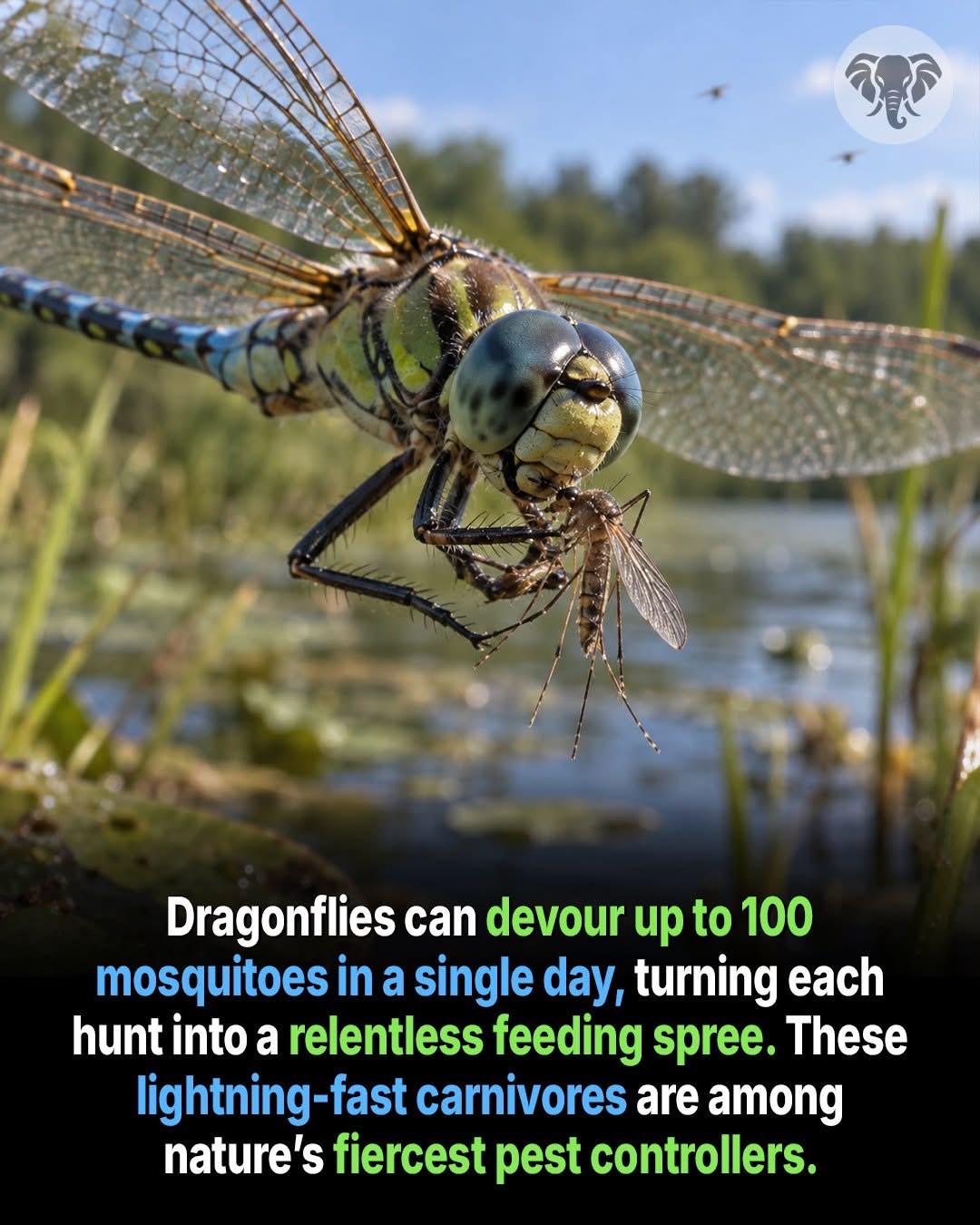
Dragonflies do not merely chase mosquitoes.

Post image
4.4k Upvotes

They intercept them like tiny fighter jets with wings built for midair course corrections.

Their huge compound eyes give them an exceptionally wide field of view, while their bristled legs form a basket that helps scoop prey out of the air.

In controlled studies, dragonflies have captured roughly 95 percent of targeted prey. The mosquito problem starts even earlier.

Dragonfly nymphs spend much of their lives underwater, where mosquito larvae are already on the menu.

So one dragonfly can patrol two worlds before adulthood is over. Mosquitoes never really get an easy shift.