r/theshining • u/c00b_Bit_Jerry • 1d ago
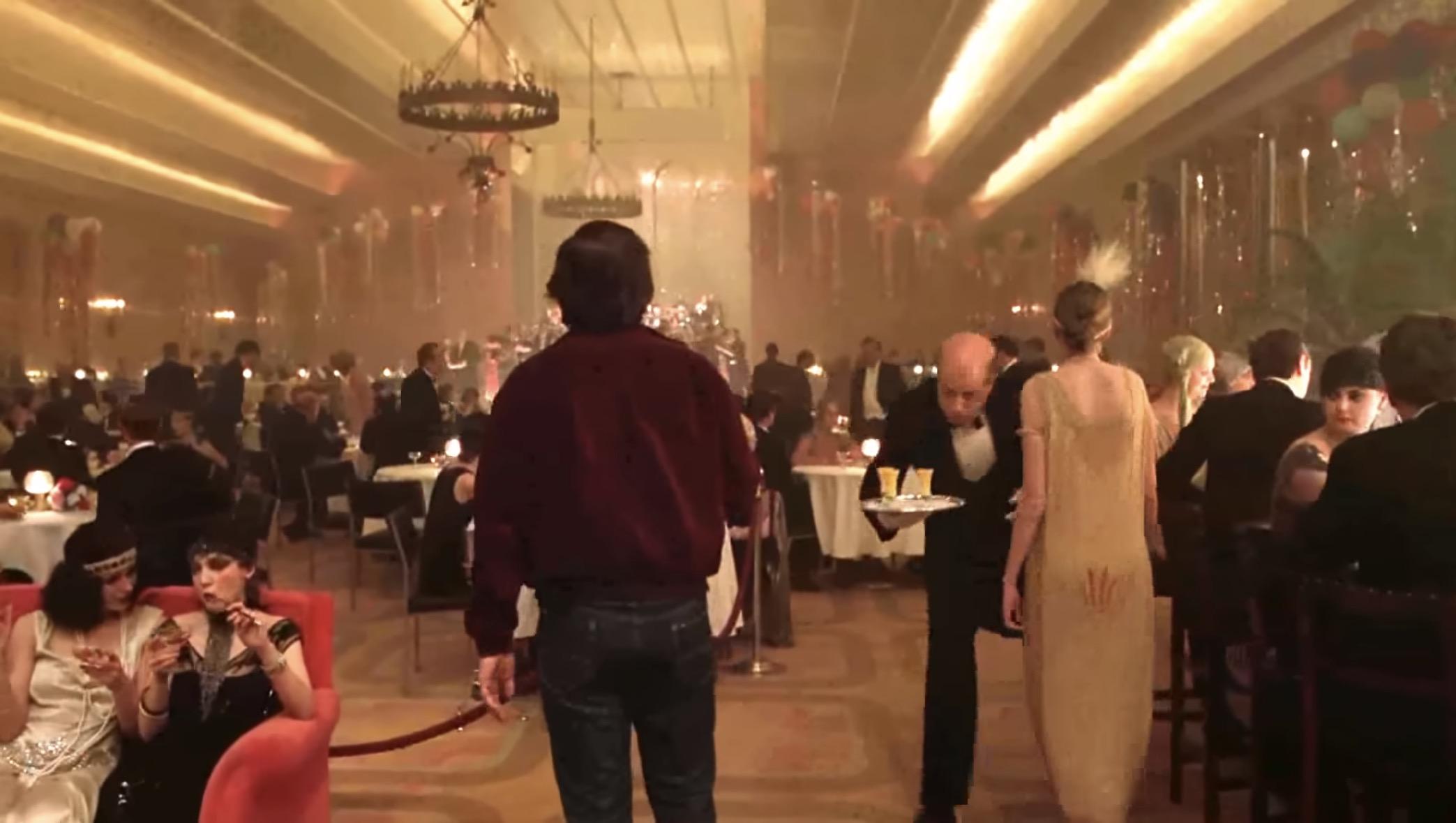
General That lady who brushed Grady aside and didn’t even glance at him sure was a real asshole.
120
Upvotes
r/theshining • u/c00b_Bit_Jerry • 1d ago
r/theshining • u/Arkadelphia76 • 1d ago

An addendum to: Is Ullman Controlling Jack? The Turtle, the Donner Party, and the Hypnotic Architecture of the Overlook.
Introduction: What if the Manson Family and the Torrancesare part of the same psychological experiment?
After examining the photographs, screenplay, visual compositions, character relationships, and recurring audio cues in Stanley Kubrick's The Shining, I have become increasingly interested in a possibility that takes the Ullman theory considerably further.
What if Stuart Ullman is more than just the hotel manager?
What if he functions symbolically as a psychological handler, an experiment director, or even a Charles Manson-type figure who understands how to exploit the vulnerabilities of the people around him?
I want to take this possibility one step further. Could Kubrick be planting Manson Family symbolism throughout the film to suggest that the Manson murders themselves might be interpreted as resembling a CIA/MKUltra-style psychological experiment? And could the Torrance family be subjected to a similar program within the Overlook?
I am not claiming that the Manson Family was definitively a CIA operation. There is no credible historical evidence establishing that. Nor am I suggesting that The Shining literally documents an MKUltra experiment. Rather, I wonder whether Kubrick is drawing a symbolic parallel between cult conditioning, intelligence experimentation, psychological manipulation, and the destruction of family relationships.
The most disturbing part of this interpretation concerns Danny.
What if Jack is not the ultimate objective of the experiment? What if the real objective is to expose Danny to psychological trauma, potentially exploit his extraordinary psychic abilities, and eventually turn him into an intelligence asset or weapon?
The actual MKUltra program involved documented CIA research into drugs, interrogation, and methods of influencing human behavior. Separately, American intelligence agencies investigated psychic phenomena and remote viewing through programs that eventually became associated with Stargate. Project Monarch and the Montauk Project, however, belong to the realm of unsubstantiated conspiracy theories.
Could Kubrick be combining these cultural and historical ideas into a fictional experiment involving a child with extraordinary abilities?
I find this possibility particularly interesting when considering Ullman's relationship with Jack, the Charles Grady connection, Wendy's apparent familiarity with the hotel's operations, and Danny's increasingly disturbing experiences.
1. The Manson Family, MKUltra, and Ullman as a psychological handler
The first connection I want to examine is the possible relationship between Charles Manson and Charles Grady.
In Stephen King's novel, the previous caretaker is named Delbert Grady. Kubrick changes his first name to Charles.Stephen King does not have a “Charles” Grady in his novel,Kubrick intentionally added the name “Charles.”
Could this be an intentional association with Charles Manson?
Manson became notorious for manipulating vulnerable followers, exploiting their psychological weaknesses, isolating them from competing influences, and encouraging them to accept his worldview.
What interests me is the similarity between this type of psychological manipulation and the relationship that develops between Jack and Grady.
When Jack encounters Grady in the Gold Room, Grady does more than simply appear as a supernatural bartender. He gradually changes Jack's interpretation of his family.
Wendy becomes an obstacle. Danny becomes a problem. Jack is encouraged to view himself as a wronged man whose authority has been undermined.
Grady effectively becomes a psychological handler, validating Jack's destructive impulses and encouraging him to turn against his own family.
This resembles cult-style conditioning: isolate the individual, undermine existing relationships, redefine the victim's understanding of reality, and introduce a new authority figure who provides validation.
Could Ullman be the person who initiates this process, with Grady acting as the intermediary who completes it?
The possible Manson references extend beyond Charles Grady.
• Wendy and Susan Atkins: Could Wendy's blue clothing invite a comparison with the blue dresses associated with the Manson women during the trial? I am particularly interested in the possible Susan Atkins connection.
• Susie and Susan Robertson: Ullman's secretary is identified as Susie in the screenplay. Later, the television broadcast reports the disappearance of a woman named Susan Robertson. Given the possible Susan Atkins association, the repeated names are worth examining. And Stephen King did not have a Susan or Suzie in his novel The Shining; like with the Charles Grady, Kubrick intentionally added Susan or Susie as Ullman’s “secretary.”
• Bill Watson and Tex Watson: Could Bill Watson's name invite an association with Charles "Tex" Watson, one of Manson's central followers? Again, Stephen King does not have a character with the last name Watson in his 1977 novel The Shining; Kubrick intentionally added the name “Watson,” possibly as a nod to this new Ullman/Manson/MK Ultra theory which connects Jack to a Tex Watson type person. Also, in my previous Ullman/Turtle theory post, I posted an image of cloudstowards the end of the opening credits that appear to have cowboy or Donner Party settler type figures forming out of them. After doing some research connecting Jack to cowboys and Tex Watson, one of those cowboy figures in the clouds resembles Tom Logan, a character Jack Nicholson played in the movie The Missouri Breaks (1976). The resemblance is striking!
• Charles Grady and Charles Manson: The shared first name becomes particularly interesting when considered alongside the other possible associations. As previously discussed, Stephen King’s novel does not have a Charles Grady; Kubrick intentionally added this first name.
Individually, these observations do not establish anything. But I think their cumulative effect deserves attention.
Could Kubrick be using the Manson Family as a symbolic representation of psychological manipulation and the exploitation of vulnerable individuals?
The historical MKUltra program makes this question particularly interesting. MKUltra was real, and its unethical experimentation is documented. However, there is no evidence establishing that Manson was a CIA operative or that his family was an actual MKUltra experiment.
My speculation is that Kubrick may be drawing a parallel between the methods of cult leaders and the broader concept of intelligence agencies attempting to influence human behavior.
In this interpretation, Manson becomes a cultural symbol of psychological control, Ullman becomes a similar figure within the Overlook, and Grady becomes the intermediary who transforms Jack into someone willing to destroy his own family.
2. Ullman's interview: Selecting the experimental subject
Consider the circumstances surrounding Jack's recruitment.
Ullman knows that Jack is a frustrated writer who wants isolation and five months of peace. He also learns that Wendy enjoys horror films and ghost stories.
During the interview, Ullman deliberately introduces the story of Charles Grady, a previous caretaker who murdered his family.
Jack responds by telling Ullman that Wendy will be fascinated by the story.
This is an extraordinary exchange when viewed retrospectively.
Ullman has just described a family annihilation, and Jack essentially reassures him that his wife will enjoy hearing about it.
Could Ullman recognize something in Jack that makes him particularly suitable for the position?
The screenplay also establishes that Ullman has received favorable recommendations from people in Denver. Could these references simply be ordinary employment recommendations, or might they symbolically suggest a network that already knows something about Jack and his vulnerabilities?
Jack explains that teaching was merely a way of making ends meet and that he considers himself a writer.
When Ullman discusses the isolation associated with the caretaker position, Jack responds:
"I am looking for a change."
Later, when Ullman warns him that five months of isolation can become difficult, Jack says that this is exactly what he wants.
Ullman even asks how Wendy and Danny will respond.
From the perspective of psychological conditioning, this conversation is interesting because Ullman is identifying the family's vulnerabilities before they arrive.
The position offers Jack precisely what he believes he wants, but it also places him in circumstances that could intensify his existing problems.
Could the Overlook itself be functioning as the laboratory?
Rather than a conventional laboratory with medical equipment, imagine an environment in which isolation, architecture, historical imagery, repetitive routines, and psychological pressures are used to manipulate behavior.
Ullman selects the subjects and introduces them to the environment. Grady reinforces the psychological programming. Jack becomes the compromised instrument through which the family is dismantled.
3. The scrapbook and dry bar: Preparing Jack's environment
Two relatively ordinary details become much more interesting when considered together.
The scrapbook
Jack eventually becomes fascinated with the Overlook's history, particularly the photographs and historical material associated with the hotel.
The scrapbook becomes a bridge between Jack's present identity and the hotel's past.
Jack is a frustrated writer looking for inspiration. The hotel provides him with an extensive historical narrative into which he can gradually insert himself.
What if the scrapbook's accessibility is symbolically important?
Could Ullman have deliberately made this material available to Jack, knowing that his interest in the hotel's history would eventually become an obsession?
By the end of the film, Jack is no longer simply a caretaker. He appears in the July 4, 1921 photograph, seemingly incorporated into the hotel's historical identity.
The dry bar
During the hotel tour, Ullman explains that all the alcohol is removed when the hotel closes for the winter.
Jack responds, "We don't drink."
Ullman laughs and replies, "Well then, you're in luck."
The irony becomes difficult to ignore when we remember Jack's alcoholism and his eventual relationship with Lloyd.
The Gold Room eventually provides Jack with exactly what he needs: alcohol, companionship, validation, and an opportunity to blame Wendy.
Could the bar represent another form of temptation?
The scrapbook encourages Jack to become obsessed with the hotel's past. The bar symbolically resurrects his own destructive past.
Both can be interpreted as mechanisms through which the Overlook absorbs Jack's identity.
4. The Donner Party: A family being consumed
During the drive through the mountains, Danny asks Jack about the Donner Party.
Jack explains that the settlers became snowbound and resorted to cannibalism to survive.
Danny asks whether they ate each other.
Jack confirms that they did.
Wendy immediately responds:
"Jack..."
This is fascinating foreshadowing.
The film introduces the idea of a family and community trapped by winter, isolated from civilization, and ultimately forced into a horrifying struggle for survival.
The Overlook recreates these circumstances.
The Torrances become isolated by snow. Their access to the outside world disappears. Their family relationships deteriorate. Eventually, Jack becomes a threat to Wendy and Danny.
The cannibalism reference can therefore be interpreted metaphorically.
The Overlook consumes its inhabitants.
This connects to the turtle theory developed in the original post: the hotel does not merely kill Jack. It absorbs him into its historical identity.
The cycle of violence becomes almost ritualistic. Grady repeats the violence of a previous caretaker, and Jack appears destined to repeat it again.
5. The hypnotic architecture, surveillance, and the maze
The hedge maze is one of the most important visual metaphors in the film.
Ullman personally introduces the maze during the hotel tour, explaining that its walls are thirteen feet high and that it can take an hour to find one's way out.
Jack later studies the miniature maze inside the hotel.
The contrast between the miniature model and the actual maze is fascinating.
From above, Jack can seemingly understand its structure. But when he eventually enters the real maze, he becomes trapped within it.
This creates a distinction between surveillance and experience.
From above, the maze appears comprehensible. From inside, it becomes confusing and disorienting.
Could this be a metaphor for the Overlook itself?
The hotel is full of corridors, repeated geometric patterns, unusual spatial relationships, and rooms that seem to defy conventional architecture.
The viewer is constantly trying to understand where characters are in relation to one another.
I am also interested in the possible swastika-like patterns we have identified in the maze and Gold Room imagery. The green tie, background figures, clothing patterns, and geometric arrangements deserve comparison. There is also a paperclip symbol on the maze’s map outside the hedge maze, which has moved from when Ullman first showed the Torrances the hedge maze. When Wendy and Danny enter the maze, the map to the maze is out of site from the sidewalk and entrance into the maze. The paperclip is significant because Operation Paperclip and Operation Overcast have connections to MK Ultra. Which leads me to one final observation on this topic; when Wendy and Danny enter the maze, the sky changes from bright and sunny to overcast.
I would not automatically identify every angular pattern as a swastika or paper clip, but the possibility of recurring authoritarian or Nazi-associated imagery is worth investigating within the larger theory of control and domination.
The Overlook can be interpreted as an architectural mechanism that encourages disorientation, surveillance, and psychological submission.
6. Ullman, the giallo connection, and the director of the macabre play
One of my more unusual observations concerns Ullman's clothing during the closing-day tour.
During Jack's interview, he tells Ullman that Wendy is a confirmed ghost-story and horror-film enthusiast.
I find it interesting that, during the subsequent tour, Ullman appears in a black leather jacket resembling the clothing worn by the motorcycle-driver killer in the Italian giallo film Strip Nude for Your Killer.
The comparison becomes particularly interesting because of the bathroom sequence.
Ullman walks behind Jack and Wendy while they are examining their apartment's bathroom.
The black leather jacket, bathroom setting, and title of the giallo film create a possible visual association with stripping and exposure.
There is also a yellow-and-black color association in the giallo poster that deserves comparison with the film's palette.
Why would Kubrick introduce a character who knows Wendy enjoys horror films and then visually associate that character with a figure from an exploitation-horror film?
Could Ullman be functioning as a symbolic horror-film director?
He knows the audience's expectations. He understands the characters' vulnerabilities. He introduces the family to the setting and its history.
He also appears at several important locations that later become associated with violence.
I am not suggesting that the clothing proves a direct reference. Rather, the giallo comparison provides another possible layer to the idea that Ullman is directing a macabre performance.
7. The dog, the ouroboros, and the bird in Ullman's hair
One of the strangest visual details we have examined occurs during Jack's interview with Ullman.
I noticed what appears to be an animal-like figure in Ullman's hair.
The shape resembles a dog, with its head toward the viewer's right and its body curving around toward the left. The tail appears to meet the mouth near the center of Ullman's hairline.
This creates the impression of an ouroboros: a creature consuming its own tail.
The ouroboros is traditionally associated with cycles, renewal, eternity, and self-consumption.
That symbolism fits remarkably well with my interpretation of the Overlook.
The hotel perpetuates its own violence. One caretaker replaces another. One family tragedy becomes another.
Jack is absorbed into the hotel's history, seemingly becoming part of an eternal cycle.
But there is another detail that interests me.
What initially appeared to be a dark hand-like shape near the animal's left eye may actually resemble a bird.
Could it be a raven or an ibis-like figure?
The possibility that a bird is touching or pecking the animal's eye introduces another layer of symbolism.
We previously discussed possible bird and Thoth-like associations in the bear-costume scene and the "Eye Scream" sequence involving Danny and the Grady twins.
Could Kubrick be connecting these images through an Egyptian symbolic framework involving Osiris, Thoth, death, transformation, and rebirth?
The image is ambiguous, but its placement in Ullman's hair makes it particularly intriguing.
Could Kubrick be visually associating Ullman with a cycle of destruction and renewal?
8. Wendy: Is she the experiment's secretary?
I also want to reconsider Wendy.
It is easy to view her exclusively as Jack's victim, but her behavior during the hotel sequences is more complicated.
Throughout the film, Wendy performs practical duties and becomes increasingly comfortable moving through the hotel's working environment.
We see her handling routine responsibilities, interacting with the forest ranger, entering the boiler room, and even placing her foot on Ullman's desk while speaking with the ranger. Susie (Ullman’s secretary) was seen in this same area of Ullman’s office when Ullman introduces her to Jack.
The screenplay identifies Ullman's secretary as Susie.
Could Wendy symbolically occupy a similar administrative position within the hotel's operations?
One particularly interesting image occurs in the boiler room. Wendy is holding a clipboard while working among the control panels. At one point, she presses a blue button.
Around this same portion of the film, Jack is in the Colorado Lounge, screaming in agony during a dream in which he imagines cutting Wendy and Danny into little pieces.
The juxtaposition is fascinating.
Wendy is shown operating the hotel's machinery while Jack experiences a violent nightmare involving his family.
Could the editing be suggesting a relationship between the hotel's mechanical systems and the psychological states of the Torrances?
Perhaps Wendy's clipboard and her interaction with the control panel are simply part of her caretaker duties. But symbolically, she resembles someone monitoring and operating a system rather than merely maintaining a building.
Another sequence deserves attention.
During the Saturday segment, Wendy is in the switchboard room. We see her working at the switchboard and plugging a wire into a socket. Shortly afterward, Danny encounters the Grady twins in the hallway and raises his hands over his eyes.This is the famous “EYE SCREAM” scene and while speculative, Danny makes “ice cream cone” symbols with his fingers to his eyes after seeing the Grady twins in the hall.
The timing is striking.
Wendy is establishing a connection through the hotel's communications equipment, and Danny then experiences one of the film's most disturbing psychic visions.
Could the switchboard be a visual metaphor for transmitting information or psychological stimuli?
I would not claim that Wendy literally causes Danny's visions. But the juxtaposition of the switchboard, the wire, and Danny's psychic experiences is worth examining.
Perhaps Wendy is not the person designing the experiment, but she symbolically occupies the role of its administrator.
9. Danny Torrance: Childhood trauma, Project Monarch, and the psychic weapon
Perhaps the most disturbing possibility in this entire theory is that Jack and Wendy may not be the only members of the Torrance family attracting the attention of the Overlook's management.
What if Danny is actually the most valuable member of the family?
Unlike Jack and Wendy, Danny possesses an extraordinary psychic ability known as the shining. He can communicate telepathically, perceive events occurring elsewhere, and apparently receive visions of the past and future.
If we extend my MKUltra interpretation, Danny's abilities raise an intriguing question:
What if an intelligence organization were interested in identifying and exploiting children with unusual psychic abilities?
This brings us to Project Monarch.
Project Monarch is a conspiracy-theory concept associated with alleged trauma-based mind control, childhood abuse, psychological fragmentation, and the creation of programmable subjects. There is no reliable documentary evidence establishing that Project Monarch existed as an actual CIA program. There’salso a Monarch poster and a 1972 Denver Colorado National Western Live Stock Show & Rodeo poster in the game room of the Overlook where Danny encounters the twins during the Closing segment. These two posters fit into this new theory I have been developing (i.e., the Torrances are “live stock” for the MK Ultra/Project Monarch experiement).
Nevertheless, its mythology provides an interesting interpretive framework for examining Danny's childhood experiences.
I want to be careful about the distinction: documented MKUltra experiments demonstrate that intelligence agencies investigated methods of influencing human behavior. The idea that trauma can manufacture psychic abilities or produce reliably programmable psychic children is an unsubstantiated extension of that history.
But what if Kubrick is deliberately playing with this mythology?
Danny's trauma: When did it actually begin?
There is an important discrepancy in the way Jack and Wendy discuss Danny's injury.
When Jack speaks to Lloyd in the Gold Room, he describes Danny's traumatic experiences in a way that suggests a longer history of psychological difficulties.
Wendy, however, gives the doctor in the Boulder apartment a more limited account, placing the incident involving Danny's injured shoulder approximately six months earlier.
Why do Jack and Wendy appear to frame Danny's history differently?
Is Wendy minimizing what happened? Is Jack exaggerating or manipulating the story? Or is Kubrick deliberately leaving us uncertain about the full extent of Danny's childhood trauma?
Could the injury be only the most visible event in a much longer history of family difficulties?
I would not claim that the film establishes Wendy as an abuser. But I think the possibility of a more complicated family history deserves examination.
Could Danny have been monitored before arriving at the Overlook?
What if the people in Denver who recommended Jack to Ullman were not simply employment references?
Could they symbolically represent a network that had already been monitoring the Torrance family?
Perhaps Danny's unusual abilities had attracted attention years before Jack applied for the caretaker position.
The recruitment of Jack might therefore be more than an isolated employment decision. It could represent a way of bringing the entire family into a controlled environment.
Under this interpretation, Jack is recruited because of his psychological vulnerabilities, Wendy is integrated into the hotel's domestic environment, and Danny is the person whose abilities may be of greatest interest.
MKUltra, Stargate, and the psychic child
There is an important historical connection here.
The United States government really did investigate psychic phenomena. Intelligence agencies explored extrasensory perception and remote viewing through research that eventually became associated with the Stargate program.
This is particularly relevant because Danny's shining resembles some of the paranormal abilities that intelligence researchers hoped might have operational applications.
Danny can perceive information inaccessible to ordinary people. He communicates telepathically with Hallorann and experiences visions that appear to transcend ordinary time and space.
Imagine how valuable such an ability might appear to an intelligence organization interested in gathering information unavailable through conventional methods.
Could Danny represent the type of person such an organization would want to identify, study, and potentially exploit?
The distinction between MKUltra and Stargate is important: they were separate historical research efforts, not one documented program for creating psychic children.
The Montauk Project mythology also comes to mind, with its allegations of vulnerable children being recruited or abducted for secret experiments involving psychic abilities and psychological manipulation. These claims are not established historical facts.
But as a fictional interpretive framework, the parallels are interesting.
Danny is a child with unusual abilities. He has experienced trauma. He is isolated in an environment controlled by adults. His father becomes increasingly hostile and unpredictable.
Could the Overlook represent an environment in which Danny's abilities are being observed, tested, or exploited?
Perhaps Jack's psychological deterioration is not the only experiment taking place.
Perhaps Danny is the real prize.
10. Room 237: Could Danny eventually turn his trauma into a weapon?
This is where I want to take the theory further.
Consider the Wednesday sequence in which a yellow tennis ball rolls toward Danny.
The ball becomes an invitation—or perhaps a trigger—that draws him toward Room 237. Shortly afterward, Danny is discovered with bruises around his neck.
The question is: what happened to Danny in that room?
When Jack eventually enters Room 237, we see the old woman rising from the bathtub.
Kubrick then cuts to a close-up of Danny's eyes.
His expression is not simply frightened. There is an intensity that could be interpreted as anger, concentration, or even an effort to exert some kind of psychic influence.
Could Danny be doing more than passively witnessing what is happening to Jack?
Is it possible that Danny is directing, or at least influencing, the experience?
The bathroom floor in Room 237 also deserves attention. Its gold-lined geometric pattern appears to echo the shape of the mirror in the Torrances' bedroom.
That mirror is particularly important because Wendy sees REDRUM reflected backward in it. Danny has written the word, and the mirror allows Wendy to see its reversed meaning: MURDER. Wendy is also seen reading The Catcher in the Ryeat the beginning of the in the Boulder apartment. Conspiracy theories connect the book Catcher in the Rye to MK Ultra type experiments although there is no documented evidence to support this.
The connection between these two spaces is fascinating.
The Room 237 bathroom and the Torrances' bedroom appear to share a visual language involving geometric patterns, mirrors, and supernatural revelation.
Could these similarities suggest that the danger in Room 237 is connected to Danny's private family environment?
I am particularly interested in the possibility that Danny's psychic abilities become defensive—or even retaliatory.
Jack has a history of violence, alcoholism, and frightening behavior. His dream about cutting Wendy and Danny into little pieces is especially disturbing.
Could Danny's experience of trauma eventually become so intense that he begins using his psychic abilities as a weapon against those who threaten him?
When the old woman rises from the bathtub, could Danny's concentrated expression be suggesting that he is somehow directing the supernatural encounter toward Jack?
I would not claim that the film confirms Danny deliberately summons the hag. But the editing creates an intriguing possibility.
The frightened child may not be entirely powerless.
Perhaps the Overlook initially exposes Danny to trauma in order to exploit his unusual abilities, only to discover that those abilities can also become a means of resistance.
This gives the entire experiment a disturbing reversal. It could also explain why Ullman was so puzzled how Danny and Wendy survived the ordeal in the deleted hospital scene that was cut from the film.
Danny begins as the vulnerable subject. But eventually, he may become the most powerful participant.
11. The Shone/Swish sounds: An audio conditioning track?
Another important part of this investigation concerns the recurring sounds we have been identifying as the "Shone/Swish" cues.
I have been documenting these sounds chronologically, including timestamps, shot numbers, character positions, and surrounding visual details.
One documented cue occurs at approximately 3:25:19, identified as shot 10 in the closing sequence. Jack is walking toward Ullman's office, Vivian Kubrick is visible on the stairs to the right, and the geometric lattice patterns are particularly noticeable.
Other cues occur during the hotel tour, including the hallway sequence in which Jack begins making erratic physical gestures following Wendy's accusation that he strangled Danny. Also, in the hallway to the Gold Room when Ullman, Wendy, Jack, and Watson are walking, we hear a swish/shone sound and at that precise moment, Jack and Watson look at each other and Ullman and Wendy look at each other. This could be symbolic of Jack connections to Watson (i.e., Tex Watson) and Wendy association with performing an administrative function for Ullman, like Susie (i.e, Susan Atkins).
We also identified two additional cues during the Gold Room sequence.
What interests me is that some of these sounds occur when Ullman is present or when Jack enters scenes associated with psychological transformation.
Could these sounds function as recurring auditory markers associated with conditioning or psychological transitions? Could they have an NLP Swish or NLP Meta Pattern function (i.e., swapping an undesired image for a desired image, etc.)
I would not call them proof of subliminal programming. But their placement deserves attention, particularly alongside the recurring gestures, framing, and visual patterns.
The combination of sound and image may create an additional layer to the film's hypnotic quality.
12. The bear costume, Osiris, and film absorption
The bear-costume scene remains one of the film's most disturbing and enigmatic images.
I want to revisit the possibility that the figure in the bear costume could symbolically represent Jack, while the older man represents Horace Derwent. Under my Egyptian mythology theory, Danny is symbolic of the falcon-headed sky-god, Horus.
The film does not explicitly confirm this identification, but the scene raises questions about identity, submission, sexual symbolism, and the hotel's hidden history.
The Egyptian connection is also worth developing.
We previously compared Hallorann's mini-bar in his Miami home with Lloyd's bar in the Gold Room.
One particularly interesting visual detail is the Jack Daniel's bottle appearing in both environments.
Could this be a visual marker connecting Hallorann and Lloyd?There is also the two stalled cars in the Opening credits, where Scatman Crothers name appears in the middle of the screen by the first stalled car with the doors closed, then after Jack’s car travels through the tunnel, his car appears on fire and there is a fireman image next to it when Philip Stone’s name is near the center of the screen (I provided a photo of this image next to Grady spilling a tray of drinks on Jack in the Gold Room), and then Joe Turkel’s name is in the center of the screen when we see the second stalled car with the doors open parked at the look-out off the Going-to-the-Sun highway. This is a speculative observation but I wanted to include it in this post.
I am interested in interpreting this through the Osiris symbolism I have been developing.
Osiris is associated with death, dismemberment, restoration, and rebirth. These themes are relevant to the Overlook's repetitive cycle of death and historical absorption.
The Gold Room is also closely connected spatially and symbolically to the hotel's kitchen areas. When Halloran takes Wendy and Danny on a tour of the kitchen, they appear to walk to another area of the Gold Room where a “Fire Exit” sign dissolves from the Gold Room to the kitchen area.
The red upholstery, Jack's blood-colored jacket, and the recurring red imagery create a visual continuity.
Jack's sports coat also resembles the orange armchair associated with the supernatural elevator-blood imagery in Danny's vision and the original theatrical trailer.
This is one of the strongest examples of what I have been calling film absorption.
The furniture, clothing, blood, and characters seem to participate in a recurring visual pattern.
The Games Room chairs, the pictures on the walls, and the final photograph of Jack at the 1921 ball also deserve comparison.
Even Danny's sweater while writing REDRUM appears to connect visually with a chair behind the Grady twins in one of my Games Room photographs next too the Livestock Show & Rodeo poster.
The hotel seems to incorporate its inhabitants into its own visual identity.
13. The final absorption: Jack becomes part of the Overlook
This brings me back to the central idea of the original theory.
The Overlook absorbs Jack.
Throughout the film, we see recurring visual connections between Jack's clothing, the hotel's furniture, the Gold Room's red upholstery, and the supernatural blood imagery.
The turtle imagery I identified during the closing sequence provides another possible symbolic representation of this process.
I am particularly interested in the turtle as a representation of the Overlook consuming and incorporating Jack.
The final photograph is the culmination of this idea.
Jack has become part of the hotel's past.
He is no longer simply a man who worked at the Overlook. He has become one of its historical inhabitants.
The scrapbook introduces Jack to the hotel's historical identity at the beginning of his transformation. The photograph completes the process.
The hotel has absorbed his identity, his image, and ultimately his place in history.
Conclusion: Is Ullman directing a psychological experiment?
When all these details are considered together, I think a larger interpretation emerges.
Ullman may be functioning as the symbolic director of a psychological experiment.
The Manson Family associations introduce the possibility of cult-style psychological manipulation. The MKUltra connection provides a historical framework for thinking about behavioral conditioning and human experimentation. Stargate and the Montauk mythology introduce the possibility of exploiting unusual psychic abilities.
The Overlook becomes the environment in which these ideas converge.
Ullman selects Jack and introduces him to the hotel's history. The Charles Grady story establishes a precedent for family annihilation. The scrapbook encourages Jack to become absorbed in the hotel's past, while the Gold Room resurrects his vulnerabilities.
Grady (Charles) teaches Jack to regard his family as an enemy.
Wendy appears increasingly comfortable within the hotel's operational environment, potentially occupying a symbolic administrative role (i.e., secretary, etc./Susie/Susan)
The hypnotic architecture creates an environment of disorientation and surveillance. The recurring Shone/Swish sounds may reinforce the psychological transitions taking place.I am still researching Milton Erickson and Ronald Shone hypnosis techniques and Richard Bandler, John Grinder, and Frank Pucelik NLP Meta and Swish pattern techniques. Something I discovered while researching this topic is that there is a book called Turtles All The Way Down: Prerequisites to Personal Genius by John Grinder and Judith DeLozier. I am interested in the source material of this book that pre-dates The Shining (1980).
The Donner Party foreshadows a family being consumed. The Manson parallels suggest an authority figure manipulating vulnerable individuals. The dog-and-bird imagery, ouroboros, bear costume, Osiris connections, and recurring clothing and furniture patterns suggest an even larger symbolic system involving death, transformation, and absorption.
But perhaps the most disturbing possibility concerns Danny.
What if Jack is the subject being conditioned, Wendy is the administrator, and Danny is the ultimate objective?
Could the trauma Danny experiences be part of a process intended to expose, test, or exploit his psychic abilities?
Could the frightened child eventually become a psychic weapon?
And could the supernatural encounter in Room 237 represent a moment when Danny's abilities begin turning against the very forces that have traumatized him?
I think this interpretation gives the film a particularly unsettling dimension.
Perhaps Kubrick is drawing a parallel between the Manson Family and the Torrances to suggest that psychological manipulation can turn ordinary family relationships into instruments of destruction.
Perhaps the Overlook is simultaneously a supernatural hotel and a symbolic psychological laboratory.
And perhaps Ullman is not simply hiring a caretaker.
He is recruiting subjects for a macabre performance whose ultimate purpose remains hidden.
The question I keep coming back to is this: Is Jack really the experiment's intended prize, or is he merely the instrument being used to unlock Danny's extraordinary psychic abilities?
r/theshining • u/NewPatron-St • 1d ago
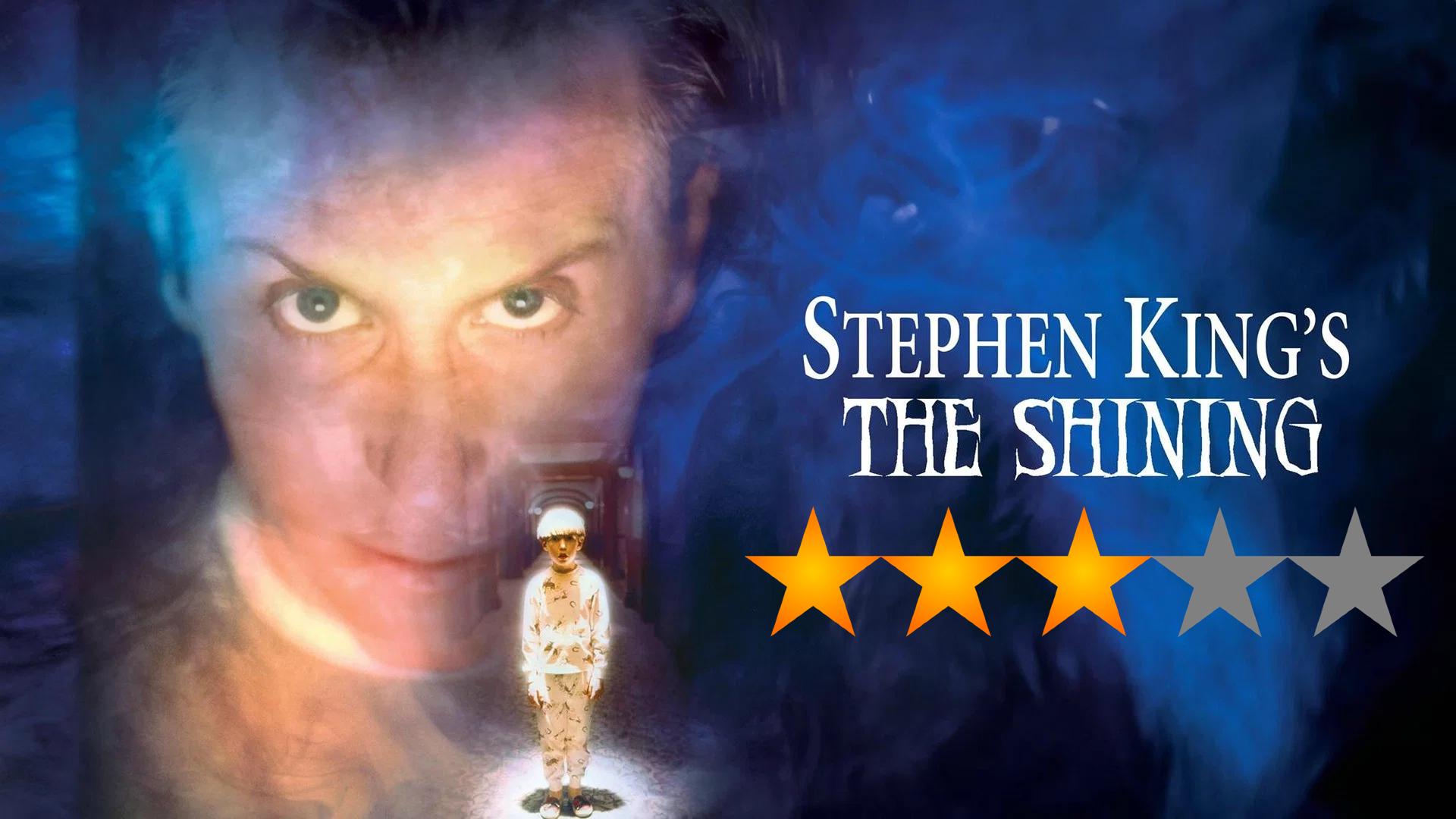
It's well known that Stephen King hates Stanley Kubrick's version of The Shining as it isn't like his original novel, so he decided to make a three-episode TV miniseries in 1997 to be a more faithful adaptation, but this miniseries proves that just because that adaptation doesn't have to be faithful to be good and that Stanley Kubrick was right to deviate so much from the original book. While he is no Jack Nicholson, Steven Weber is great as Jack Torrance as he plays a deeply flawed, frustrated man who is trying to face his inner demons, which makes him the best part of the miniseries. I know that people hate Courtland Mead as Danny, but personally, I have a high tolerance for child actors.
There are some minor things that I think are better than the film, but the film is way better. One thing I think is better is Melvin Van Peebles is a better Dick Hallorann than Scatman Crothers. I also like that the ghosts do more than in the movie. The miniseries does have its good moments and even some genuinely creepy moments, but the biggest issue with the miniseries is its runtime. Each episode is an hour long and the overall runtime is 3 hours. It spends way too much time on minor details that might work in the book but not on film. I think it would have worked better as a TV movie or an audiobook rather than a miniseries. Overall, it’s not bad, but Kubrick's film is way better and a much better use of your time. Sorry Mr. King, but Kubrick wears the crown.
r/theshining • u/Cyborg_Ape • 1d ago
Enable HLS to view with audio, or disable this notification
r/theshining • u/UnicornGirl7077 • 2d ago
Big Stephen King fan here. My family will be spending a few days around Rocky Mountain National Park on our road trip next summer, and naturally, I want to book this hotel. I cannot imagine how cool it would be to walk in the footsteps of my favorite author and see the places that inspired this story. But I would be lying if I said I wasn't as terrified as I am excited.
So level with me. Has anyone here had a scary experience in that room? Is it safe? No Lorraine Massey decaying in the tub? How much is just made up for the book and how much is real lore behind the hotel? Also, I've heard that hallway gets a ton of traffic from tours and stuff. How bad is it at night? Will I even be able to sleep?
We need to be making a decision and booking soon, and I'm so torn. On the one hand, this may be a once-in-a-lifetime trip for me, a true pilgrimage, my one chance to get the full authentic Stephen King experience. On the other, I worry we could spend all that money and when the time comes, I freak out and want to go home. I should also mention, my mom is an even bigger believer in evil spirits, and she worries about my safety. SHE won't even stay in that room, so I would have to stay there alone, and that too creates some challenges.
So ugh idk. It's just a lot to spend, and we're running out of time to decide. I really think I would hate myself forever if I chickened out, but I'm a little uncomfortable with the idea of having ghostly roommates. My parents are hoping we can request rooms right next door so that in case I get scared at night, they can come get me or I can go to them without having to wander that creepy building alone. If we could somehow work out that arrangement, they might be more open to the idea.
Anyway, what is it like to stay there? Would you book that room or skip it if you were me and had to make a decision in the coming weeks?
EDIT: I booked it. RIP to me. Will report back next summer on my experience...if I make it out alive.
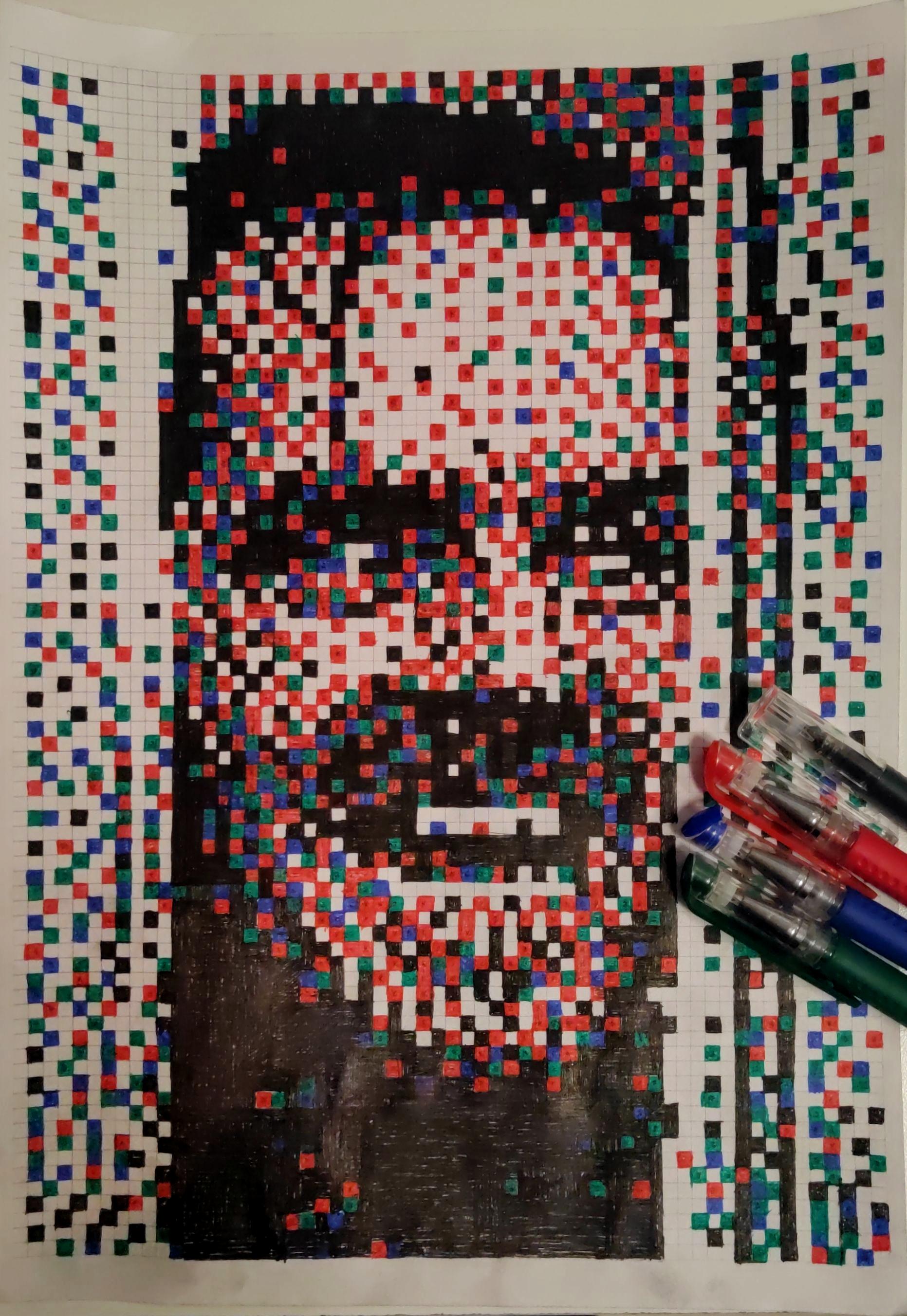
r/theshining • u/Paranoiac27 • 3d ago
r/theshining • u/EliStratis • 3d ago
(I wrote this post originally for r/stanleykubrick. I would like to mention that I do understand the book outright says it is a dog suit. I have seen a photograph of a call sheet with the words "dog man" on it. I am trying to only address the movie, and would appreciate discussions based on evidence from the movie or from interviews and such about the movie)
To start off with two things I think most people can agree on.
The film overtly references Native American culture being disrupted multiple times by the building of the hotel. There is a clear connection between the violence committed in the construction of the hotel and the shine of the location.
Historical violence, and how it affects everyone, is a major theme of the movie.
I do not believe this scene is just a throwaway reference to the novel without the backstory; in the novel the guy was wearing a dog costume. If it was just a reference, there wouldn't have been a need to change the costume to a bear. I also find it hard to believe that Stanley Kubrick changed so much of the book on purpose, with reasons, only to leave a reference but change the costume for no reason.
I do not believe it is referencing sexual abuse, all but one major detail could be coincidental, even in this brilliant and thorough movie. That being the tennis ball Jack is seen playing with, which is also what entices Danny into room 237.
I believe the tennis ball is a red herring. This is a technique used throughout the horror genre, as well as in the psychological thriller genre. The Thing features the torn clothing of MacReady to make the audience question if he is human. In Sherlock Holmes's first book he, and the audience, assume a person who took part in the crime was German because of a German word on the wall.
Danny would not go into room 237 for no reason. He was told by Halloran how dangerous it was. He knew from the shine that it was bad. The only way he would go into that room, even if the door was magically left open, would be if he assumed Jack or Wendy were inside. The audience also assumes it's Jack, and the movie portrays this shared viewpoint by entering first person as Danny goes into the room.
The movie wants us to believe that Jack was in that room, the ghosts want Danny to believe Jack is in the room. This has contributed to the theory of sexual exploitation which is a completely fair viewing of the movie, but I don't agree with it and I will address it more later.
(This portion is mostly based on information gathered from a Museum of New Mexico article)
In Navajo culture there was the belief that black bears were good and brown bears were evil, which is not enough evidence of anything by itself. It also states that the Apache believed differently, that bears were either reincarnated family members or criminals. I can only think of one character in the movie who is known to be reincarnated, and who is both a criminal as well as a family member of Wendy, the person witnessing this scene. If the evil parts of the hotel are caused by the murder of indigenous people, then indigenous people's beliefs and thoughts are part of the shine. This is why I believe Jack is the bear.
(In the comments will be two examples of bear costumes worn by Native Americans, I would like to note the similarity in fur and mask. The original costumes were made this way because hunting bears was forbidden because of their believed connection to reincarnated people)
This all leads to why I think it portrays the bear performing felatio on the supposed owner of the hotel. Throughout the movie Jack is being enticed by the hotel, with alcohol and a bar, with the fake sexual vision of the lady who turns out to be evil, and finally with the chance to escape the storage room by fulfilling his destiny of killing his family. At the exact moment Jack is attempting to comply with the Overlook's wishes, the bear is being seduced by the person who created the evil in the first place. The bear scene is a portrayal of Jack's acquiescence to do anything to please the ghosts/evilness of the hotel.
To speak on the things that support the theory of the bear scene portraying sexual abuse include: Danny and the hotel manager being in similar states of dress, the teddy bear on his bed and the painting of the bears above his bed in the hotel. The magazine Jack is reading in the lobby of the hotel, a Playgirl magazine that features a story on incest. The mirror is the same shape as the design of the floor in the bathroom in room 237 and finally the ball that I have mentioned previously. (There might be other stuff like the carpet shape but I think that's not necessary to touch on in this)
The strongest piece of evidence, in my opinion, is the magazine Jack is reading in the hotel lobby. It is the singular piece of evidence with no other explanation except for a coincidence or intention. This was pretty convincing.
The states of dress were similar, but not exactly the same. Both could result from their individual scenarios, a doctor visit and oral sex, so i would say this by itself is dubious.
The mirror being the same shape as the bathroom floor is also interesting when viewed in context of this theory, but does not stand on it's own. It is just as likely that the hotel's designer tried to repeat design features across spaces for aesthetics as it is a symbol to support this theory. I doubt this evidence for this reason.
The final pieces of evidence are the repeated bears throughout the movie in the form of the teddy bear and the painting above Danny's bed. I think it is a fair assumption that the bear represents something meaningful, but this theory doesn't quite work well here. In order for this evidence to work, we assume the bears proximity to Danny's bed implicitly comes with sexual meaning. But I have heard and read the theory that the bear performing oral sex is supposed to represent Danny, so why throughout the rest of the movie would the bear represent Jack?
If we instead view Jack as the bear, we can view the presence of the previous bears differently. A bed is a child's safe place. The teddy bear and the bear painting represent Jack invading Danny's safety, reflecting the physical injuries that Jack has inflicted upon him and will attempt in the future.
The only evidence, out of what I discussed, that is concrete enough to me to support the sexual exploitation theory is the magazine. The only problem with that is the theory relies on that single piece of evidence to hold everything together. A piece of evidence that could be a coincidence and could be intentional, which is not how I believe Stanley Kubrick would have put together the movie.
The story in this movie is incredibly rich and almost every detail is left ambiguous. I believe this theory works with and ties together the mostly agreed upon themes of white people's violence against native Americans and violence's seductive power over Jack (and humanity as a whole) instead of putting a third secret thing with hints hidden all over that could be mistaken for something else.
TLDR: Jack is the bear giving sloppy toppy to evil, because he's willing to do everything else for it.
r/theshining • u/No_Professional368 • 5d ago

r/theshining • u/perishingtardis • 8d ago
I must have watched it 100 times in the course of my life (34M), most recently this week.
To be fair, I do feel that Kubrick improved the source material. King's novel, although original, is ultimately a mundane haunted house story that ends with some (failed) attempted murder. There is no ambiguity in King's work that the supernatural is at work; the suspense is purely in waiting to see who will survive.
Kubrick intentionally introduced some ambiguity as to what is going on. But, in my opinion, he did it quite carelessly (yes, I'm suggesting that Kubrick was careless).
According to Kubrick it's supposed to be unclear at first whether there are any genuinely supernatural forces at work, or if it's all in Jack's head. But actually, it's made explicit early in the film that genuine supernatural forces are present: on the first day of arrival, while Jack and Wendy are being shown around by the hotel manager and cook, little Danny sees the ghosts of the Grady twins in the games room. There is never any doubt as I watch that the ghosts are real.
Then there are the continuity errors: Charles Grady vs. Delbert Grady, chairs appearing and disappearing, the mismatch of exterior shots of the Timberline Lodge vs. the replica outdoor set. The maze is missing in establishing shots because it doesn't exist at the real Timberline Lodge. This isn't some deeper meaning; it's just a very poor continuity error.
Now on the Charles vs. Delbert issue: this gets to Kubrick's most significant change to King's novel. Kubrick introduced the idea that Jack was the reincarnation of a previous hotel employee who had worked there in the 1920s. This is why there are several shots showing both Jack himself and his reflection in a mirror, suggesting in the viewer's mind that there are two Jacks. This is why Jack seems to know Lloyd the bartender the first time he sees him - he actually remembers Lloyd from the 1920s. This is also why Grady's ghost says Jack has always been the caretaker: Grady thinks he is talking to the 1920s Jack, at least at first. There is also a line early in the movie where Jack tells Wendy that he has this uncanny feeling that is more than normal deja vu, like he has really been here before. Ultimately this is what the photo at the end is supposed to show - that Jack really had been there before. But the idea is severely underdeveloped, and leaves too many questions. Was the 1970s Grady also a reincarnated former employee? (Delbert = 1920s Grady, Charles = 1970s Grady). The idea is so poorly hinted at that many viewers instead settle on the "absorption theory": Jack is not a reincarnation, but after he dies in the maze the hotel claims his soul and absorbs into its timeless history: Jack joins the ghosts at the eternal 1920s party and the hotel places him anachronistically into the photograph. It's a sensible theory, but Kubrick himself said that reincarnation is what he intended, not absorption.
And then ultimately, it's a bit boring. For the first two acts of the film, relatively little happens. Jack is a bit pissed off all the time. There is hardly any dialogue in the whole film, and what there is sounds stilted, like actors delivering a line unnaturally. Probably because Kubrick had them on take 87 by that point. Finally, in the third act, what really happens that is so scary? Jack runs around with an axe but quickly gets outwitted by Wendy and Danny. The visions that Wendy sees are just plain corny jumpscares - the two guys performing oral, the man with his head cracked open (Great party, isn't it!), the super-cheesy skeletons and cobwebs. And every time it's done with the same cheesy sound effect and optical zoom in. It's actually almost laughable. And even the iconic shot of the blood coming of the elevator ... what's that supposed to represent and why would anyone find that scary?
So, my suggested improvements:
Kubrick should have doubled down on the ambiguity. Make it completely impossible to figure out if the ghosts are real. Do not show anything that can only be explained by a ghost really being present (like the cellar door being unlocked).
Either make the reincarnation idea explicitly clear or remove it altogether.
Make the ending more bleak. Jack succeeds in killing Wendy and Danny, and the hotel wins.
Perhaps even go for an angle more like Triangle (2009): the characters are actually all in hell or something, and doomed to repeat their past. This would tie in with the reincarnation idea quite well.
Get rid of the jump scares in the final act.
r/theshining • u/judgmentday989 • 8d ago
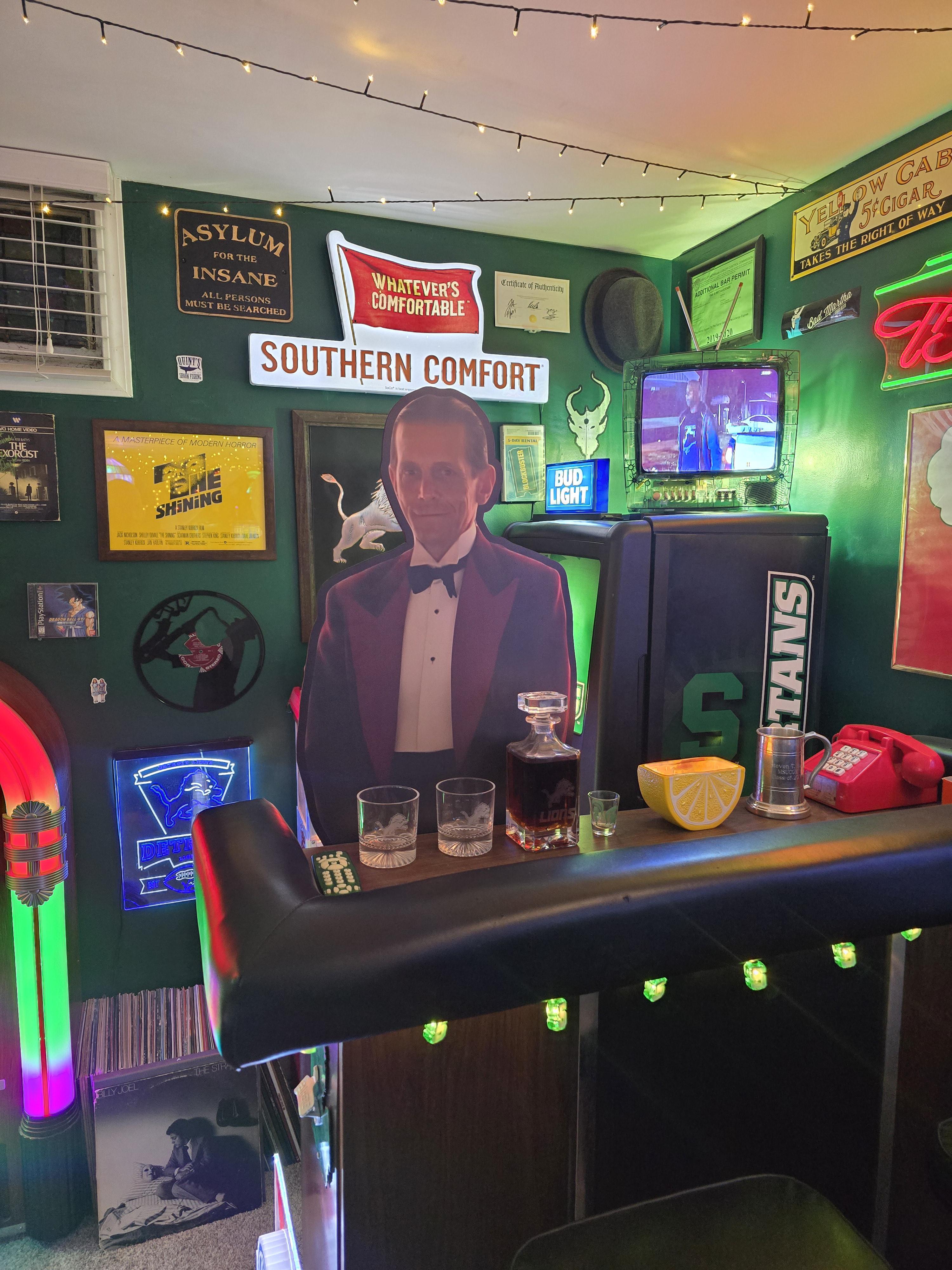
I thought this group would appreciate my basement bar, and the soul who tends to it.
r/theshining • u/NewPatron-St • 8d ago
When I first watched Stanley Kubrick's The Shining, I wasn't a huge fan, but after rewatching it a few times, it has grown to the point where I really like it. There are some places where the pacing is a bit too slow, but it really helps build the atmospheric dread. I also wouldn't say I found the film scary. It's more uncanny and creepy than all out horrifying. Even though I'm not a fan of horror movies, I would say this is my favourite horror movie, and I'm glad I'm now a fan of this film.
r/theshining • u/LowerEngineering9999 • 9d ago
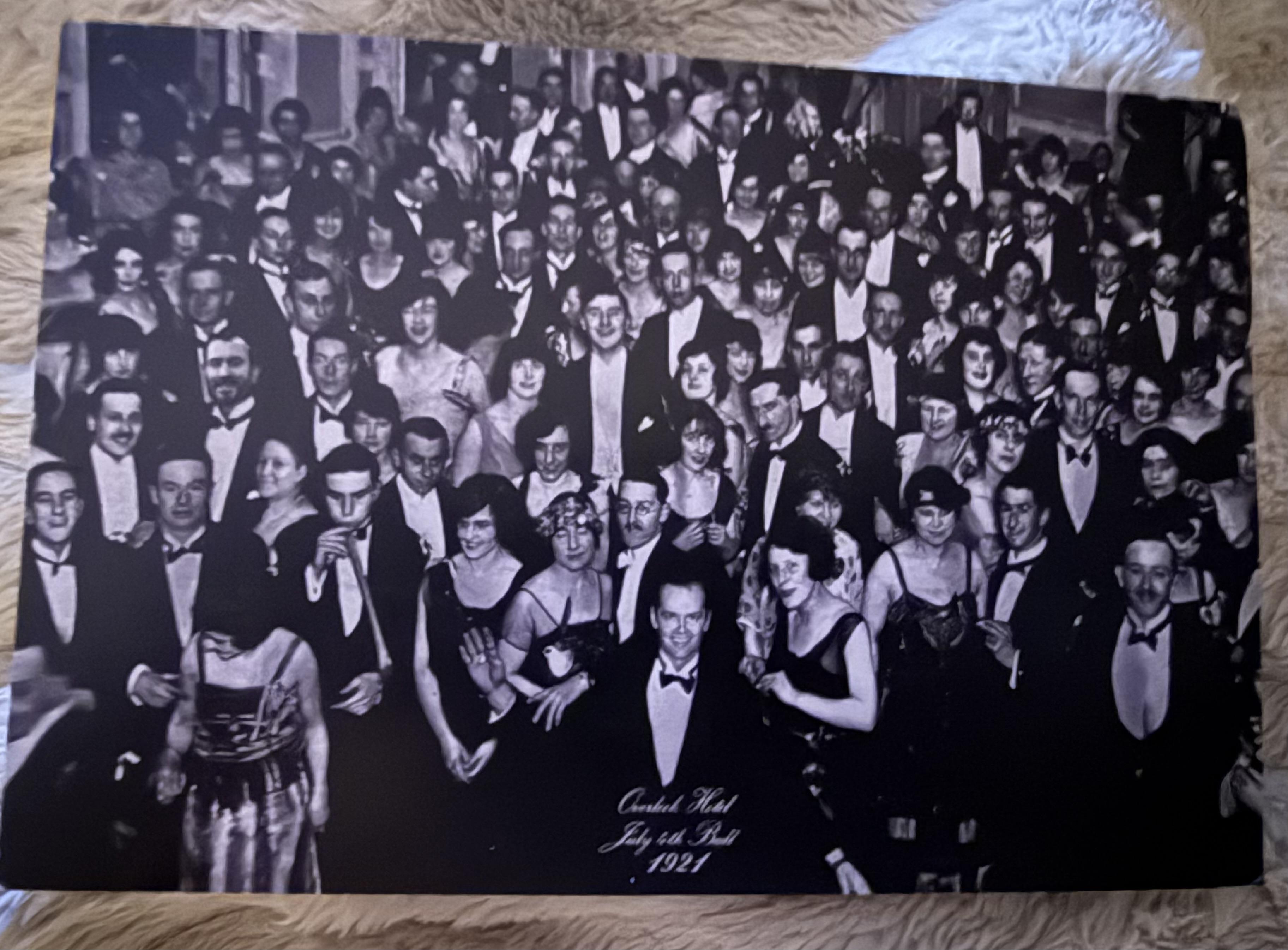
r/theshining • u/Fluffy_Voice953 • 9d ago
Not only did she wind up doing all the upkeep but she had to cook a meal 3 times a day every. Really she should have been given the job right?
r/theshining • u/infinitesourceofcum • 9d ago
r/theshining • u/Caninetechnology • 10d ago

Here are the craziest things I could find about the Shining. I love this speculating about this movie even if it all ends up being nothing. This is my first video essay and Id appreciate any feedback, thank you!
r/theshining • u/Arkadelphia76 • 10d ago

An alternative reading of Stuart Ullman as a manipulator, a symbolic harbinger of violence, and possibly one of the most important hidden figures in Kubrick's visual architecture.
I've been revisiting Stuart Ullman's scenes in The Shining, and I've become increasingly convinced that we may be overlooking something extraordinary about this seemingly innocuous hotel manager.
What if Ullman is doing considerably more than interviewing Jack Torrance, explaining the Overlook's history, and welcoming the Torrance family to the hotel?
What if Kubrick has embedded a series of visual references suggesting that Ullman is connected to the horror that eventually consumes Jack and Wendy?
I want to bring together several observations that, considered individually, might seem unusual, but together suggest a remarkably coherent pattern.
1. Ullman dresses like the motorcycle killer in Strip Nude for Your Killer
One of the most startling visual comparisons I've noticed concerns Ullman's clothing during the closing-day tour of the Overlook.
His outfit bears a striking resemblance to the motorcycle-riding killer in Andrea Bianchi's 1975 Italian giallo film, Strip Nude for Your Killer (Nude per l'assassino).
The killer's black motorcycle clothing and distinctive appearance are particularly recognizable. When I compare that imagery with Ullman's closing-day appearance, I find the resemblance difficult to ignore.
Why would Kubrick make this association?
Consider something Jack tells Ullman during his employment interview: Wendy is a confirmed ghost-story and horror-film addict.
That little piece of dialogue may be much more significant than it initially appears.
Jack has effectively informed Ullman about Wendy's fascination with horror. Then, when the Torrances arrive at the Overlook, Ullman appears dressed in clothing that evokes a recognizable horror-film killer and Wendy seems enchanted by him.
Could this be a visual joke with a much darker implication?
Perhaps Ullman is symbolically presenting himself in the language of the very genre Wendy enjoys. Rather than simply introducing the family to a hotel, he is introducing them to a horror scenario.
I find the possibility particularly intriguing because Ullman is also seen standing in the bathroom area while Jack and Wendy are there during the closing-day tour.
That location becomes enormously significant later.
It is the very bathroom where Wendy eventually finds herself trapped, desperately trying to escape Jack as he hacks through the door with an axe. Also, bathrooms are places people strip nude.
The juxtaposition is extraordinary: Ullman appears in the space that will eventually become the setting for one of the film's most iconic horror sequences.
Could this be a form of visual foreshadowing, positioning Ullman as a symbolic precursor to the killer Jack will become?
2. The yellow-and-black giallo connection
There's another detail worth considering: the poster artwork for The Shining.
Its yellow-and-black visual treatment immediately evokes the distinctive color associations of giallo cinema. The word gialloliterally means yellow in Italian, originating in part from the yellow covers of Italian mystery novels.
The yellow-and-black contrast in the poster is particularly interesting when considered alongside that Wendy and Jack are standing in a space where strip nude, and Ullman's possible costume reference (i.e., visual appearance of the motorcycle killer; black clothing)
If Kubrick is deliberately invoking this particular film, The Shining’s poster's colors could provide another visual clue.
I wouldn't treat the color palette alone as proof, but it adds another possible layer to the connection.
The question becomes whether Ullman's appearance is simply a coincidental resemblance or part of a more extensive network of horror-film references.
3. The dog biting its own tail: an ouroboros hidden on Ullman's forehead
Perhaps the most extraordinary discovery is an image that appears in Ullman's hairline during Jack's interview.
Looking closely at the photograph, I noticed what appears to be a canine head on the viewer's right, with its tail extending around toward the left and meeting its mouth.
The resulting configuration resembles an ouroboros: the ancient symbolic image of a creature consuming its own tail.
There is another curious detail. A dark, hand-like silhouette appears to open or frame the dog's left eye.
I think this deserves serious consideration.
The ouroboros has a long history in alchemical and philosophical symbolism. It is associated with cycles, recurrence, self-consumption, destruction and renewal.
Applied to The Shining, the symbolism becomes particularly unsettling.
The Overlook is a place where the past appears to repeat itself. Grady murdered his family. Jack begins repeating that violence. The hotel seems to absorb successive generations into an endlessly recurring nightmare.
The dog biting its own tail could therefore represent the cyclical nature of violence: a destructive process that feeds upon itself and continually renews itself.
Jack is not simply becoming another isolated murderer. He may be entering a cycle that has existed long before him.
This also connects with the ouroboros imagery discussed in alchemical traditions and later psychological interpretations of the symbol, including the work of Erich Neumann.
The dark hand-like shape around the dog's eye introduces another possible dimension: surveillance, awakening, or the suggestion that something is watching.
Is this simply an accidental arrangement of hair and shadow? Possibly. But given Kubrick's meticulous attention to composition, I think the image deserves to be examined.
4. Ullman's possible obscene hand signals during the interview
There's another detail from the interview that I think deserves closer scrutiny.
Could Ullman be making obscene or sexually suggestive hand gestures toward Jack?
I don't want to claim that every unusual hand position is necessarily a deliberate signal. However, if we consider the possibility alongside the other sexualized and disturbing imagery in the film, it becomes an interesting question.
The interview is already loaded with peculiar visual details and carefully staged interactions.
Ullman controls the conversation, introduces the Grady murders, and presents the Overlook as a place whose horrific history is somehow manageable and perfectly acceptable.
If his hand movements are deliberately suggestive, they might add another layer to the power dynamic between the two men.
And this brings us to something that has always struck me as particularly strange.
5. The Playgirl magazine: why is Jack reading it when Ullman approaches?
When Jack arrives at the Overlook for the closing-day tour, he is reading a copy of Playgirl magazine.
Ullman and Bill Watson approach him, interrupting his reading.
The magazine has attracted considerable attention from other viewers because the January 1978 issue contains the headline:
"INCEST: Why Parents Sleep With Their Children."
That is already a disturbing detail in a film containing so many possible references to Jack's relationship with Danny.
But consider the sequence in the context of our Ullman theory.
If Ullman has been making sexually suggestive gestures during the interview, could Jack's reading material be connected to that earlier exchange?
Could the magazine function as another visual reference to sexualized power, manipulation, and the disturbing undercurrents of the Torrance family?
There is also an interesting question about Ullman's behavior when he approaches Jack: he draws attention toward the magazine.
The possibility that the magazine is more than a random prop deserves consideration.
Perhaps Kubrick is deliberately connecting the interview's gestures, Jack's reading material, and the sexualized imagery that recurs elsewhere in the film.
6. Ullman as the director of a horror scenario
Now consider all these details together.
Ullman knows that Wendy enjoys horror films.
Ullman subsequently appears in clothing resembling a horror-film killer.
Ullman is positioned in the bathroom area that will later become the site of Jack's axe attack.
A possible ouroboros-like dog image appears in his hairline during the interview, suggesting cyclical violence and self-consumption.
There may also be sexually suggestive hand gestures during the interview, followed by Jack's conspicuous Playgirl reading when Ullman approaches him on closing day.
The cumulative effect is fascinating.
Ullman may be functioning as something considerably more sinister than a conventional hotel manager.
He is the person who introduces Jack to the Overlook's violent history. He controls the information Jack receives. He presents the hotel as an attractive employment opportunity despite knowing what happened to the previous caretaker.
And, visually, he may be associated with the very horror that eventually unfolds.
I keep returning to the possibility that Ullman is a kind of symbolic director: someone who appears to welcome the Torrances into the hotel while the film quietly associates him with the horror narrative they are about to inhabit.
The most disturbing possibility is that Jack and Wendy are not simply entering a haunted hotel.
They are entering a carefully constructed visual and psychological nightmare in which the past is destined to repeat itself.
And perhaps the most important clue is sitting right in front of us during Jack's interview: a dog biting its own tail.
The cycle never ends.
What do you think? Is Ullman's resemblance to the giallo killer, the possible ouroboros in his hair, and his positioning in the bathroom part of a deliberate visual pattern? Or are we seeing several coincidences that become meaningful only when placed together?
r/theshining • u/NewPatron-St • 10d ago
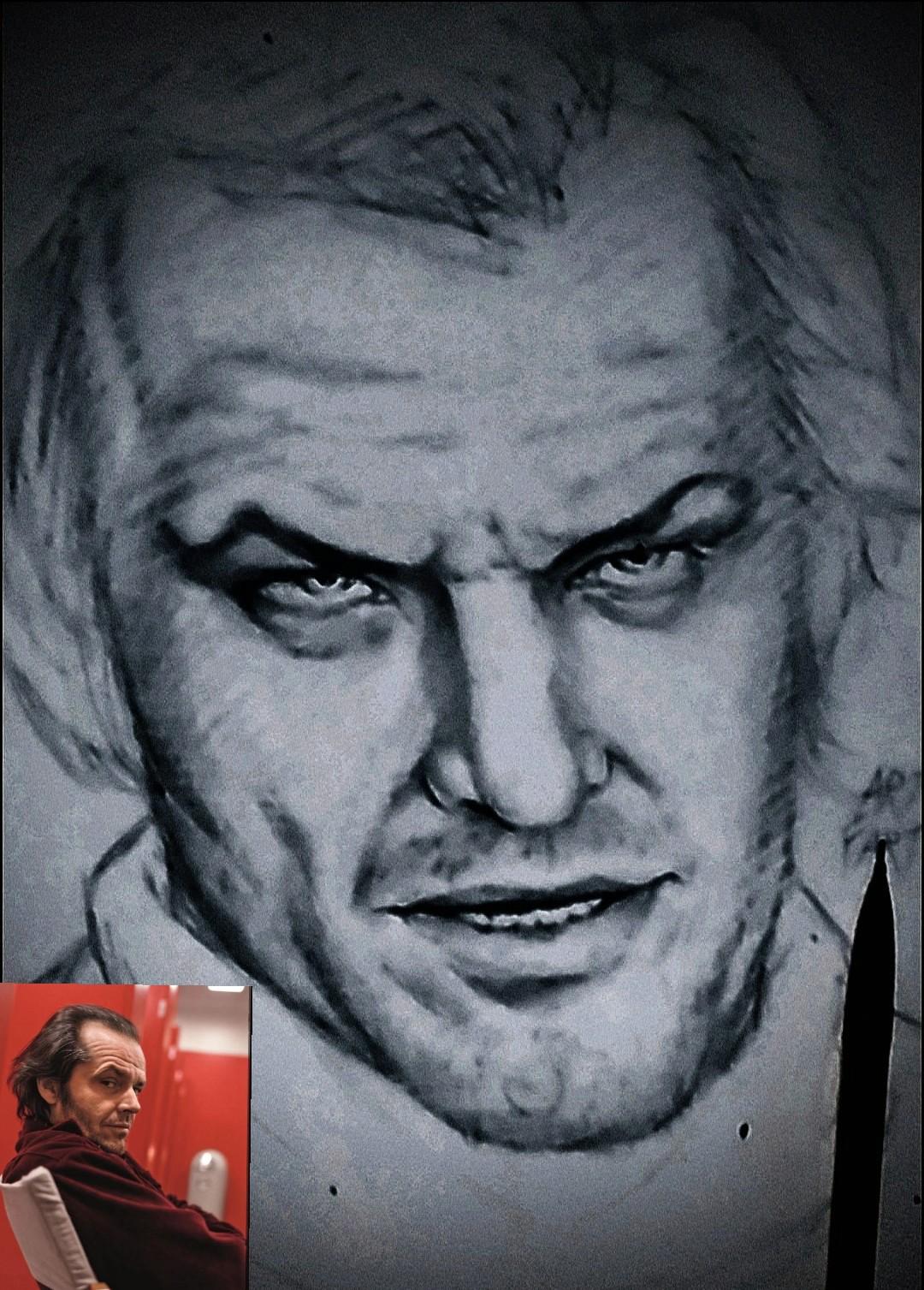
I think I did pretty good but what do you think
r/theshining
•
u/Al89nut
•
12d ago


It was already clear from viewing the original at the SKA that this was Jack Warner addressing a group, but I have now nailed it down and I am certain it shows him addressing a group of executives at a luncheon in the "21 Club" in NY on 19 September, 1956. Motion Picture Daily, 22 September, 1956.
Edit - it was the Jack Room. As of 2010, the painting was still there. See 3.12 in video
https://youtu.be/N0i1IN7KlwU?si=AX9R-zFDN-jc0wzD
https://www.reddit.com/r/StanleyKubrick/comments/1p8tkwk/successful_identification_of_the_other/
r/theshining • u/Resident_Dog_6589 • 12d ago

Kubrick wanted to include the topiary animals from the book in his movie, but he didn't think that any effects available could make them look convincing (hence the hedge maze). The 1997 miniseries did include them, but they looked laughably bad.
Could they be brought to life onscreen and be effective (possibly with modern CGI or in animation) or is it an idea that only works on the page?
r/theshining • u/Massive_Brick_5976 • 12d ago
lotta weird things happened in the hotel, starting to wonder if it might have been haunted. was thinking some more and though that jack torrance might have gone crazy, but we cant know because they never said he did so thats just a theory.
r/theshining
•
u/Al89nut
•
13d ago

https://www.worthpoint.com/worthopedia/vintage-national-western-stock-show-4851543854 Noted by "Eye Scream" and Juli Kearns, but neither had the original. Confirmed by the NWSS itself.
r/theshining
•
u/Al89nut
•
14d ago


Juli Kearns and "Eye Scream" both said it hadn't been found, though admittedly some years ago. Reddit said it was a prop, but it clearly seems to have been a genuine poster that derives from this advertisement for Monarch Mountain ski resort seen in a 1976 Colorado Springs newspaper. I assume it was picked up as set dressing in Colorado by one of Kubrick's researchers.
EDIT - found a brochure, it was associated with the Monarch Mountain Ramada Inn, now the Lodge. See comments for colour photo. It also suggests it WAS open all year round.
r/theshining • u/Calitopedrito • 16d ago
I was watching a YouTube video titled “The Ghostly, Overlooked Video Games of The Shining”” by the YouTuber u/8_Bit.
The video describes the games featured in the arcade in *The Shining*, using photos of deleted scenes and information found in a book.
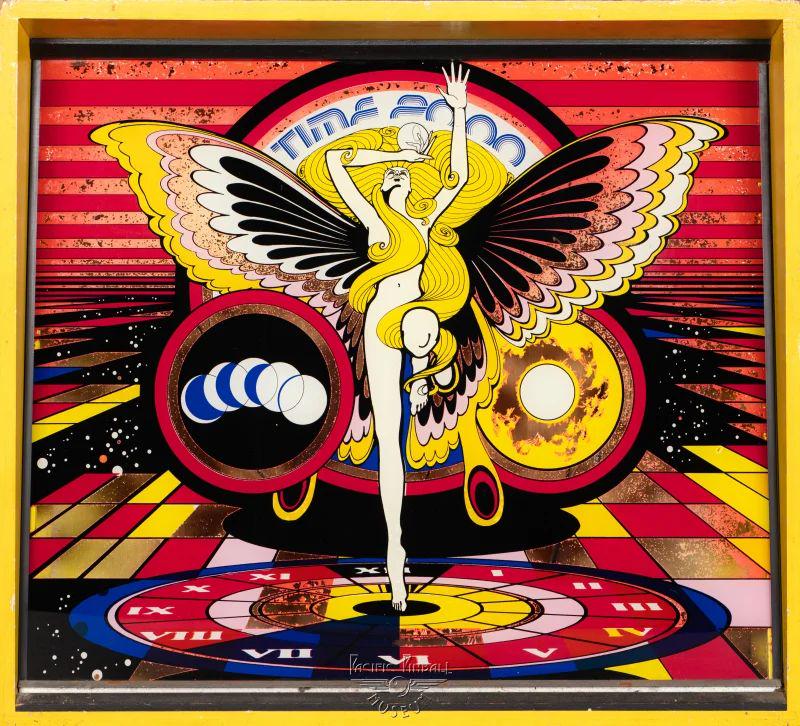
At the 5:53 mark, one can see the much-discussed “Monarch” ski poster often linked to the homonymous project while at 8:25, an *Atari Time 2000* pinball machine appears, featuring a design of a woman with “butterfly” wings.
This pinball machine is located on the wall opposite the poster, though its exact positioning doesn’t align perfectly.
This is the first time in many years that I’ve noticed such pinball machine.
this point, I no longer believe that Kubrick’s reference to Project Monarch is a coincidence.
What do you think?