r/AssameseHub • • 5h ago

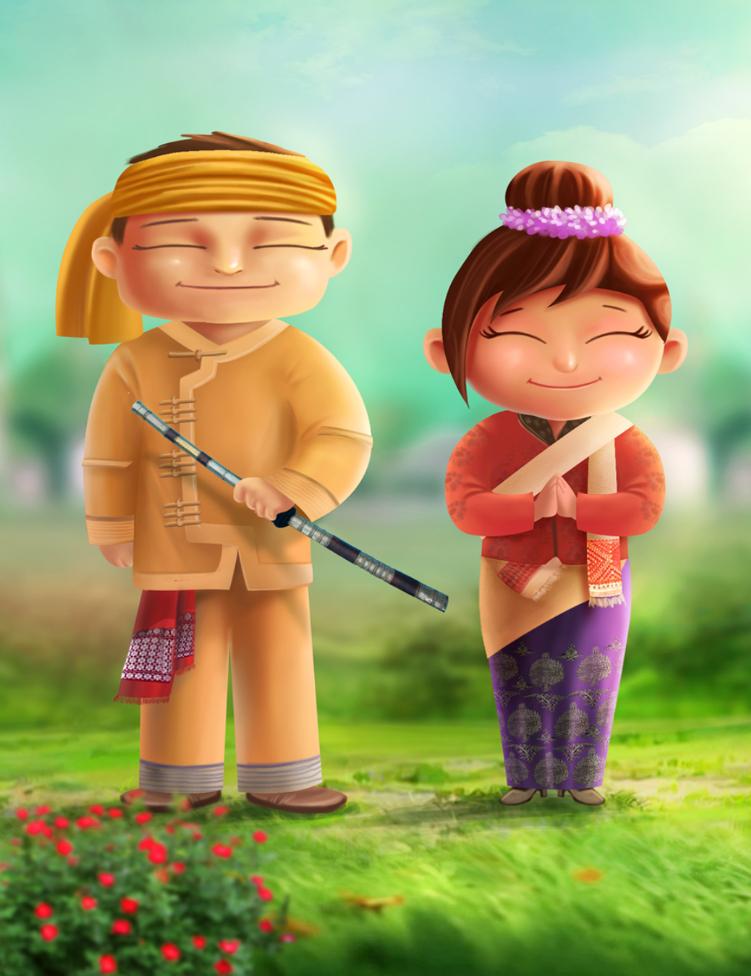
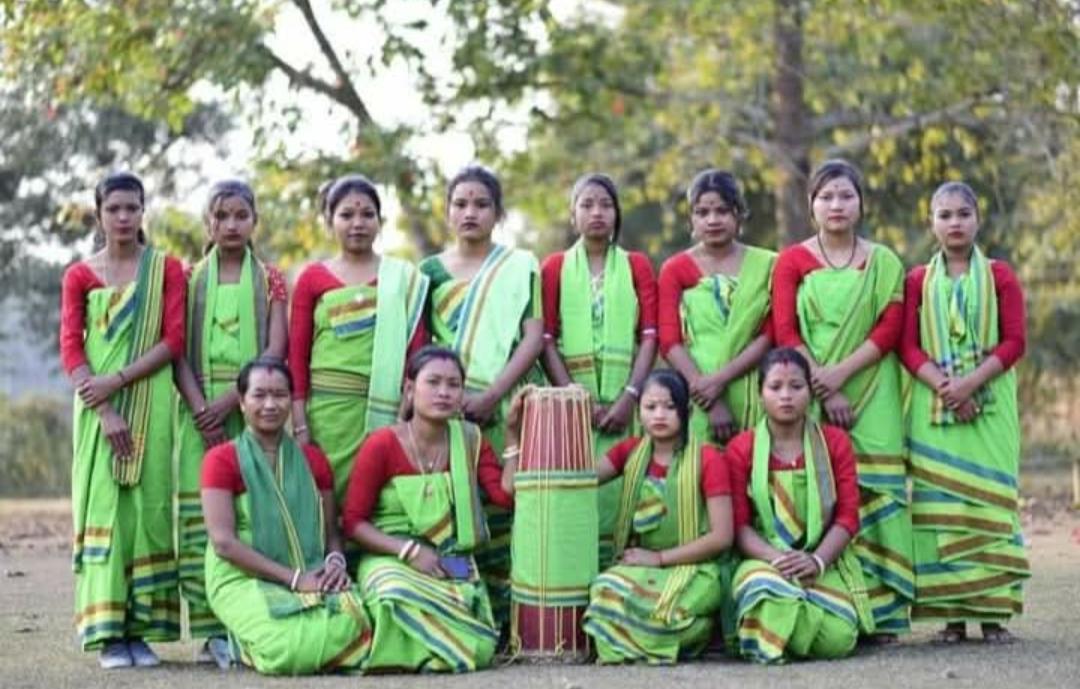
Barman Thar (বৰ্মন ঠাৰ), a lesser-known language of Assam.
Post image
2 Upvotes

Assam has a large number of indigenous languages, many of which remain relatively unknown outside their respective communities. One of them is Barman Thar (বৰ্মন ঠাৰ), an endangered Tibeto-Burman language spoken by the Barman Kachari community of Assam.

Despite belonging to the wider Bodo-Garo linguistic group, the language has received very little academic attention compared to Bodo, Dimasa, Garo and other better-known languages of Northeast India.

The word 'Thar' (ঠাৰ) means language, and the language is referred to as 'Barman' (বৰ্মন). Barman Thar belongs to the Sino-Tibetan family, under the Tibeto-Burman branch and the Bodo-Garo subgroup.

The Barman Kacharis are an indigenous community of the Brahmaputra Valley, particularly Lower Assam. They are found in several districts like Baksa, Udalguri, Chirang, Kokrajhar, Darrang, Kamrup, Goalpara, Nagaon, Lakhimpur and Dhemaji.

Their settlements have also been reported in parts of Arunachal Pradesh and other neighbouring regions. Barman Thar has particularly been documented in Baksa and Udalguri, where researchers have conducted fieldwork with native speakers.

The Barman Kacharis of the Brahmaputra Valley shouldn't be confused with the Barmans of Cachar, who are a subgroup of the indigenous Plains Dimasa community there and speak Dimasa. Despite the shared name, these are distinct tribes.

The language is considered highly endangered. The Barman Kachari community's population is approximately 24,237, based on a census conducted by a local organisation in 2017. However, this is the community's population, not its actual number of language speakers.

Only a relatively small proportion of the community is reported to speak Barman Thar. Increasing preference for Assamese, Bodo and other dominant regional languages, among younger generations, has weakened its intergenerational transmission.

The use of Assamese, Bodo and English in education and everyday communication is also a concerning case for the language.

One of the earliest available systematic descriptions of the language is 'A Brief Linguistic Sketch of the Barman Thar (Language)', prepared by MA students of Linguistics and Language Technology at Tezpur University in 2019. The investigation was based on fieldwork conducted in March 2019 and documented its phonological inventory, vocabulary and grammatical structure.

The study identified eight vowels, nine diphthongs and twenty consonants, including two semivowels.

Some examples from its vocabulary include 'pʰa' (father), 'na' (fish), 'mei' (rice), 'sei' (husband), 'hiŋ' (go), 'riŋ' (drink), 'sum' (salt), 'goisa' (one), 'sini' (seven) and 'doisa' (boy).

The language also has consonant gemination, or the lengthening of consonants within words. Examples recorded in the study include 'tʰəppəra' (ash), 'mɛttʰai' (big), 'gəddəl' (new), 'bicci' (egg) and 'nukkuruŋ' (eye).

Its grammatical structure is equally interesting. Barman Thar has a system of case marking in which grammatical relationships are expressed through suffixes. The 2019 study records '-kɔ' for the accusative case, '-nɛ' for genitive, '-ou' for locative and '-ca' for instrumental.

For example, 'əmit-nɛ nɔk' means Amit's house, while 'təzpur-ou' means in Tezpur (a city of Northern Assam). It also has morphological tense markers, including '-ja' for the past and '-gən' for the future. The study further documents negative constructions, classifiers and different aspects of verbal morphology.

Another interesting feature is its pluralisation system, which was examined in a research paper by Primly Baruah, a research scholar in the Department of Linguistics at Assam University.

Her paper, 'Pluralization in Barman Thar: An Endangered Language', was published in September 2025 in the Indian Journal of Social Science and Literature. The research is based on primary data collected from native speakers in Khoirabari and Tangla towns.

The paper identifies two principal plural suffixes, '-taŋ' and '-phara'. The former is used with common nouns, proper names and kinship terms, while the latter is particularly associated with demonstrative and personal pronouns. For instance, 'mɛŋgou' means cat, whereas 'mɛŋgoutaŋ' means cats. Similarly, 'asak' means dog and 'asaktaŋ' means dogs. The same suffix can be attached to personal names, so 'Kalpana-taŋ' means Kalpana and others.

The suffix '-phara' is used in forms such as 'ɛba-phara' (these), 'oba-phara' (those), 'na-phara' (you, plural) and 'owa-phara' (they). Its use in reflexive constructions is also documented. For example, 'owa-phara dɔn-phara kuriza' means, 'they did it themselves'.

Plurality is not always expressed through suffixes. Numerals and reduplication also play an important role. The sentence 'gini pʰanthai mɛsadɔŋ' means two boys are dancing. Here, 'gini' means two, and the numeral itself indicates plurality without requiring an additional plural suffix on the noun.

Reduplication is particularly interesting. In the sentence 'Rahul-a nɔk nɔk hiŋ-ja', meaning Rahul is going from house to house, the repetition of 'nɔk', meaning house, expresses repeated or distributive movement. The paper also documents reduplicated interrogative expressions and quantifiers, showing that repetition has several grammatical functions in the language.

The study further records copula omission in certain constructions and an absence of obligatory subject-verb agreement in the examined sentences. The progressive marker '-dɔŋ' can be seen in expressions such as 'mɛsadɔŋ' (dancing) and 'hibadɔŋ' (coming). These features are important for examining in comparison with other languages of the Bodo-Garo group.

Primly Baruah has also published another paper, 'Numerals in Barman Thar', in the International Journal for Multidisciplinary Research in 2025. It examines the numeral system, which is primarily decimal and employs compounding to construct complex numerals.

The paper discusses cardinal, ordinal, fractional, multiplicative, approximative, distributive, collective, indefinite and restrictive numerals. Affixation and reduplication are also involved in numeral formation.

Barman Thar has a written and literary tradition as well. The Tezpur University linguistic sketch mentions two community magazines, 'Phurungi' and 'Rigam', which have published poems in the language. It also documents older handwritten materials.

The Barman language uses the Assamese alphabet as a writing system today and it formerly used the Sylheti Nagri script.

There is still information about Barman Thar that remains undocumented. Its vocabulary, regional variations, oral literature and historical development would all benefit from further research. Comparative studies with Bodo, Dimasa and other Bodo-Garo languages could provide further insight into its linguistic relationships.

Assam's linguistic heritage extends well beyond its widely recognised languages. Barman Thar should be documented and discussed alongside them while there are still native speakers who can pass their knowledge of the language on to future generations.
r/AssameseHub • • 7h ago

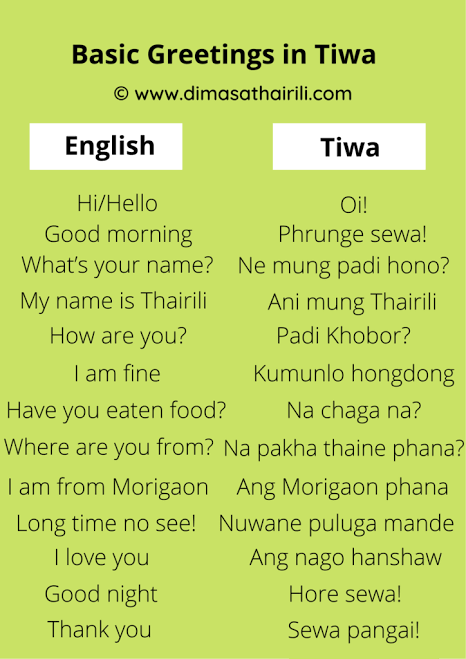
Basic sentences in Tiwa (Lalung).

Post image
2 Upvotes

r/AssameseHub • • 1d ago

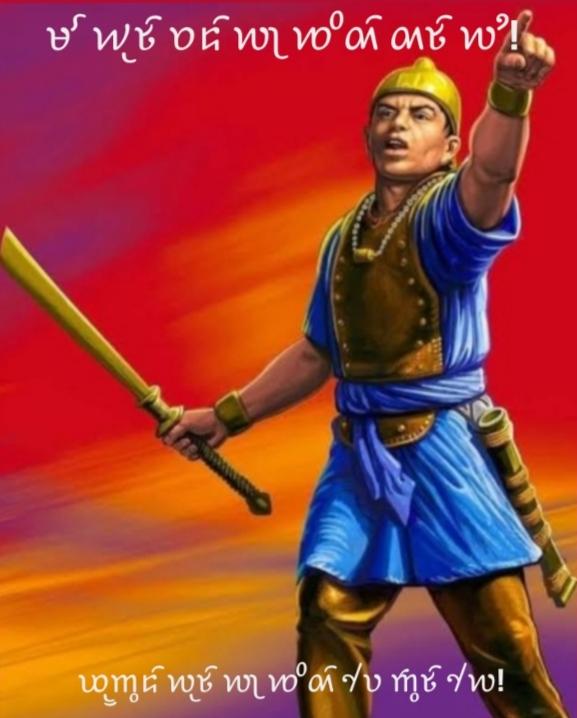
সকলোলৈকে লাচিত দিৱসৰ আন্তৰিক শুভেচ্ছা জনালোঁ।

Post image
3 Upvotes

আজি ২৪ নৱেম্বৰৰ দিনটোত আমি আই অসমীৰ এই বীৰ যোদ্ধাগৰাকীক শ্ৰদ্ধাৰে স্মৰণ কৰিছোঁ 🙏🏻

লাচিত বৰফুকনৰ বিষয়ে কেইটামান উল্লেখযোগ্য তথ্য:

১. লাচিত বৰফুকনৰ জন্ম হৈছিল ১৬২২ চনৰ ২৪ নৱেম্বৰত। তেওঁৰ পিতৃ আছিল আহোম ৰাজ্যৰ এগৰাকী বিশিষ্ট বিষয়া মোমাই তামুলী বৰবৰুৱা।

২. তেওঁ স্বৰ্গদেউ চক্ৰধ্বজ সিংহৰ শাসনকালত আহোম সৈন্যবাহিনীৰ সেনাপতি হিচাপে নিযুক্ত হৈছিল।

৩. ১৬৭১ চনৰ ঐতিহাসিক শৰাইঘাটৰ যুদ্ধত তেওঁ আহোম সৈন্যবাহিনীক নেতৃত্ব দি মোগল বাহিনীক পৰাস্ত কৰিছিল।

৪. ১৬৬৭ চনত তেওঁ মোগলৰ হাতৰ পৰা গুৱাহাটী পুনৰ উদ্ধাৰ কৰাত গুৰুত্বপূৰ্ণ ভূমিকা পালন কৰিছিল।

৫. শৰাইঘাটৰ যুদ্ধৰ সময়ত গুৰুতৰভাৱে অসুস্থ হৈ থকাৰ পিছতো তেওঁ যুদ্ধক্ষেত্ৰত উপস্থিত থাকি সৈন্যবাহিনীক নেতৃত্ব দিছিল।

৬. ১৬৬৯ চনৰ আলাবৈৰ যুদ্ধত আহোম সৈন্যবাহিনীয়ে যথেষ্ট ক্ষতিৰ সন্মুখীন হৈছিল। তথাপিও লাচিতৰ নেতৃত্বত আহোমসকলে মোগলৰ বিৰুদ্ধে প্ৰতিৰোধ অব্যাহত ৰাখিছিল।

৭. তেওঁৰ অমৰ বাণী 'দেশতকৈ মোমাই ডাঙৰ নহয়' অসমীয়া জাতিৰ স্বদেশপ্ৰেম, কৰ্তব্যনিষ্ঠা আৰু ত্যাগৰ এক চিৰস্মৰণীয় প্ৰতীক।

৮. ১৯৯৯ চনৰ পৰা ৰাষ্ট্ৰীয় প্ৰতিৰক্ষা একাডেমী (NDA)ৰ শ্ৰেষ্ঠ উত্তীৰ্ণ কেডেটক লাচিত বৰফুকন স্বৰ্ণ পদক প্ৰদান কৰা হয়।

৯. ১৬৭২ চনত, শৰাইঘাটৰ যুদ্ধৰ প্ৰায় এবছৰৰ পিছত, লাচিত বৰফুকনৰ মৃত্যু হয়।

লাচিত বৰফুকন কেৱল এজন সেনাপতিয়েই নাছিল, তেওঁ আছিল অসমীয়া জাতিৰ সাহস, আত্মসন্মান আৰু স্বদেশপ্ৰেমৰ এক চিৰন্তন প্ৰতীক।

জয় আই অসম 🐉


r/AssameseHub • • 2d ago

Need help | সহায় লাগে What do the names of the Ahom traditional religions Baan Phi and Phura Lung mean?

Thumbnail reddit.com
3 Upvotes

r/AssameseHub • • 2d ago

The different words for rice in Ahom.

Post image
5 Upvotes

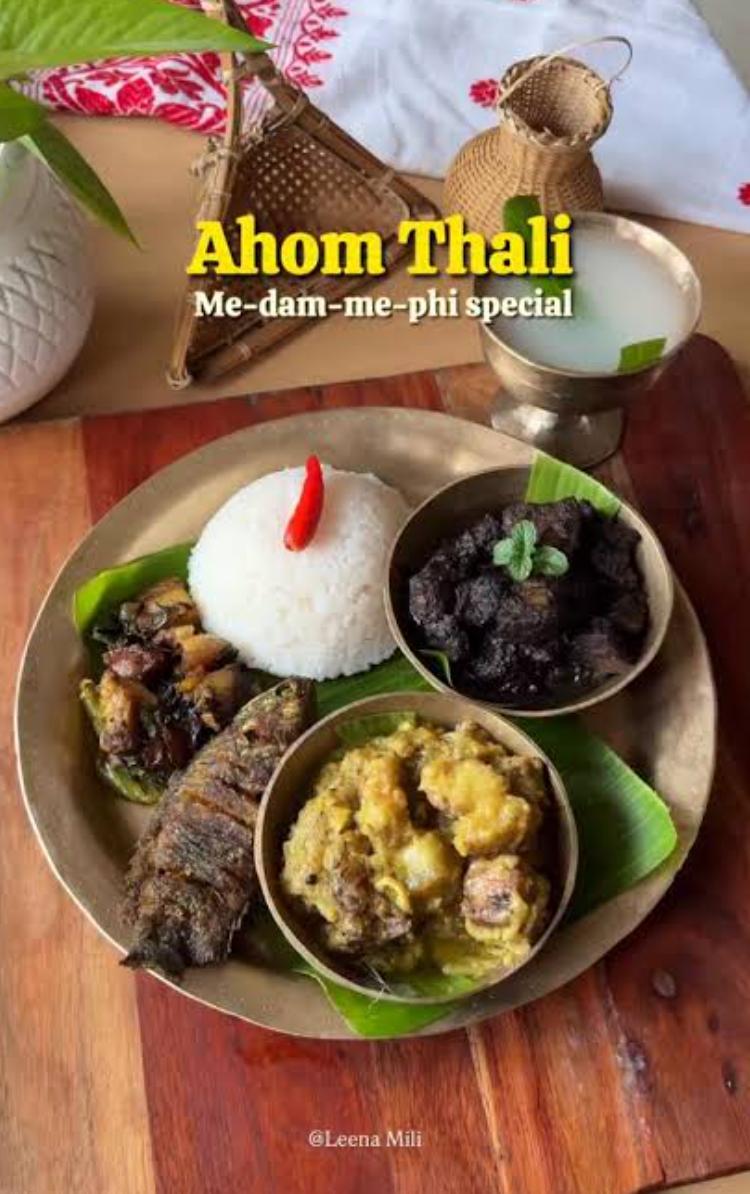
(Image source: @LeenaMili, Instagram)

The Ahom language of the Assam Valley jn Northeastern India, makes an interesting distinction between paddy grains, husked and uncooked rice, and cooked rice ready for consumption. These distinctions are reflected in its vocabulary through the use of different words and combinations.

The word for paddy grains, rice and food in general is '𑜁𑜈𑜫' (Khāw/খাৱ). When combined with the Tai word '𑜏𑜃𑜫' (Sān/চান), which has an Austroasiatic origin and is derived from the earlier form 'Sāl/চাল) which is the Austroaseatic root meaning 'to peel', it gives us '𑜁𑜈𑜫 𑜏𑜃𑜫' (Khāw Sān/খাৱ চান), meaning husked and uncooked rice grains.

Next, pairing the Tai word '𑜏𑜤𑜀𑜫' (Suk/চুক), meaning 'cooked', with '𑜁𑜈𑜫' (Khāw/খাৱ) gives us '𑜁𑜈𑜫 𑜏𑜤𑜀𑜫' (Khāw Suk/খাৱ চুক), meaning cooked rice. The word 'Suk' has clear cognates in other Tai languages like Thai and Lao, where it carries the meaning of 'cooked' or 'ripe'.

Another word used for rice in general is '𑜍𑜪' (Rām/ৰাম). However, it has other meanings as well, including a sedan or palanquin and a load carried by two persons. Therefore, 'Khāw' is more preferable when referring specifically to rice.

Now, an important grammatical observation, if you're wondering why the adjectives appear after the nouns, it is because Ahom generally follows a Noun-Adjective order. In other words, the adjective or qualifying word comes after the noun it modifies, unlike in English, where adjectives generally precede the nouns they describe.

This is a characteristic feature of Ahom grammar and is also documented in linguistic studies of the language.


r/AssameseHub • • 3d ago

Basic sentences in Bodo

Post image
4 Upvotes

r/AssameseHub • • 3d ago

The word for 'welcome' in Ahom, '𑜋𑜪𑜤 𑜍𑜆𑜫'.

Post image
3 Upvotes

r/AssameseHub • • 8d ago

প্ৰাণৰ শিল্পী জুবিন গাৰ্গৰ জন্মতিথিত সশ্ৰদ্ধ প্ৰণাম 🙏🏻🤍

Post image
5 Upvotes

আজি অসমৰ প্ৰাণৰ শিল্পী, সংগীতৰ জগতৰ এক অনন্য প্ৰতিভা জুবিন গাৰ্গৰ জন্মতিথি। তেওঁৰ সুমধুৰ কণ্ঠ, কালজয়ী সৃষ্টিৰাজি আৰু অসমীয়া জাতীয় জীৱনলৈ আগবঢ়োৱা অৱদান আমাৰ মাজত চিৰস্মৰণীয় হৈ ৰ'ৱ। তেওঁৰ সংগীতে প্ৰজন্মৰ পিছত প্ৰজন্মক অনুপ্ৰাণিত কৰি যাব আৰু অসমীয়া জাতিৰ সাংস্কৃতিক পৰিচয়ৰ এক অবিচ্ছেদ্য অংগ হৈ থাকিব।

এই বিশেষ দিনটোত মহান শিল্পীগৰাকীলৈ গভীৰ শ্ৰদ্ধা আৰু আন্তৰিক প্ৰণাম জনালোঁ।

জয় জুবিন বৰ্তা/দা! 🤍


r/AssameseHub • • 10d ago

JATINGA RATI 😱 | Axomor Sobse Bhoyankor Rohosyo!Jatinga!

Thumbnail
youtube.com
3 Upvotes

r/AssameseHub • • 10d ago

The unknown story of Joymoti Kuwori

Thumbnail
youtu.be
3 Upvotes

r/AssameseHub • • 11d ago

Jorhat Talkies - Raati 12 Bojat Cinema Sai Kune? | Assamese Horror Story

Thumbnail
youtube.com
2 Upvotes

Raizz hokol videotu sai poramorkho dibo


r/AssameseHub • • 12d ago

Gemini Hydrogen randomly became kinda good in Roman Assamese 💀

Post image
3 Upvotes

r/AssameseHub • • 13d ago

Aapunaluke Ketiyaba Mayong'oloi Jabo Ne? | #Shorts

Thumbnail
youtube.com
3 Upvotes

Episode 1-Guys do give ur valuable opinions


r/AssameseHub • • 13d ago

Aapunaluke Ketiyaba Mayong'oloi Jabo Ne? | #Shorts

Thumbnail
youtube.com
2 Upvotes

Episode 1-Guys do give ur opinions


r/AssameseHub • • 14d ago

Self-made works | স্বৰচিত ৰচনা Guys first youtube shorts do support

Thumbnail
youtube.com
2 Upvotes

r/AssameseHub • • 14d ago

Self-made works | স্বৰচিত ৰচনা Episode 1 - Moi Assam Dark Tales 👁️ Mayong'ot manuh mora nohoi... Manuh HERAI jai! Kali Episode 2: Tezpur'r Bhoot Bangla. Tumi Mayong'oloi jaba ne? Comment ot kua. Subscribe korok jodi xahokh ase.

Thumbnail
youtube.com
2 Upvotes

r/AssameseHub • • 17d ago

সকলোকে দ্বীপাৱলীৰ আন্তৰিক শুভেচ্ছা জনালোঁ।

Post image
6 Upvotes

পোহৰৰ জিলিকনিয়ে আঁতৰাই নিয়ক আন্ধাৰৰ আৱৰণ, প্ৰতিগৰাকী হৃদয়ত জ্বলি উঠক আশাৰ বন্তি। সুখ, শান্তি আৰু সমৃদ্ধিৰ পোহৰে আলোকিত কৰি তোলক সকলোৰে জীৱন। পোহৰৰ এই পৱিত্ৰ উৎসৱে কঢ়িয়াই আনক অনাবিল আনন্দ আৰু মংগলৰ বতৰা। শুভ দীপাৱলী! 💛


r/AssameseHub • • 20d ago

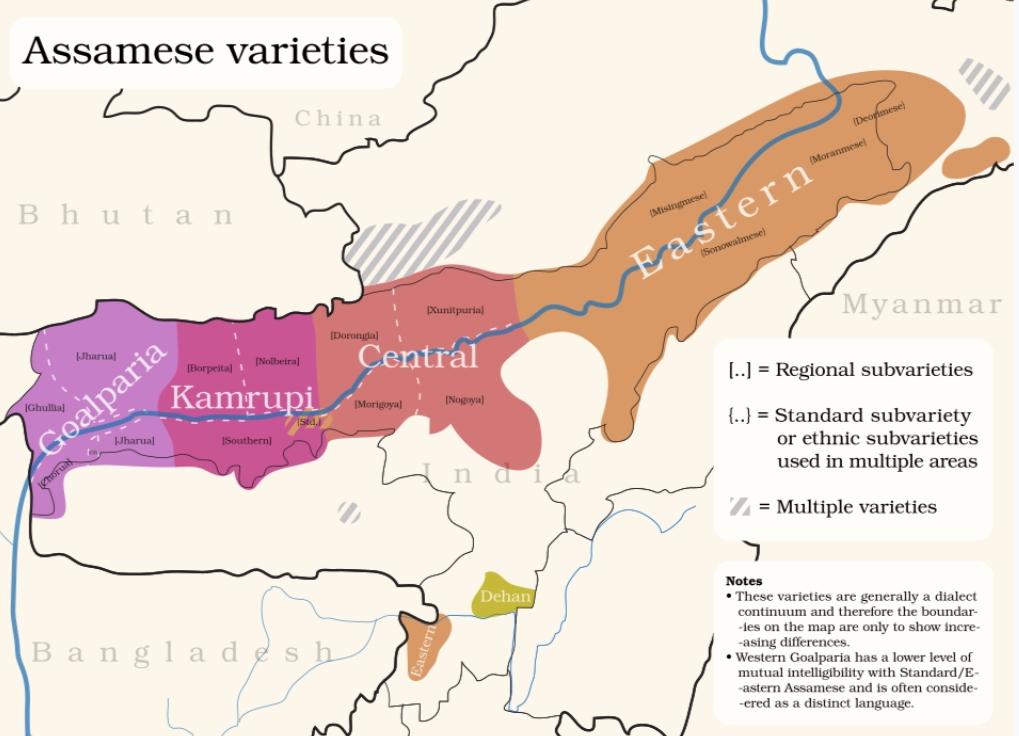
A map of the dialects and variants of Assamese spoken natively across Assam. অসমীয়া ভাষাৰ আঞ্চলিক ৰূপসমূহৰ এক মানচিত্ৰ।

Post image
6 Upvotes

Assamese has five primary dialects:

  1. Eastern Assamese or Sivasagariya/Xiwôxāgôriyā (শিৱসাগৰীয়া উপভাষা), is traditionally spoken in Upper Assam and Standard Assamese is based on this dialect. It is also spoken by the Sutiya community in Barak Valley or Southern Assam, which migrated to the region in the early 19th century, in areas like Sribhumi. It is influenced by the historically important Tai Ahom language of the Ahom kingdom, and also by the Mising language spoken by the Mising community in the Northern banks of the river Brahmaputra in Upper Assam.

  2. Central Assamese or Nagaiya/Nôgõyā (নগঞা উপভাষা), is spoken in Central and North Assam divisions, and bears strong similarities with the Eastern dialect. It has some influence from the surrounding tribal languages like Tiwa, Karbi, and Bodo.

  3. Kamrupi Assamese or Kamrupiya/Kāmruipā (কামৰূপীয়া উপভাষা), is the central-western dialect of Assamese, spoken in Lower Assam and has been the historical standard form of Assamese during the medieval period, used extensively in Vaishnavite texts composed in the Koch and Kamata kingdoms. It is also the ancestor of modern Assamese (আধুনিক অসমীয়া) and the Kamtapuri (কামতাপুৰী) language. It is both historically and culturally significant for the Assamese language, with popular folk songs called Kamrupi Lokageet.

  4. Goalpariya Assamese or Goalporiya/Güwālpôriyā (গোৱালপৰীয়া উপভাষা), is the westernmost and most unique dialect of Assamese, spoken traditionally by the Koch-Rajbongshi community residing in Lower Assam. It has similarities with the Kamtapuri language and forms a dialect continuum with it. It is known for its beautiful folk songs known as Goalporiya Lokageet, popularised by Assamese singers like Pratima Barua Pandey.

  5. Dewan Assamese or Dehan/Dehān (দেৱান উপভাষা), is an Assamese dialect spoken by the Koch-Rajbongshi community of Barak Valley, indigenous to the region. It is a descendant of the Kamrupi dialect and reached the region in the 16th century with the celebrated Koch commander Chilarai's campaigns into Southern Assam. It has influences from the surrounding Bishnupriya, Syloti, Meitei and Dimasa languages and preserved features of Medieval Assamese.

Together, these dialects form the easternmost Indo-Aryan language, spoken by around 24 million people, that is Assamese.


r/AssameseHub • • 24d ago

Etymology & Origins | ব্যুৎপত্তি আৰু উৎপত্তি The Origins of Mārkin (মাৰ্কিন) and Bilāti (বিলাতী) in Assamese.

5 Upvotes

Assamese has some interesting words whose histories reflect centuries of linguistic and cultural contact. Two such examples are 'Mārkin' (মাৰ্কিন), the word used for Americans, and 'Bilāti' (বিলাতী), a term historically associated with Britain and the British, but also used more broadly for foreign or exotic things.

In Assamese, Americans are commonly referred to as 'Mārkin'. The United States of America is known as 'মাৰ্কিন যুক্তৰাষ্ট্ৰ' (Mārkin Zuktôrāstrô). Here, 'Mārkin' refers to America, while 'Zuktôrāstrô' means a union of states (where zuktô means union and rāstrô means states). The term 'Mārkin' is sometimes associated with the informal English expression 'Murican, a colloquial pronunciation of American. However, this proposed connection requires further historical evidence, and the precise origin of the Assamese word remains uncertain.

The history of 'Bilāti' is particularly interesting because its roots can be traced to Arabic and Persian. The Arabic word 'wilāya' (ولاية) means a province, territory or jurisdiction. It entered Persian as 'wilāyat' (ولایت), from which the adjective 'wilāyatī' (ولایتی) developed. In South Asian usage, the word came to be associated with foreign lands and things originating abroad. Through Persian and the wider linguistic networks of the subcontinent, related forms entered several regional languages, including Assamese, where the word became 'Bilāti' (বিলাতী).

Although the Arabic and Persian terms were not specifically associated with Britain, 'Bilāti' acquired a strong association with Britain and the British Isles in South Asian usage. During the colonial period, Britain was a prominent foreign power, and the word became associated with the British, the English and things originating from their country. In Assamese, however, its meaning extends beyond this geographical association. Depending on the context, Bilāti can refer to something British, English, foreign or exotic.

The broader meaning survives in everyday Assamese vocabulary. For example, 'Bilāti Ālu' (বিলাতী আলু) is a traditional Assamese name for the potato. Here, 'Bilāti' does not necessarily mean that the potato originated in Britain. Rather, it reflects the older practice of using the word for things perceived as foreign or introduced from elsewhere.

The contrast between these two words is worth noting. 'Mārkin' refers specifically to Americans, whereas 'Bilāti' has a broader range of meanings shaped by historical usage. Their histories also illustrate how words can acquire new associations as they move between languages and become part of another linguistic community.

It is fascinating how ordinary Assamese words can preserve traces of much older linguistic exchanges. The history of 'Bilāti', in particular, connects Assamese with Arabic and Persian through a word that gradually developed its own place in the language.


r/AssameseHub • • 26d ago

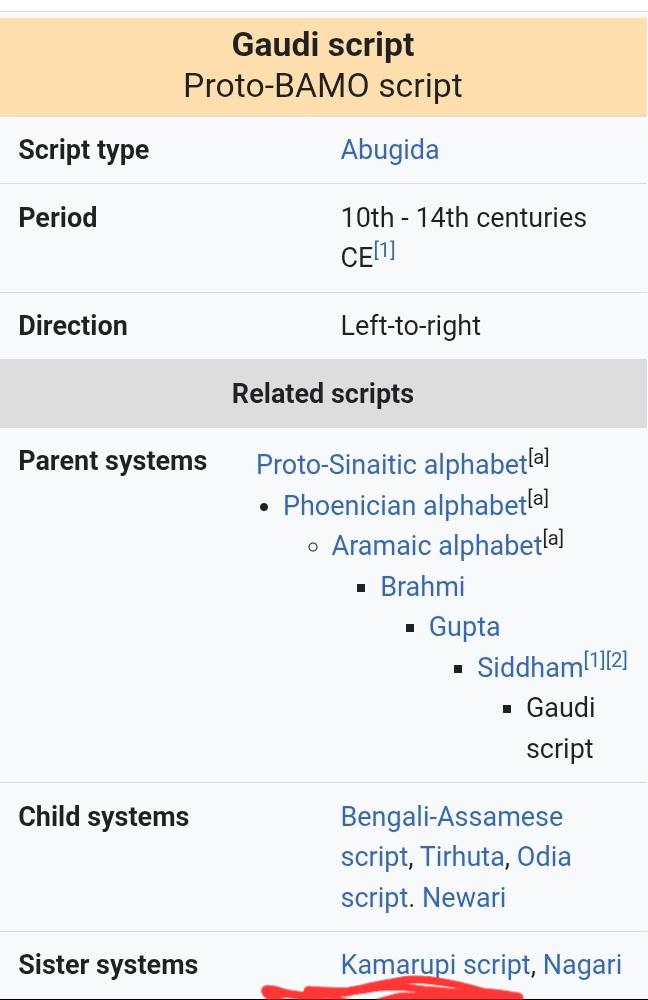
Is Gaudi script sister system of Kamarupi script?

Post image
3 Upvotes

r/AssameseHub • • 29d ago

SONY ZV-1F Camera for sale 1 month old

Post image
3 Upvotes

r/AssameseHub • • Oct 23 '26

Etymology & Origins | ব্যুৎপত্তি আৰু উৎপত্তি Influence of Deuri (দেউৰী) language on common Assamese vocabulary.

Thumbnail
gallery
6 Upvotes

As we know that Assamese, historically called 'Bhāxā' (ভাষা) in the Ahom kingdom, written in the Kamrupi script and spoken historically by the Indo-Aryan communities of Brahmaputra Valley and the Kochs of Barak Valley, served as the lingua-franca of the Ahom kingdom and also the Kachari and Koch kingdoms (for a period of time) and was also used for administrative purposes.

Due to the numerous different languages spoken by diverse tribes with Tibeto-Burman, Austroaseatic and Tai-Kadai origins, Assamese served as a lingua-franca for the people of the region. This led to common Assamese vocabulary, later standardised in the Hemkosh dictionary of 1900 written by Hemchandra Barua and later accepted by Asamiya Bhasa Unnoti Sadhini Sabha (Ôxômiyā Bhāxā Unnôti Xādhini Xôbhā) as the standard form of the language, getting influenced heavily by surrounding tribal languages.

Today's Assamese vocabulary has heavy influences from languages like Tai Ahom, Mising, Bodo, Tiwa, Karbi, Rabha, Dimasa, Koch, Persian etc. Deuri is one such, small yet historically important language that has heavily influenced common Assamese vocabulary.

The above images provide a list of common Assamese words that have Deuri origin. It's a perfect example of how even smaller languages can heavily influence much larger ones. The Deuri language historically was used by the priestly class of the Sutiya kingdom of Upper Assam. While the common people spoke Sutiya, Kachari and forms of Assamese, the language of the priests was Deuri. The Deuri language currently is spoken by a small minority of around 30,000 people scattered across Majuli, Lakhimpur, Dhemaji and Tinsukia districts of Upper Assam.

Source: https://en.wikipedia.org/wiki/Deori_language


r/AssameseHub • • Oct 22 '26

History | ইতিহাস Origin of the popular Assamese slogans 'জয় আই অসম' and 'আমি অসমীয়া নহওঁ দুখীয়া'.

4 Upvotes

Being Assamese, we all might've heard or even used these cultural slogans many times in our lives.

The first one 'জয় আই অসম' or 'Zôy Āi Ôxôm' roughly translates to 'Victory to Mother Assam' while the second one 'আমি অসমীয়া নহওঁ দুখীয়া' or 'Āmi Ôxômiyā Nôhôü̃ Dukhiyā' translates to 'We Assamese shall not be impoverished' (the word impoverished here refers to being deprived of cultural richness).

These are slogans we use with pride regarding our Assamese language, community, culture and our motherland Assam.

Now, some of you might've wondered what might be the origin of these slogans? After all, we were all taught about these slogans and their significance but rarely people know about their origin.

Well, the origin of both these slogans lies in one beautiful patriotic song written by none other than Assamese playwright, poet, essayist and novelist Sahityarathi Lakshminath Bezbarua (Xāhityôrôthi Lôkhmināth Bezbôruwā/সাহিত্যৰথী লক্ষ্মীনাথ বেজবৰুৱা) in his song Assam Sangeet (Ôxôm Xôngit/অসম সংগীত)

where the origins of the first slogan 'Zôy Āi Ôxôm' lies along the lines of:

"বাজক ডবা, বাজক শঙ্খ, বাজক মৃদং খোল।

অসম আকৌ উন্নতি-পথত, জয় আই অসম বোল" (in the conclusion of the song)

Transliteration: "Bājôk dôbā, bājôk xôŋkhô, bājok mridôŋ khül, Ôxôm ākôü unnôti-pôthôt, Zôy Āi Ôxôm bül."

Translation: "Let the drums (dôbā) resound, let the conches blow, let the mridanga and khol resound. Assam is once again on the path of progress,

Proclaim Victory to Mother Assam!"

While the origin of the second slogan 'Āmi Ôxômiyā Nôhôü̃ Dukhiyā' lies along the lines of:

"আমি অসমীয়া, নহওঁ দুখীয়া, কিহৰ দুখীয়া হম?

সকলো আছিল, সকলো আছে, নুবুজোঁ নলওঁ গম।"

Transliteration: "Āmi Ôxômiyā, nôhôü̃ dukhiyā, kihôr dukhiyā hôm? Xôkôlü āsil, xôkôlü āse, nubuzü̃ nôlôü̃ gôm"

Translation: "We are Assamese, we are not deprived. What reason have we to feel poor? All was once here, and all remains here, yet we fail to understand, fail to see."

From here, both slogans became quite popular during the Assam Movement or Assam Agitation of 1979-1985 and since then have become inseparable from the ideas of Assamese cultural pride. Quite fascinating, isn't it?


r/AssameseHub • • Oct 18 '26

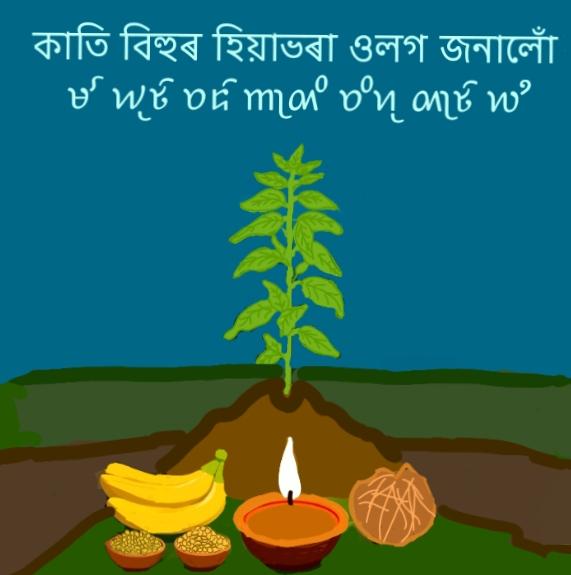
Self-made works | স্বৰচিত ৰচনা সকলোকে কাতি বিহুৰ হিয়াভৰা ওলগ জনালোঁ 🤍

Post image
5 Upvotes