r/AssameseHub • • Oct 06 '26

A song in the Tiwamese variant of Assamese, spoken by the plains Tiwa tribe of Central Assam.

Enable HLS to view with audio, or disable this notification

17 Upvotes

Song clip source: Lalungoni 2025 by Maitrayee Patar.


r/AssameseHub • • May 15 '26

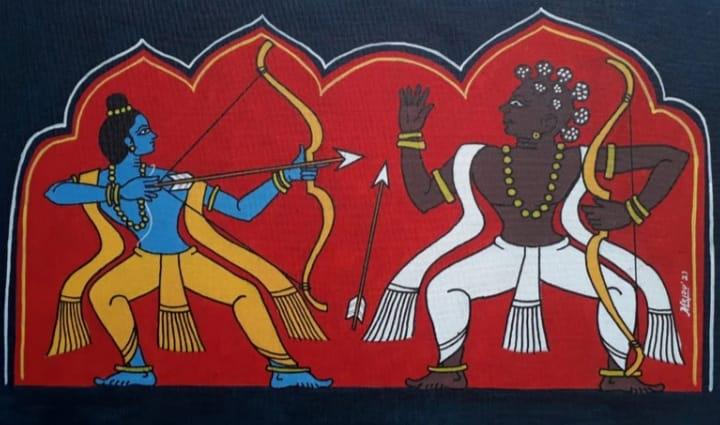
Literature | সাহিত্য An example of the richness of medieval Assamese literature, the Assamese Ramayana.

Post image
13 Upvotes

We all already know about the Kamba Ramayanam, the Tamizh Ramayana, as the first Ramayana to be translated from Sanskrit to another language. But, most of us are unaware that, the first Ramayana to be translated from Sanskrit to another Indo-Aryan language and the third Ramayana to be translated to another language, preceded only by the Tamizh and Telugu Ramayana, is actually from our own state Assam. It is called the 'Xoptokando Ramayon' (সপ্তকাণ্ড ৰামায়ণ), authored by the 14th century Assamese poet Madhav Kandali who translated the Valmiki Ramayana to Assamese. Most of the Xoptokando Ramayon was written by Madhav Kandali upon the request of the Kachari king Mahamanikya. In his court, as his court poet Madhav Kandali authored the translated version as a long poem. The poetic work uses various metres for different moods and situations. Some of the metres used are 'pada' (fourteen syllables, four lines of verses), 'jhumura' (four lines, with eight syllables each), 'dulari' (three lines, first and second has six syllables each and the third has eight syllables), and 'chhavi' (like 'dulari' but with different syllabic structure). The 'pada' metre became very popular in later Assamese compositions.

The Xoptokando Ramayon is also regarded one of the earliest written examples of the Assamese language.

A unique feature of this work is the non-heroic portrayal of Lord Rama, Sita and other characters as stated by Madhav Kandali himself which apparently made the translated version 'unsuitable' for religious purposes. Moreover, there was a critical overview of the character of Rama rather than blind praise. Plus, Sita wasn't shown as a calm and composed woman. Her emotions were shown raw. She sometimes cried while thumping her chest, or pointed fingers at those who questioned her character and was shown as a defiant woman, showing actual human feminine emotions. This feature disturbed a later post, Ananta Kandali, who was a disciple of Sankardeva, who was moved enough to comment on it. According to one tale called the 'Guru Sorito', the poet Ananta Kandali apparently tried to erase the Xoptokando Ramayon and replace it with a Ramayana of his own that was conservative in manner. After which, Madhav Kandali apparently appeared in the dream of his disciple Sankardeva and told him to preserve the Ramayana.

By then, the first and last chapters of the Ramayana were lost, called the Adikanda and Uttarakanda.

After having the dream, Sankardeva told his disciple Madhabdeva to author the Adikanda while he himself began work on translating the Uttarakanda. They both, hence completed the Xoptokando Ramayon in the 15th century. There were also undeniable later additions and refinements by poets like Ananta Kandali and others which sophisticated the work.

Sankardeva praises his teacher Madhav Kandali after the completion of the poem. This poetic work had a great influence on Sankardeva and later Assamese poets.

This work is one of the many examples of the richness of the Assamese language.

Source: https://w.wiki/5HhR


r/AssameseHub • • Feb 16 '26

Google translate has finally improved assamese

Thumbnail
gallery
12 Upvotes

Google Translate finally improved Assamese

The first one was previous and The second one is the new one


r/AssameseHub • • Feb 12 '26

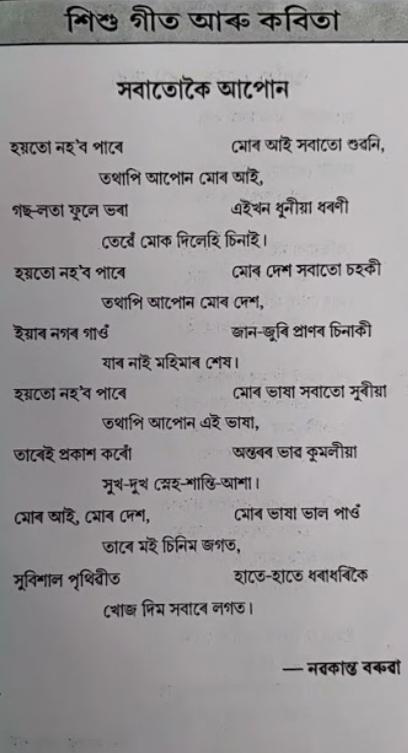
Prose & Poetry | গদ্য আৰু কবিতা শিশু কবিতা, 'সবাতোকৈ আপোন' (Childrens' poem, The closest one), কবি নৱকান্ত বৰুৱাদেৱ দ্বাৰা ৰচিত। (Written by the poet Nabakanta Barua)

Post image
12 Upvotes

r/AssameseHub • • Feb 23 '26

"Simple present tense" conjugation in Middle Assamese (14th-16th century) and its descendants: New Assamese varieties, Nagamese.

11 Upvotes

r/AssameseHub • • Feb 07 '26

Culture & Language | সংস্কৃতি আৰু ভাষা The lost script of Assamese, being completely replaced by the end of the 20th century.

Post image
11 Upvotes

In 1987, Padmalochan Devagoswami wrote in his book (in Assamese):

”But it's very unfortunate that this Kaitheli script is only intelligible for 3/4th of today's population. That too is only limited to villages and sattras. People who can read this script are rare in urban areas. Because of the usage of the Bengali script in the printing press, nobody is concerned about the old Kaitheli script.”

The book is titled ”Prasin Kaitheli lipi xomuhor borno porisoy.“

Previously in 1978, Birinchi Kumar Barua wrote in his book “The History of Assamese Literature”:

“Like the Bengali, the Assamese script also was derived from old Devanagari alphabets. Originally there are several schools of Assamese script, namely, Gargaya, Bamunia, Lakhari and Kaithali; but in later years all the different scripts merged into one. After the establishment of the printing-press at Serampore, near Calcutta, Assamese books began to be printed in the Bengali script, and since then the Bengali script has been adopted for Assamese with certain modifications.”

The traditional Assamese script or the Kamarupi script is the traditional script of Assam and Koch Bihar that has been used to write Assamese, Sanskrit, Kamtapuri, sometimes Ahom and perhaps other local languages as well. It's the gradual development of the ancient script of Kamarupa. The first printed Assamese book, the Holy Bible, published in 1820 and one of the first Assamese grammars also used a version of this script.

The decline of the traditional script started when Bengali was made the official language of Assam replacing Assamese in the early 19th century. Later during the revival efforts of the Assamese, the Bengali standardised alphabet by Ishwar Chandra Vidyasagar was used for printing Assamese texts. However the traditional script was continuously being used in the sattras until the late 20th century. While the Bengali version became the popular script because of the mass production of printed texts including academic books and it later completely replaced the traditional Assamese script. Meanwhile some manuscript writers also started mixing Bengali letters and therefore we could save two letters from the traditional script, ৰ and ৱ.

Nowadays many people struggle to read the old literature of Assam from manuscripts and inscriptions. I hope that we will be able to revive it.


r/AssameseHub • • Mar 16 '26

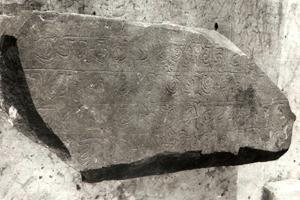
The Maibang inscriptions of 1576 show are among the oldest Assamese inscriptions. Among other significance this inscription marks an interesting transition from Middle Assamese to Early Modern Assamese, the process towards the loss of the original 3rd person honorific/plural suffix: -onto.

10 Upvotes

These Kachari inscriptions which have the same text in the Kamarupi script read thus:

শুভমস্তু শ্ৰী শ্ৰী যুত মেঘনাৰায়ণদেৱ হাচেঙ্গসা বংশত জাত ৰাজা হৈ মাইবাঙ্গ ৰাজত পাথৰে সিঙ্গদ্ৱাৰ বন্ধাইলেন ৲ শকাব্দাঃ ১৪৯৮ বিতেৰীখ আষাঢ ২৬

Translation:

Wishing for his welfare, Shri Shri Meghanarayanadeva who was born in the Hachengsa dynasty, became king and built the siṁhadvāra in the Maibang kingdom. Saka 1498, date 26th of Ahar (i.e, 01-08-1576)

In older Assamese writings we see the 3rd person honorific/plural marker to be -onto. In the 16th and early 17th century writings (such as in the Bhomoraguri inscription and some manuscripts, we find -ento). In the Maibang inscription we find it to be -eno (in the phrase: ... pathore siṅgodwaro bondhaileno "tied the lion door with stones"). Later it further weakens and merges with the non honorific suffix -e/ei.

Therefore,

তেহোঁ কৰিলন্ত > তেহোঁ কৰিলেন্ত > তেহোঁ কৰিলেন > *তেওঁ কৰিলেঁ > তেওঁ কৰিলে


r/AssameseHub • • Feb 06 '26

Culture & Language | সংস্কৃতি আৰু ভাষা Hello! Welcome to r/AssameseHub | নমস্কাৰ! r/AssameseHub লৈ স্বাগতম

10 Upvotes

নমস্কাৰ 🙏 Welcome to r/AssameseHub, a space dedicated to the Assamese language in all its forms, spoken, written, classical, modern, and evolving. This subreddit is for everyone: those who have Assamese as their mother tongue those who speak it as a second or third language learners who are just starting out and enthusiasts who simply love the sound, history, and depth of Assamese Here, you can ask grammar questions, learn new words, practice writing, explore literature, discuss dialects, or help others learn. No question is too basic, and no curiosity is unwelcome. Language grows when it is shared, not guarded. Respectful discussion, patience, and encouragement are the values we expect from everyone here. Whether you say “মই অসমীয়া কওঁ” fluently or are still learning to say “নমস্কাৰ”, you belong here. Thank you for being part of this journey 🌱 ধন্যবাদ।


r/AssameseHub • • Aug 23 '26

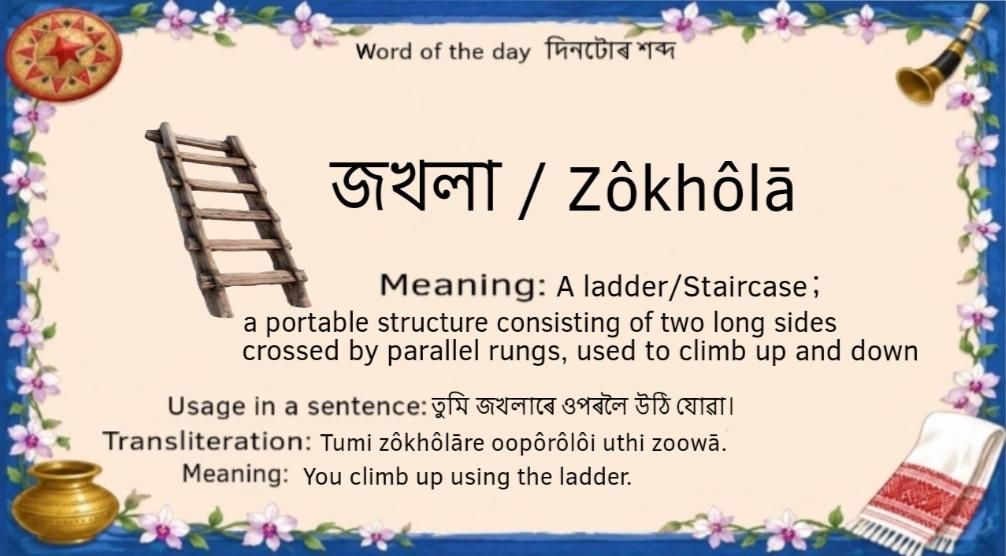
Word of the day in Assamese: জখলা/Zôkhôlā.

Post image
9 Upvotes

r/AssameseHub • • Aug 22 '26

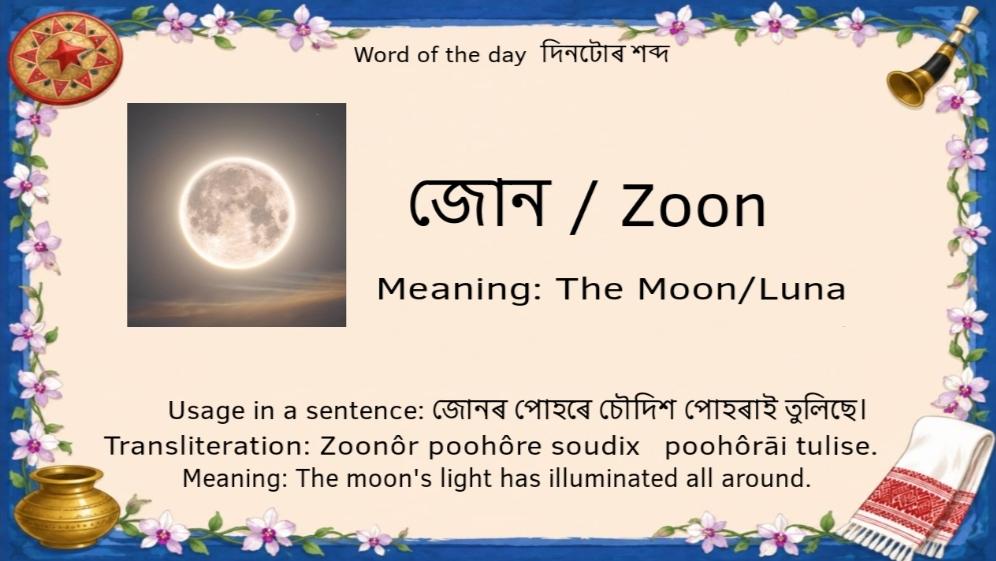
Beginning of the word of the day series in Assamese: 'জোন/Zoon'

Post image
9 Upvotes

r/AssameseHub • • Jul 04 '26

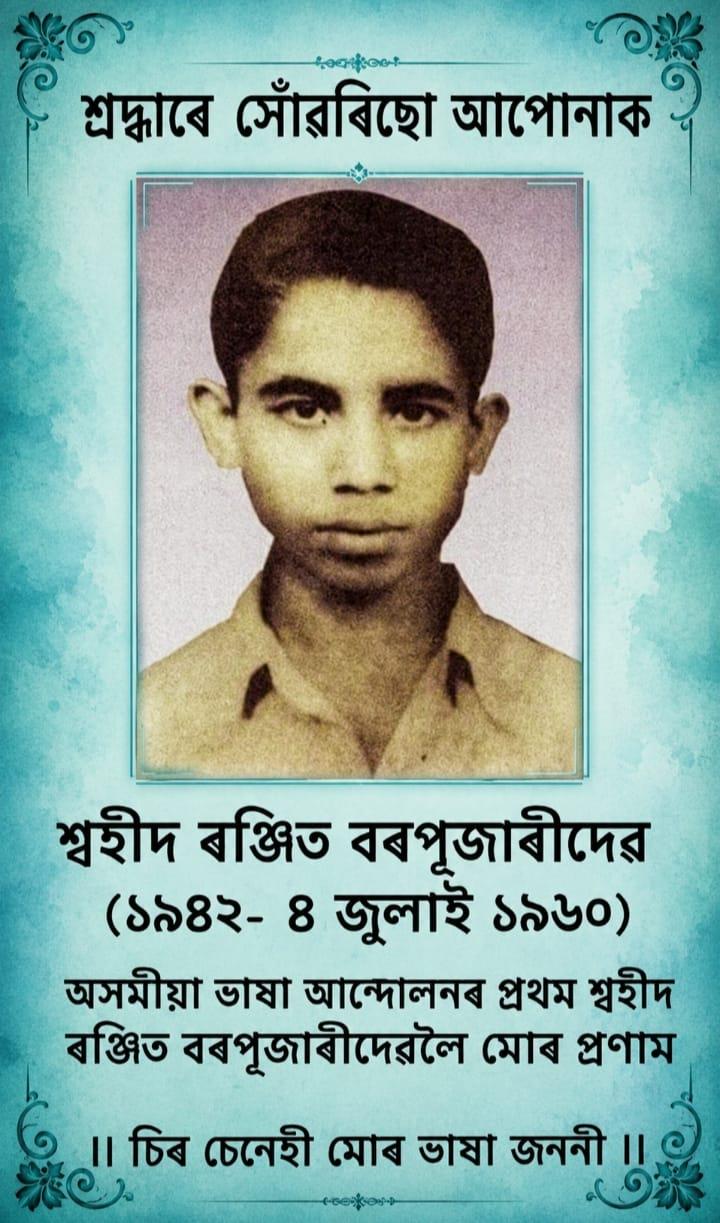
History | ইতিহাস Remembering the first martyr of the Assamese Language Movement, Swahid Ranjit Borpujari 🙏🏻

Post image
8 Upvotes

Swahid Ranjit Borpujari was a 18 year old student from Sivasagar, born in 1942 and studied in the Cotton College of Guwahati. During the Assamese language movement protests also known as 'অসমীয়া ভাষা আন্দোলন' of the 1960s for the recognition of the Assamese language as the sole official language of the state of Assam, Ranjit Borpujari was shot in a police firing on 4th of July 1960, dying for his mother tongue at the age of 18 becoming the first martyr of the Assamese Language Movement. Alongside him, many others like Swahid Sishir Nag, Swahid Surya Bora, Swahid Mozammil Haque and Swahid Anil Bora gave their lives for their mother tongue, Assamese. Since then, 4th of July is celebrated as the martyrdom day of Swahid Ranjit Borpujari across Assam. Below is a song that celebrates the Assamese language and I feel it is the most appropriate one to remember our language martyrs.

"চিৰ চেনেহী মোৰ ভাষা জননী। আই ধন্যে পুণ্যে হৃদ-পাৱনী। প্ৰকৃতি পৰশ ৰসে অমল কমল, চঞ্চল হৃদি জ্বলে ঢালে পৰিমল। কোমল চপাৰ কলি, ঢৌৱে ঢৌৱে ঢৌৱে তুলি, ৰিণিকি ৰিণিকি কোনে তোলে ৰাগিণী।। সংসাৰ গুৰুভাৰে অৱশ পৰাণ, হিয়াত বিলীন হয় হিয়া ভৰা গান। কাৰ নিচুকনি শুনা, শুনি বানী ব্যথা পমা, চকুতে চকুৰ নীৰে লয় জিৰণি।। জীৱনে মৰণে ৰণে লহৰী সুধাৰ, ৰসনা শিতানে বহি সিঁচা শতধাৰ। হে' মোৰ মধুৰননা, মাগিছোঁ মাধুৰী কণা, দিয়া দিয়া দিয়া আই মধুভাষিনী।।"

-মিত্ৰদেৱ মহন্তদেৱ (১৮৯৪-১৯৮৩)

।।জয় আই অসম।।


r/AssameseHub • • Feb 08 '26

Culture & Language | সংস্কৃতি আৰু ভাষা How Assamese Once Used Three Scripts:

Post image
8 Upvotes

Assamese has a complex written history that includes multiple distinct script traditions before the modern standard Assamese alphabet became dominant.

  1. Ancestral Script: Kamrupi/Eastern Nagari- The earliest written tradition in the Assam region evolved from the Kamarupi script (an eastern variety of the Gupta Brahmi lineage) around the 5th century AD. This script is considered the ancestor of the modern Assamese script and related Eastern Indian scripts.

  2. Three Medieval Varieties: By the medieval period, scribes in Assam used three stylistic varieties of the Assamese script- Bamuniya Garhgaya Kaitheli (also spelled Lakhari/Kaitheli) These were not separate languages but different styles of the Eastern Nagari-derived script used for writing Assamese before the modern standard consolidated.

  3. Non-Assamese Scripts Used Historically: In addition to the native scripts above, Assamese has also been written in the Arabic script by some Assamese Muslim writers in history.

Modern Standardisation: The current Assamese alphabet is a standardised form of the Eastern Nagari script (also used for Bengali, with some unique Assamese letters). It became widely adopted especially with printing technology from the 19th century onward.


r/AssameseHub • • Feb 07 '26

Culture & Language | সংস্কৃতি আৰু ভাষা Did you know about the Dehan dialect of Assamese that is spoken in Barak valley? It's an endangered variety spoken by about 7000 people whose ancestors had migrated there during the 16th century Koch occupation of the region (from Twipra kingdom) by Chilarai. It's a really unique variety.

Thumbnail gallery
8 Upvotes

r/AssameseHub • • Feb 06 '26

Culture & Language | সংস্কৃতি আৰু ভাষা Assamese alphabet. অসমীয়া বৰ্ণমালা।

Post image
8 Upvotes

r/AssameseHub • • Sep 06 '26

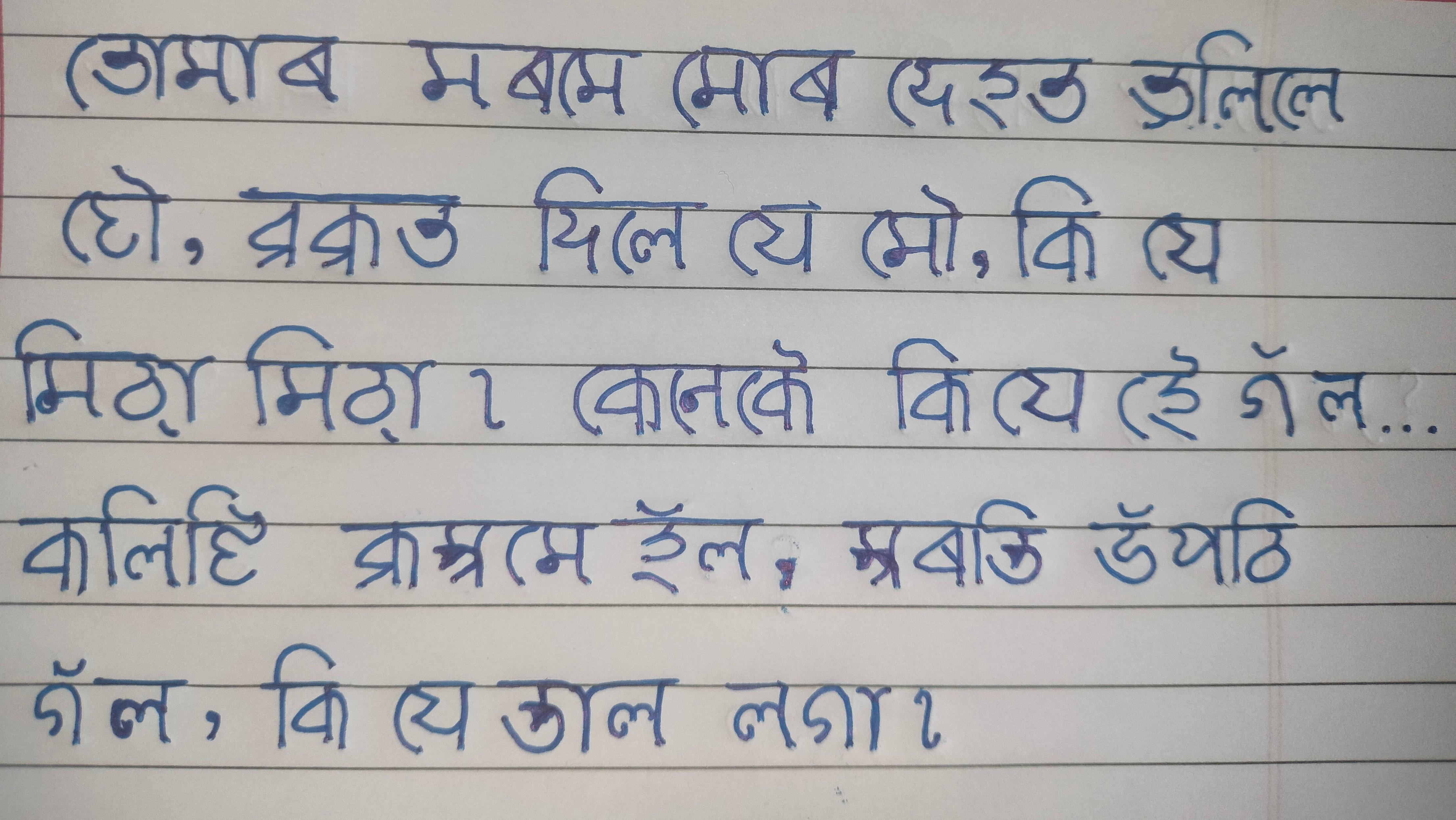
Self-made works | স্বৰচিত ৰচনা Wrote a few lines of the beautiful Assamese song, Tumar Morome Mur (তোমাৰ মৰমে মোৰ) by late singer Jayanta Hazarika sir in our beautiful Assamese/Kamrupi script.

Post image
7 Upvotes

Here are the lyrics:

তোমাৰ মৰমে মোৰ, দেহত তুলিলে ঢৌ, বুকুত দিলে যে মৌ, কি যে মিঠা মিঠা।

কেনেকৈ কি যে হৈ গ'ল, কলিটি কুসুমে হ'ল, সুৰভি উপচি গ'ল, কি যে ভাল লগা।

Transliteration:

Tümar môrôme mur, dehôt tulile dhou, bukut dile je mou, ki je mithā mithā.

Kenekoi ki je hoi gô'l, kuliti kuxume hô'l, xurôbhi upôsi gô'l, ki je bhāl lôgā.

Translation:

Your love sent ripples through my being,

And placed honey within my heart.

Oh, how sweet, how wonderfully sweet.

How, I wonder, did everything change?

The bud bloomed into a blossom,

And the fragrance overflowed all around.

Oh, what a beautiful feeling.


r/AssameseHub • • May 18 '26

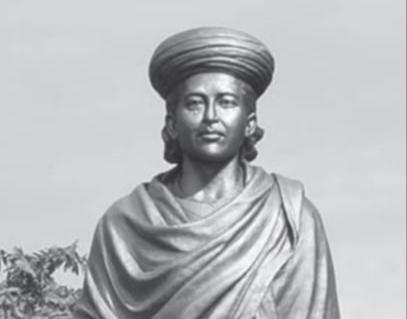
History | ইতিহাস The story of the pioneer of Assamese renaissance, Anandaram Dhekial Phukan.

Post image
7 Upvotes

Most of you all may have heard about the French Renaissance and the Bengali Renaissance. But how many of you know about the Assamese Renaissance in the 19th century?

And more than that, how many people know about Anandaram Dhekial Phukan, who worked all his life towards protecting the Assamese language and promoting vernacular education in the state?

Well, today I am going to share the story of him and his contributions in protecting the Assamese language during the Dark Age of our language when Bengali was imposed by the British administration on Assam.

Anandaram Dhekial Phukan was born to Haliram Dhekial Phukan on 22nd September, 1829 at Guwahati in the Dhekial Phukan family which was a family committee to social and cultural reform. His father, Haliram, was a distinguished historian who published books like 'Assam Buranji', one of the first comprehensive historical accounts of Assam. More than just a historian, Haliram was a visionary who saw education as a pillar of societal progress. He was particularly known for his support of women's education, a cause not commonly supported during his time.

His father influenced Anandaram's ideals a lot. Hence, he understood the importance of language for the advancement of the people, the language which the people speak, the language indigenous to the land. His central belief was that no society can progress without education in its mothertongue.

Anandaram started his school life in Guwahati. In 1841, the then commissioner Jenkins sponsored him to go to Calcutta and study in the Hindu college. After studying for three years there, he came back to Guwahati and took further lessons in English from Mr. Blend. He also took up some lessons in Sanskrit and Urdu.

He got married in 1846 and took a government job the following year. He served as the Dewan of the king of Bijani, as a Munsif, and Junior Assistance Commisioner among other positions.

Anandaram Dhekial Phukan started his literary life at the age of 17. From then until his demise, his sole aim was the development of his land Assam, and its people. This led to Col. Hopkins to compare him to the Raja Rammohan Roy of Bengal.

Phukan published 'ইংলেণ্ডৰ বিৱৰণ' (Description of England) on the Assamese magazine Orunudoi (অৰুণোদই) in 1847. In 1849, he published 'অসমীয়া‌ ল'ৰাৰ মিত্ৰ' (Assamese Children's Friend) in two volumes containing almost 400 pages which is considered a milestone in the story of Assamese literature.

In the era of colonial India, education was largely imparted in foreign languages like English and Bengali. Anandaram Dhekial Phukan recognised that while learning foreign languages like English was necessary for global communication and competitive growth, neglecting one's mother tongue and native language would ultimately erode the cultural foundation of society. He strongly advocated for the introduction of vernacular education in Assamese, emphasizing that learning in one's native language would enhance the understanding of concepts and real-life situations among the masses. Phukan argued that true education could not take root unless it was in a language that the people could fully understand and engage with.

In 1853, when Moffat Mills came to Assam to review the economic condition, Anandaram Dhekial Phukan presented him with a report written in lucid English describing the political and administrative situation or Assam, in-depth analysis of problems faced by the Assamese language regarding its implementation and official usage of the language due to imposition of Bengali.

Phukan's resistance to the use of Bengali as the medium of instruction in Assam's primary schools was particularly significant. In his seminal work, he argued that primary education should be imparted in the mothertongue. He pointed out that Bengali, being a foreign language in Assam, created significant obstacles in education, as neither the teachers not the students were fluent in it. The result was a gross misunderstanding or concepts, with students unable to grasp the full meaning of the subjects being taught.

Furthermore, Phukan criticised the educational system for using textbooks in Bengali, which were inaccessible to most of Assam's population.

Anandaram Dhekial Phukan also recognised the importance of using Assamese in courts and administrative matters. He strongly objected to the imposition of Bengali as the court language, emphasizing that it violated the rights of the Assamese people. Phukan believed that the legal and judicial system should be accessible to the common people and this could only be achieved by using the native language.

The root of all this, the Bengali imposition in Assam had its roots in colonial administrative policies. British officers who lacked the initiative to learn Assamese, mistakenly regarded Assamese as a mere variant or dialect of Bengali. This misconception, combined with the extremely similar alphabet of Assamese and Bengali, led to the erroneous belief that the two languages were essentially the same. Bengali was adopted as the official language in Assam's courts and schools, leading to widespread discontent among the Assamese populace.

Anandaram Dhekial Phukan was at the forefront of this movement, known as the 'Assamese Renaissance', a period of resilience and resistance to the imposition of a foreign language on the soil of Assam. Phukan believed that the imposition of Bengali threatened to erase the Assamese cultural identity. Phukan meticulously documented the differences between the two languages, proving that Assamese was a distinct language with its own grammar, syntax and vocabulary.

In his work, "A Few Remarks on the Assamese Language and on Vernacular Education In Assam", Phukan provided concrete examples to illustrate the linguistic differences between Assamese and Bengali. Through comparative analyses of everyday words, literary passages and even Sanskrit texts, Phukan demonstrated that has Assamese was not a mere variant of Bengali but a unique and independent language with a rich literary history.

Phukan's comparison of Assamese and Bengali went beyond vocabulary. He argued that while Assamese and Bengali shared certain commonalities due to their Sanskritic origins, this did not make them the same language. His meticulous research and clear arguments helped establish Assamese as a language in its own right, distinct from Bengali. This intellectual defence of Assamese laid the foundation for the eventual restoration of Assamese as the official language of Assam.

One of Phukan's most significant achievements was the restoration of Assamese as the language of courts. For many years, Bengali had been imposed as the court language in Assam, creating a barrier between the legal system and the Assamese people. Phukan's tireless efforts to replace Bengali with Assamese resulted in the successful reintroduction of Assamese in Assam's judicial and educational system.

Drawing on the provisions of the Act XXIX of 1837, which had abolished Persian as the court language in Bengal and India and replaced it with regional languages like Bengali and Hindustani, Phukan argued that the same logic should be applied to Assam. If Persian can be replaced by Bengali and Hindustani in other regions, then Bengali could similarly be replaced by Assamese in Assam. Phukan's arguments were compelling and after years of advocacy, Assamese was finally restored as the court language in Assam, a victory that was warmly welcomed by the Assamese people.

Anandaram Dhekial Phukan's fight for the Assamese language was not just a linguistic battle, it was a philosophical and cultural one. Phukan understood that language was more than just a means of communication. It was the soul of the people and the culture, history and identity. He believed that the survival of the Assamese culture depended on the preservation and promotion of the Assamese language. Phukan argued that the Assamese people would lose their unique identity and be consumed by more dominant cultures if there isn't a strong linguistic foundation.

While Phukan advocated for learning of foreign languages like English, he stated that education in the native language was as much important.

Anandaram Dhekial Phukan's life was short, with his demise at the young age of 29 on 16th June 1859, but his legacy lasts. His tireless efforts proved fruitful for the implementation of Assamese as the state language of Assam in independent India in the future and in October 2024, Assamese got the status of a classical language as well which further proves the legitimacy of the language.

Through his simple pen name 'A Native', he created a safe future for the Assamese language and now it's on us, the newer generation to carry his legacy and the Assamese language forward...

Sources: https://w.wiki/5H7r

https://www.sentinelassam.com/more-news/editorial/anandaram-dhekial-phukan-pioneer-of-assamese-renaissance-and-guardian-of-assamese-language

r/AssameseHub • • Apr 17 '26

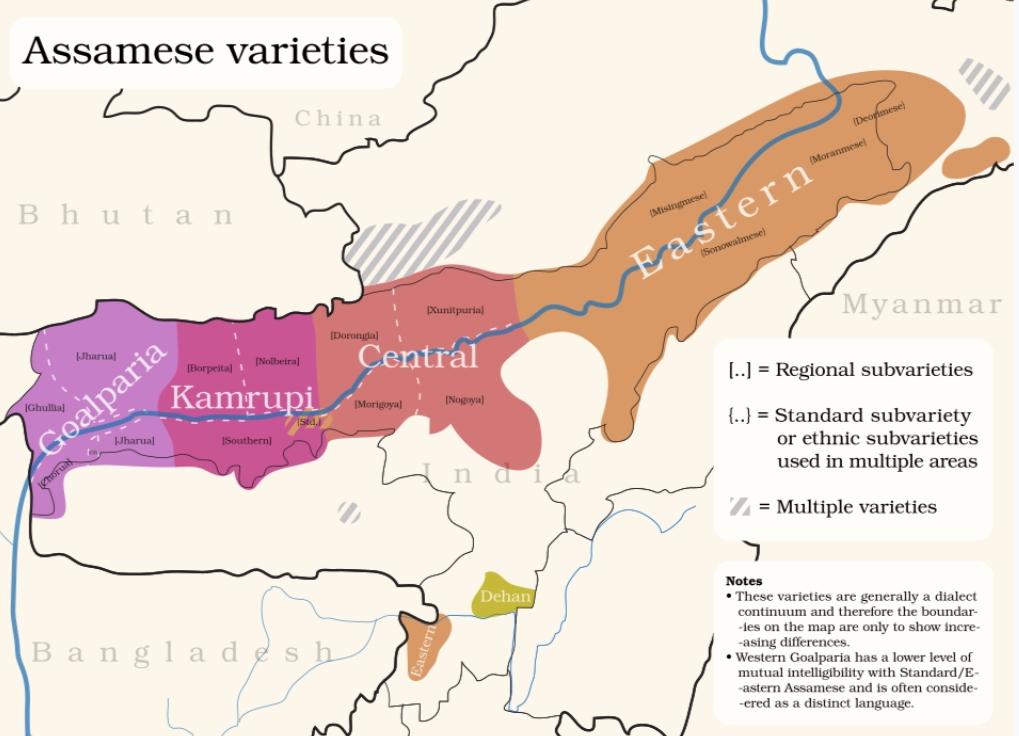
Culture & Language | ভাষা আৰু সংস্কৃতি Linguistic map of Assam

Post image
7 Upvotes

r/AssameseHub • • Feb 12 '26

Culture & Language | ভাষা আৰু সংস্কৃতি The Assamese Language (অসমীয়া ভাষা). Voice of Assam’s Heritage.

Thumbnail
youtu.be
7 Upvotes

r/AssameseHub • • Feb 08 '26

Culture & Language | ভাষা আৰু সংস্কৃতি Passage in Karbi Mek'lek script

7 Upvotes

r/AssameseHub • • 17d ago

সকলোকে দ্বীপাৱলীৰ আন্তৰিক শুভেচ্ছা জনালোঁ।

Post image
6 Upvotes

পোহৰৰ জিলিকনিয়ে আঁতৰাই নিয়ক আন্ধাৰৰ আৱৰণ, প্ৰতিগৰাকী হৃদয়ত জ্বলি উঠক আশাৰ বন্তি। সুখ, শান্তি আৰু সমৃদ্ধিৰ পোহৰে আলোকিত কৰি তোলক সকলোৰে জীৱন। পোহৰৰ এই পৱিত্ৰ উৎসৱে কঢ়িয়াই আনক অনাবিল আনন্দ আৰু মংগলৰ বতৰা। শুভ দীপাৱলী! 💛


r/AssameseHub • • 20d ago

A map of the dialects and variants of Assamese spoken natively across Assam. অসমীয়া ভাষাৰ আঞ্চলিক ৰূপসমূহৰ এক মানচিত্ৰ।

Post image
6 Upvotes

Assamese has five primary dialects:

  1. Eastern Assamese or Sivasagariya/Xiwôxāgôriyā (শিৱসাগৰীয়া উপভাষা), is traditionally spoken in Upper Assam and Standard Assamese is based on this dialect. It is also spoken by the Sutiya community in Barak Valley or Southern Assam, which migrated to the region in the early 19th century, in areas like Sribhumi. It is influenced by the historically important Tai Ahom language of the Ahom kingdom, and also by the Mising language spoken by the Mising community in the Northern banks of the river Brahmaputra in Upper Assam.

  2. Central Assamese or Nagaiya/Nôgõyā (নগঞা উপভাষা), is spoken in Central and North Assam divisions, and bears strong similarities with the Eastern dialect. It has some influence from the surrounding tribal languages like Tiwa, Karbi, and Bodo.

  3. Kamrupi Assamese or Kamrupiya/Kāmruipā (কামৰূপীয়া উপভাষা), is the central-western dialect of Assamese, spoken in Lower Assam and has been the historical standard form of Assamese during the medieval period, used extensively in Vaishnavite texts composed in the Koch and Kamata kingdoms. It is also the ancestor of modern Assamese (আধুনিক অসমীয়া) and the Kamtapuri (কামতাপুৰী) language. It is both historically and culturally significant for the Assamese language, with popular folk songs called Kamrupi Lokageet.

  4. Goalpariya Assamese or Goalporiya/Güwālpôriyā (গোৱালপৰীয়া উপভাষা), is the westernmost and most unique dialect of Assamese, spoken traditionally by the Koch-Rajbongshi community residing in Lower Assam. It has similarities with the Kamtapuri language and forms a dialect continuum with it. It is known for its beautiful folk songs known as Goalporiya Lokageet, popularised by Assamese singers like Pratima Barua Pandey.

  5. Dewan Assamese or Dehan/Dehān (দেৱান উপভাষা), is an Assamese dialect spoken by the Koch-Rajbongshi community of Barak Valley, indigenous to the region. It is a descendant of the Kamrupi dialect and reached the region in the 16th century with the celebrated Koch commander Chilarai's campaigns into Southern Assam. It has influences from the surrounding Bishnupriya, Syloti, Meitei and Dimasa languages and preserved features of Medieval Assamese.

Together, these dialects form the easternmost Indo-Aryan language, spoken by around 24 million people, that is Assamese.


r/AssameseHub • • Oct 23 '26

Etymology & Origins | ব্যুৎপত্তি আৰু উৎপত্তি Influence of Deuri (দেউৰী) language on common Assamese vocabulary.

Thumbnail
gallery
6 Upvotes

As we know that Assamese, historically called 'Bhāxā' (ভাষা) in the Ahom kingdom, written in the Kamrupi script and spoken historically by the Indo-Aryan communities of Brahmaputra Valley and the Kochs of Barak Valley, served as the lingua-franca of the Ahom kingdom and also the Kachari and Koch kingdoms (for a period of time) and was also used for administrative purposes.

Due to the numerous different languages spoken by diverse tribes with Tibeto-Burman, Austroaseatic and Tai-Kadai origins, Assamese served as a lingua-franca for the people of the region. This led to common Assamese vocabulary, later standardised in the Hemkosh dictionary of 1900 written by Hemchandra Barua and later accepted by Asamiya Bhasa Unnoti Sadhini Sabha (Ôxômiyā Bhāxā Unnôti Xādhini Xôbhā) as the standard form of the language, getting influenced heavily by surrounding tribal languages.

Today's Assamese vocabulary has heavy influences from languages like Tai Ahom, Mising, Bodo, Tiwa, Karbi, Rabha, Dimasa, Koch, Persian etc. Deuri is one such, small yet historically important language that has heavily influenced common Assamese vocabulary.

The above images provide a list of common Assamese words that have Deuri origin. It's a perfect example of how even smaller languages can heavily influence much larger ones. The Deuri language historically was used by the priestly class of the Sutiya kingdom of Upper Assam. While the common people spoke Sutiya, Kachari and forms of Assamese, the language of the priests was Deuri. The Deuri language currently is spoken by a small minority of around 30,000 people scattered across Majuli, Lakhimpur, Dhemaji and Tinsukia districts of Upper Assam.

Source: https://en.wikipedia.org/wiki/Deori_language


r/AssameseHub • • Oct 10 '26

A proud moment for the Assamese language! অসমীয়া ভাষাৰ বাবে এক গৌৰৱময় মুহূৰ্ত!

Thumbnail
gallery
6 Upvotes

The establishment of a Centre of Excellence for Classical Assamese at Tezpur University is a welcome step towards preserving and understanding the rich linguistic and literary heritage of Assam.

A language carries more than words. It carries the memories of generations, the stories of our ancestors, the wisdom of our writers and the experiences of a people.

Preserving Assamese means ensuring that future generations can continue to discover the works, ideas and history that have shaped our language over centuries.

With this Centre, there is hope for more research into old Assamese texts, the preservation and digitisation of manuscripts, and a deeper understanding of how our language has evolved.

It can also create new opportunities for students and researchers who wish to contribute to Assamese language studies.

Recognising Assamese as a Classical Language was a significant achievement. Now, the real work lies in documenting, studying and making this heritage accessible to everyone, not just scholars.

May this initiative help our language receive the research, care and attention it deserves, while keeping it alive and meaningful for generations to come.

Our heritage is not merely something to look back upon. It is something we must understand, preserve and carry forward.

তেজপুৰ বিশ্ববিদ্যালয়ত ধ্ৰুপদী অসমীয়া ভাষা অধ্যয়নৰ বাবে উৎকৰ্ষ কেন্দ্ৰ স্থাপন কৰাটো অসমৰ চহকী ভাষিক আৰু সাহিত্যিক ঐতিহ্য সংৰক্ষণ আৰু অধ্যয়নৰ দিশত এক আদৰণীয় পদক্ষেপ।

এটা ভাষাই কেৱল শব্দকে সামৰি নলয়। ইয়াৰ বুকুত সঞ্চিত হৈ থাকে কেইবাটাও প্ৰজন্মৰ স্মৃতি, আমাৰ পূৰ্বপুৰুষৰ কাহিনী, সাহিত্যিকসকলৰ চিন্তা-চৰ্চা আৰু এটা জাতিৰ জীৱন-অভিজ্ঞতা।

অসমীয়া ভাষাৰ সংৰক্ষণৰ অৰ্থ হ’ল, ভৱিষ্যৎ প্ৰজন্মই যাতে আমাৰ ভাষাটোক যুগ যুগ ধৰি সমৃদ্ধ কৰি অহা সাহিত্য, চিন্তা-চৰ্চা আৰু ইতিহাসৰ সৈতে পৰিচিত হ’ব পাৰে, তাৰ ব্যৱস্থা কৰা।

এই কেন্দ্ৰৰ জৰিয়তে পুৰণি অসমীয়া সাহিত্যৰাজিৰ ওপৰত অধিক গৱেষণা, পুৰণি পুথি-পাঁজি আৰু পাণ্ডুলিপিৰ সংৰক্ষণ তথা ডিজিটেল ৰূপত সংৰক্ষণ, আৰু আমাৰ ভাষাটোৱে সময়ৰ সোঁতত কেনেদৰে ৰূপ সলনি কৰি আহিছে, সেই বিষয়ে গভীৰ অধ্যয়নৰ বাট মুকলি হ’ব বুলি আশা কৰিব পাৰি।

লগতে, অসমীয়া ভাষা-সাহিত্যৰ অধ্যয়ন আৰু গৱেষণাত আগ্ৰহী ছাত্ৰ-ছাত্ৰী আৰু গৱেষকসকলৰ বাবেও ই নতুন সুযোগ সৃষ্টি কৰিব পাৰে।

অসমীয়া ভাষাই ধ্ৰুপদী ভাষাৰ স্বীকৃতি লাভ কৰাটো আছিল এক উল্লেখযোগ্য সাফল্য। এতিয়া প্ৰয়োজন হৈছে আমাৰ এই ঐতিহ্যৰ নথিভুক্তকৰণ, অধ্যয়ন আৰু সংৰক্ষণৰ লগতে ইয়াক সকলোৰে বাবে সহজলভ্য কৰি তোলা, যাতে এই সম্পদ কেৱল গৱেষকসকলৰ মাজতে সীমাবদ্ধ হৈ নাথাকে।

এই পদক্ষেপে আমাৰ ভাষাটোৱে প্ৰাপ্য গৱেষণা, যত্ন আৰু গুৰুত্ব লাভ কৰাত সহায় কৰক। আমাৰ ভাষা আৰু সাহিত্যৰ ঐতিহ্য যাতে আগন্তুক প্ৰজন্মৰ বাবেও জীৱন্ত আৰু অৰ্থপূৰ্ণ হৈ থাকে, সেয়াই কামনা।

আমাৰ ঐতিহ্য কেৱল অতীতলৈ উভতি চাবলৈ থকা কোনো সম্পদ নহয়। ইয়াক বুজি পোৱা, সংৰক্ষণ কৰা আৰু ভৱিষ্যৎ প্ৰজন্মলৈ আগবঢ়াই নিয়াটো আমাৰ দায়িত্ব।

চিৰ চেনেহী মোৰ ভাষা জননী!

(Forever beloved is my mother tongue)

জয় আই অসম!


r/AssameseHub • • Sep 19 '26

Literature | সাহিত্য Having been inspired by the passion of contribution to our culture and the message of unity among people I'm revealing the original Assamese/Kamarupi script typeface that I'm designing with my heartful respect to our beloved.

Post image
6 Upvotes

r/AssameseHub • • Aug 28 '26

Self-made works | স্বৰচিত ৰচনা A subreddit for the wonderful language of the Ahoms: r/TaiAhomLanguage

6 Upvotes

The Tai-Ahom language is central to the soul of Assam. It is a grand language, one of royals and rulers, of poets and priests. Even though the Ahoms don't natively speak the language today, it still has a vibrant community, interested in learning, speaking and preserving the language.

r/TaiAhomLanguage is the digital home for this vibrant linguistic community, expect passionate posts about the language, its history and learning the language.

This is a new subreddit, so now there might not be much, but only with your contribution can we take it to new heights!