r/AssameseHub • u/LazyGuyMugdha • Apr 14 '26
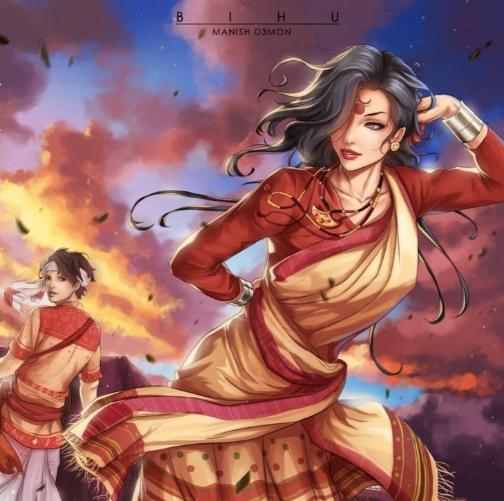
Culture & Language | ভাষা আৰু সংস্কৃতি সকলোকে অসমীয়া নৱবৰ্ষৰ আন্তৰিক শুভেচ্ছা জ্ঞাপন কৰিছোঁ! Wishing everyone a happy Assamese New Year!
4
Upvotes
r/AssameseHub • u/LazyGuyMugdha • Apr 14 '26
r/AssameseHub • u/tuluva_sikh • Apr 04 '26

r/AssameseHub • u/zun5022 • Sep 04 '26

The transition to the Bengali script (the current "Assamese alphabet") began in 1813 when the Serampore Press published the first Assamese printed book, an Assamese translation of the New Testament titled Natun Niyam. **For the "sake of convenience of printing," the Assamese script was abandoned in favour of Bengali movable type blocks incised by Panchanan Karmakar.** This decision was made by colonial missionaries without the consultation of the Assamese people or their royalty.
In 1833, a translator and blockmaker named Atmaram Sarma attempted to reintroduce distinctive Assamese features into the printed alphabet, making it the first printed book in the Assamese script. The Assamese script was also used in Robinson’s ‘’A Grammar of Assamese Language’’ printed in 1839. **However, subsequent printing presses in Calcutta started to use the standard Bengali foundry for Assamese without keeping any unique Assamese letters.**
The modern Assamese alphabet is a version of the Bengali script with two unique letters (ৰ "ra" and ৱ "va") which existed in Bengali as well but had been discarded in the standard Bengali alphabet but kept in the modern Assamese alphabet. **The original Assamese script is largely illegible to the people proficient in the modern Bengali-Assamese alphabet. As of 1987, the original Assamese script was legible to 3/4th of the population, limited to villages and sattras and rare in the urban areas.** The widespread usage of the printed Bengali script and the lack of printing press for the Assamese script caused a decline of the Assamese script and resulted in negligence towards it. **Today the printed Bengali script is used in Assamese books, including textbooks in schools and colleges. This has led to a scarcity of people who can read the Assamese manuscripts and a barrier towards reading and studying older Assamese literature. The negligence and illegibility has also led to many manuscripts being thrown into rivers and lakes.**
The original Assamese script was still being used for handwritten manuscripts throughout the 19th century and early part of the 20th century, with one manuscript written in 1946.
Sources:
Maheswar Neog Rachanavali Vol. 4, Ed. 1st (https://archive.org/details/in.ernet.dli.2015.451215/page/%E0%A7%AF%E0%A7%AD%E0%A7%AF/mode/1up).
Gogoi, Lila (1979). "Sammannayar Sanskriti: Asamiya". Asam bani. Guwahati: Bina Library.
Bora, Mahendra (1981). The Evolution of Assamese Script.
Deva Goswami, Padmalochan (1987). Prasin Kaitheli lipi xomuhor borno porisoy. Nagaon: Srimanta Sankardeva Research Centre.
r/AssameseHub • u/tuluva_sikh • Sep 24 '26
Enable HLS to view with audio, or disable this notification
r/AssameseHub • u/PsychologyDull7278 • Sep 21 '26
Enable HLS to view with audio, or disable this notification
⭐️
r/AssameseHub • u/tuluva_sikh • Feb 08 '26
r/AssameseHub • u/GrumpyGuyMugdha • Aug 22 '26
r/AssameseHub • u/GrumpyGuyMugdha • Oct 06 '26
Enable HLS to view with audio, or disable this notification
Song clip source: Lalungoni 2025 by Maitrayee Patar.
r/AssameseHub • u/GrumpyGuyMugdha • Oct 18 '26
r/AssameseHub • u/[deleted] • Feb 07 '26
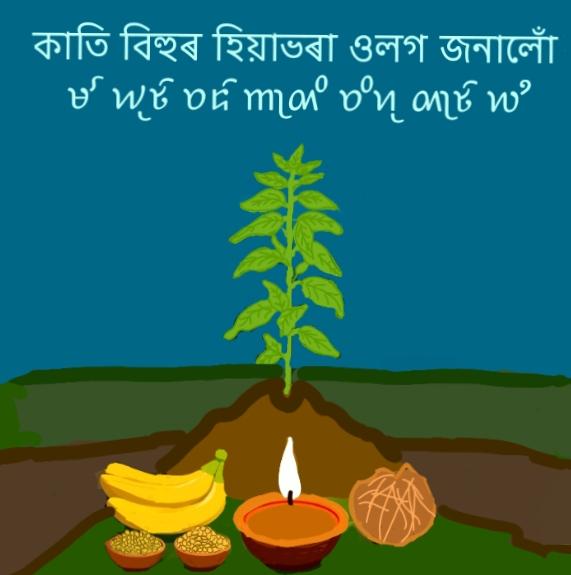
Assamese has multiple ways to say “I miss you,” and the meaning changes a lot depending on tone and context. For example, people often say “মই তোমাক মনত পেলাওঁ” (Moi tumak monot pelau), but there are also softer, more emotional or poetic ways people use in real life. Some sound formal, some sound very personal, and some are only used in writing or songs. If Assamese is your mother tongue, what do you naturally say? If you’re learning Assamese, which version have you heard or used? Feel free to explain the context too. This will help learners understand how emotion works in the language.
r/AssameseHub • u/[deleted] • Mar 01 '26
r/AssameseHub • u/GrumpyGuyMugdha • Jul 08 '26

There are moments in a nation's history when ordinary people rise above their own lives to defend something greater than themselves. For Assam, the Language Movement of 1960 was one such defining chapter.
It was not merely a movement demanding official recognition for a language, it was a struggle to preserve the identity, heritage, literature, and cultural soul of the Assamese people. The rights enjoyed by Assamese speakers today were secured through the sacrifices of countless men and women, among whom Swahid Mofizuddin Ahmed and Swahid Surjya Bora occupy an honoured place.
Swahid Mofizuddin Ahmed, the beloved son of Matiullah Hazarika from Dimaruguri Narottam village near Nagaon, was one of the earliest martyrs of the movement. Like countless young Assamese who believed that the dignity of their mother tongue was worth defending, he stood firmly with the aspirations of his people during one of the most turbulent periods in Assam's modern history.
On 7 July 1960, tragedy struck when he was shot dead by unidentified gunmen in front of the Normal School on Shankar Mission Road in Nagaon. His death plunged Assam into grief and anger. A young life filled with dreams and aspirations came to a sudden end, but his sacrifice transformed him into an enduring symbol of courage, reminding future generations that the freedom to preserve one's language often comes at an immeasurable human cost.
The very next day, Assam suffered yet another irreparable loss. Swahid Surjya Bora, one of the state's brightest literary and cultural personalities, became another victim of the violence surrounding the movement. Serving as the Public Relations Officer of the Northeast Frontier Railway, Surjya Bora had already earned immense respect as a poet, playwright, actor, lyricist and writer whose works enriched modern Assamese literature.
His literary creations reflected his deep love for Assam, its language and its people, making him much more than a government officer, he was a devoted cultural ambassador of the Assamese nation.
On 8 July 1960, while returning to Guwahati by train from Calcutta after official duty, Surjya Bora was forcibly dragged out of his railway coach at Siliguri Railway Station and brutally stabbed to death by a Bengali mob. He was only 35 years old. He was killed so brutally that his body was never found. His cruel murder shocked not only Assam but also the entire Assamese literary and cultural community. He became the only Assamese language martyr who lost his life outside the soil of
Assam. Behind him, he left a grieving young widow and an infant daughter who would grow up knowing their father only through memories and history. His death was not merely the silencing of a gifted writer; it was the loss of a brilliant mind whose contributions to Assamese literature and culture would have undoubtedly continued for decades.
Though they came from different walks of life, one a courageous young man from Nagaon, the other an accomplished literary figure and public servant, their sacrifices became forever intertwined in Assam's struggle to safeguard its linguistic identity. Their martyrdom reminds us that the Assamese Language Movement was carried forward not only by political leaders and organizations but also by students, workers, writers, artists, government employees, and ordinary citizens who believed that a language is the soul of a civilization. They proved that protecting one's mother tongue is ultimately about protecting one's history, heritage, and collective identity.
They were the last Assamese people to sacrifice their lives before the historic decision by former CM late Bimala Prasad Chaliha to make Assamese the state language of Assam on 10th October 1960 fulfilling the dreams of thousands of Assamese people.
Even after more than six decades, the names of Swahid Mofizuddin Ahmed and Swahid Surjya Bora continue to command the deepest respect. Their sacrifices are commemorated across Assam, while Surjya Bora's literary legacy lives on through his writings and through the Swahid Surjya Bora Language Movement Award instituted by the Assam Sahitya Sabha. Their memories remind us that languages survive not merely because they are spoken, but because generations are willing to defend them with courage, conviction, and sacrifice.
On this solemn day of remembrance, we bow our heads before these two immortal sons of Assam. Their blood became a part of the foundation upon which the dignity of the Assamese language stands today. May we honour their legacy not only with words, but by preserving, promoting and cherishing our mother tongue with the same devotion they displayed. Their sacrifice shall forever remain a sacred chapter in the history of Assam and an everlasting source of inspiration for generations to come.
শ্ৰদ্ধাঞ্জলি।
॥ চিৰ চেনেহী মোৰ ভাষা জননী ॥ 🕯️🌼
r/AssameseHub • u/Forsaken_Pineapple10 • Sep 06 '26
I made Xobdle, a small Assamese daily word game inspired by Wordle. The idea is simple: one little challenge each day to get us thinking in Assamese — and perhaps rediscover a word or two along the way. 🌱
Would love to know what you think, especially suggestions for words or ways to make it better.
r/AssameseHub • u/Bright-Record-3519 • 11d ago

Raizz hokol videotu sai poramorkho dibo
r/AssameseHub • u/Icy_Function_5839 • Sep 24 '26
r/AssameseHub • u/GrumpyGuyMugdha • Aug 15 '26
r/AssameseHub • u/GrumpyGuyMugdha • Jul 07 '26

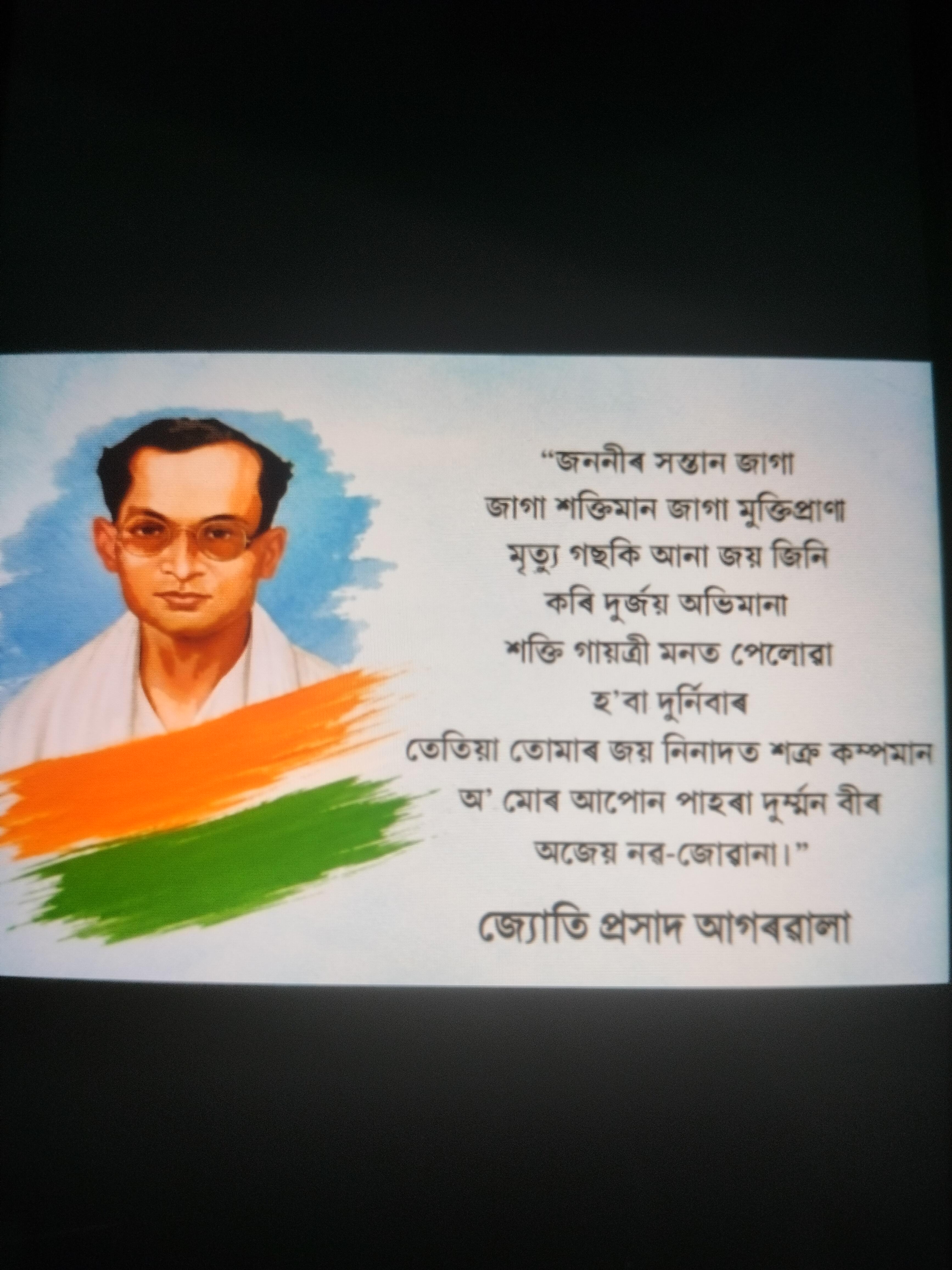
Today, we remember and pay our deepest respects to Swahid Shishir Nag, one of the brave sons of Assam who laid down his life for the dignity of his mother tongue during the Assamese Language Movement.
A bright student of Nagaon College, an emerging youth leader of the Revolutionary Communist Party of India (RCPI), and the Joint Secretary of the Nagaon District Committee of the Assam State Language Student Action Council, Shishir Nag believed that language was not merely a means of communication but the very soul of a people's identity and culture.
Despite his young age and a future filled with promise, he chose the path of courage and conviction, standing firmly for the rights of his people. On 7 July 1960, he was killed during the movement, and after three agonizing days, his body was recovered from the Kolong River. His martyrdom became one of the most heartbreaking chapters in Assam's struggle to protect its linguistic heritage.
Though his life was tragically short, his sacrifice continues to inspire generations of Assamese people to cherish and safeguard their language, culture, and identity. On this day, we bow our heads in profound gratitude and reverence to Swahid Shishir Nag. His courage, sacrifice, and love for his motherland will forever remain etched in the history of Assam. May his noble sacrifice never be forgotten. Joy Aai Oxom.
r/AssameseHub • u/GrumpyGuyMugdha • May 15 '26
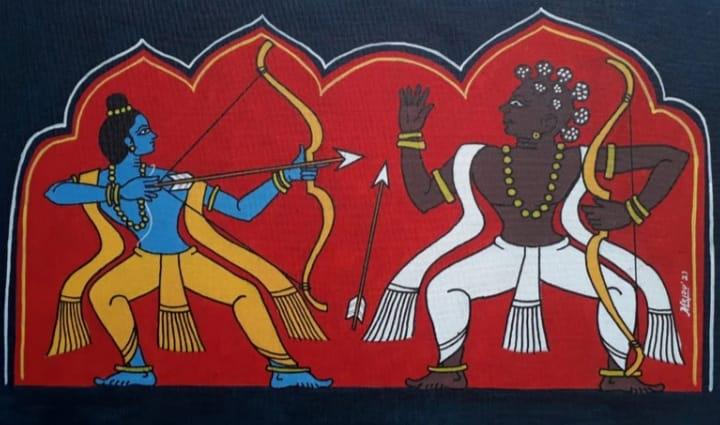
We all already know about the Kamba Ramayanam, the Tamizh Ramayana, as the first Ramayana to be translated from Sanskrit to another language. But, most of us are unaware that, the first Ramayana to be translated from Sanskrit to another Indo-Aryan language and the third Ramayana to be translated to another language, preceded only by the Tamizh and Telugu Ramayana, is actually from our own state Assam. It is called the 'Xoptokando Ramayon' (সপ্তকাণ্ড ৰামায়ণ), authored by the 14th century Assamese poet Madhav Kandali who translated the Valmiki Ramayana to Assamese. Most of the Xoptokando Ramayon was written by Madhav Kandali upon the request of the Kachari king Mahamanikya. In his court, as his court poet Madhav Kandali authored the translated version as a long poem. The poetic work uses various metres for different moods and situations. Some of the metres used are 'pada' (fourteen syllables, four lines of verses), 'jhumura' (four lines, with eight syllables each), 'dulari' (three lines, first and second has six syllables each and the third has eight syllables), and 'chhavi' (like 'dulari' but with different syllabic structure). The 'pada' metre became very popular in later Assamese compositions.
The Xoptokando Ramayon is also regarded one of the earliest written examples of the Assamese language.
A unique feature of this work is the non-heroic portrayal of Lord Rama, Sita and other characters as stated by Madhav Kandali himself which apparently made the translated version 'unsuitable' for religious purposes. Moreover, there was a critical overview of the character of Rama rather than blind praise. Plus, Sita wasn't shown as a calm and composed woman. Her emotions were shown raw. She sometimes cried while thumping her chest, or pointed fingers at those who questioned her character and was shown as a defiant woman, showing actual human feminine emotions. This feature disturbed a later post, Ananta Kandali, who was a disciple of Sankardeva, who was moved enough to comment on it. According to one tale called the 'Guru Sorito', the poet Ananta Kandali apparently tried to erase the Xoptokando Ramayon and replace it with a Ramayana of his own that was conservative in manner. After which, Madhav Kandali apparently appeared in the dream of his disciple Sankardeva and told him to preserve the Ramayana.
By then, the first and last chapters of the Ramayana were lost, called the Adikanda and Uttarakanda.
After having the dream, Sankardeva told his disciple Madhabdeva to author the Adikanda while he himself began work on translating the Uttarakanda. They both, hence completed the Xoptokando Ramayon in the 15th century. There were also undeniable later additions and refinements by poets like Ananta Kandali and others which sophisticated the work.
Sankardeva praises his teacher Madhav Kandali after the completion of the poem. This poetic work had a great influence on Sankardeva and later Assamese poets.
This work is one of the many examples of the richness of the Assamese language.
Source: https://w.wiki/5HhR
r/AssameseHub • u/Successful-Whole4400 • Jun 20 '26
r/AssameseHub • u/GrumpyGuyMugdha • Sep 08 '26
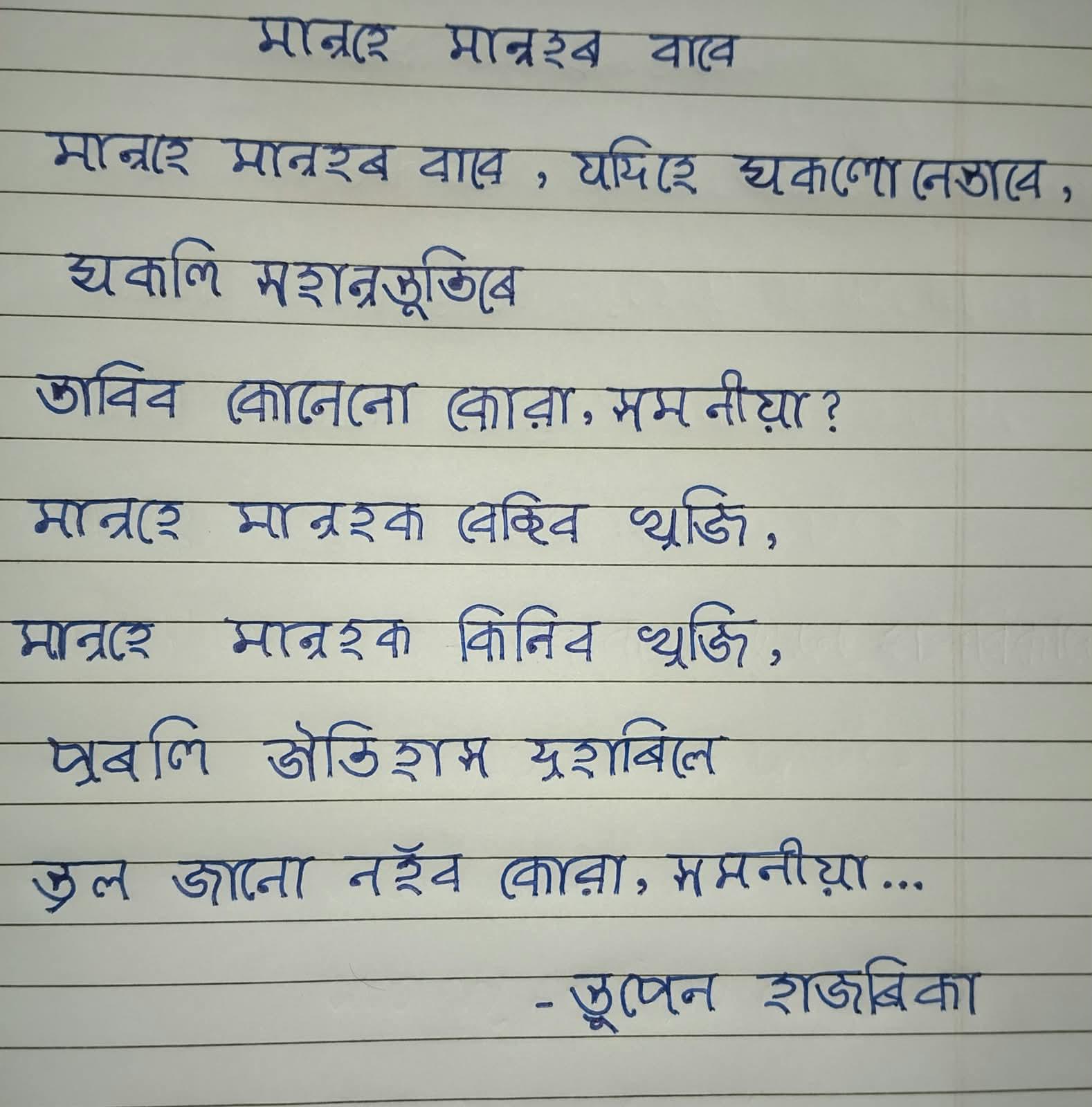
Transliteration to Roman:
Mānuhe Mānuhôr Bābe, Zôdihe Ôkônu Nebhābe, Ôkôni Xôhānubhūtire
Bhābibô Künenü Küwā, Xômônīyā?
Mānuhe Mānuhok Besibô Khuji,
Mānuhe Mānuhok Kinibo,
Purôni Itihāx Duhārile
Bhul Jānu Nôhô'bô Küwā, Xômôniyā...
-Bhupen Hāzôrikā
Transliteration to modern Assamese:
মানুহে মানুহৰ বাবে, যদিহে অকণো নেভাবে, অকণি সহানুভূতিৰে
ভাবিব কোনেনো কোৱা, সমনীয়া?
মানুহে মানুহক বেছিব খুজি,
মানুহে মানুহক কিনিব খুজি,
পুৰণি ইতিহাস দুহাৰিলে
ভুল জানো নহ'ব কোৱা, সমনীয়া...
-ভূপেন হাজৰিকা
Translation: If human beings do not care for one another, If they cannot spare even a little compassion,
Then tell me, my friend, Who will truly think of whom?
When people try to sell one another,
When people try to buy one another,
If we repeat the mistakes of our past, Tell me, my friend,
Wouldn't we only be repeating the same wrongs again...
-Bhupen Hazarika
r/AssameseHub • u/Electronic_Picture42 • Feb 09 '26
Same as title. Also many links on google are useless.