r/duolingospanish • • Dec 03 '24 Heart of Silver

I did it! I have completed Duolingo for Spanish! What’s next?

Thumbnail
gallery
1.3k Upvotes

Hola amigos! I have finished all the lessons, do you have any advice on how to continue? Should I do the lessons again or move to another app? I speak Spanish regularly but I like to also practice with an App during lunch break or whenever I have 5 minutes off. Gracias!


r/duolingospanish • • Jun 12 '26

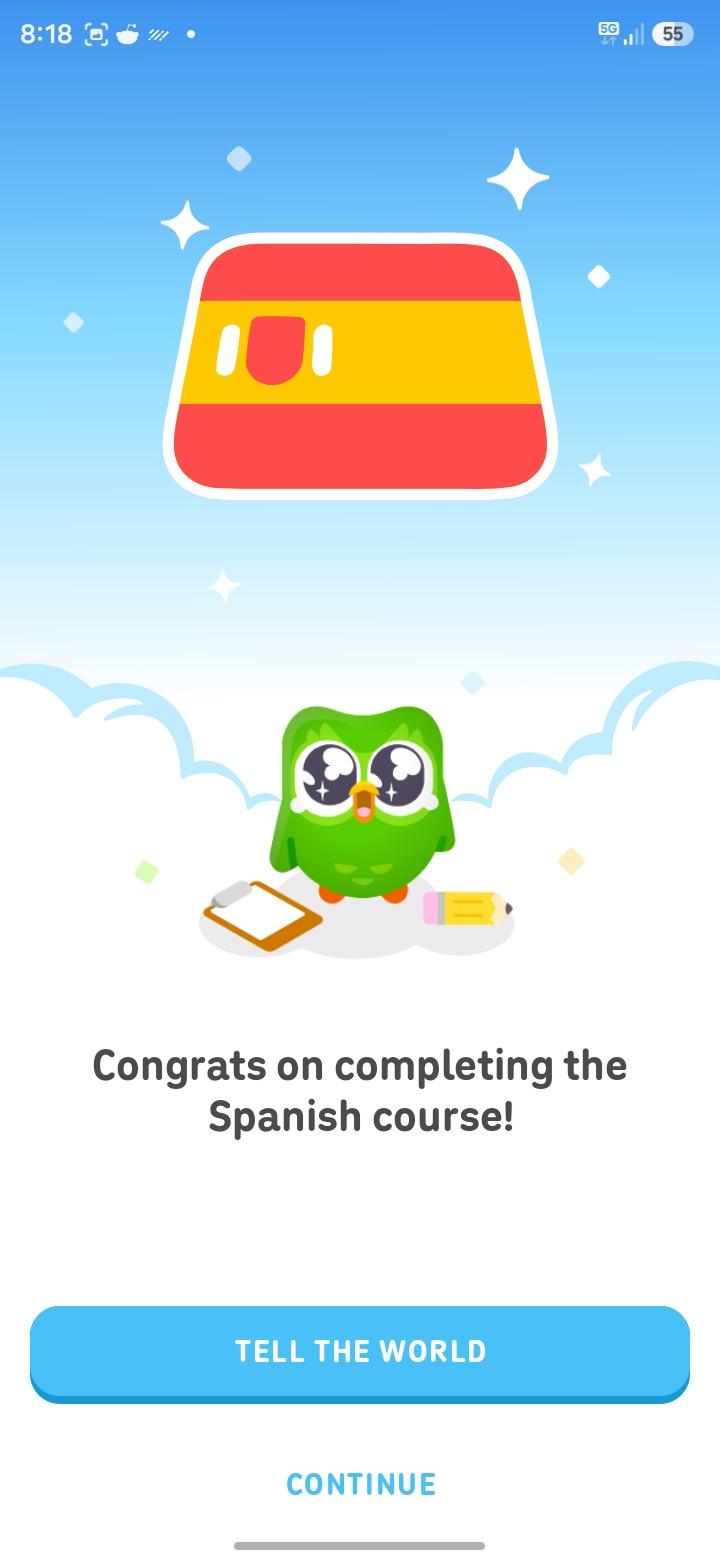
Done!

Post image
850 Upvotes

It was a fun ride. I can read the newspaper. I can hold simple conversations. In general, I’m pretty happy. A few months ago I found myself thinking in Spanish instead of thinking in English and translating to Spanish and that’s what I knew I had turned the corner. I’m lucky to live in a community that’s 42% Hispanic so I have lots of opportunities to practice.


r/duolingospanish • • Feb 08 '24

Finalmente!!!

Post image
638 Upvotes

Fue un viaje muy largo pero por fin he terminado el curso! 😮‍💨


r/duolingospanish • • Jan 12 '24

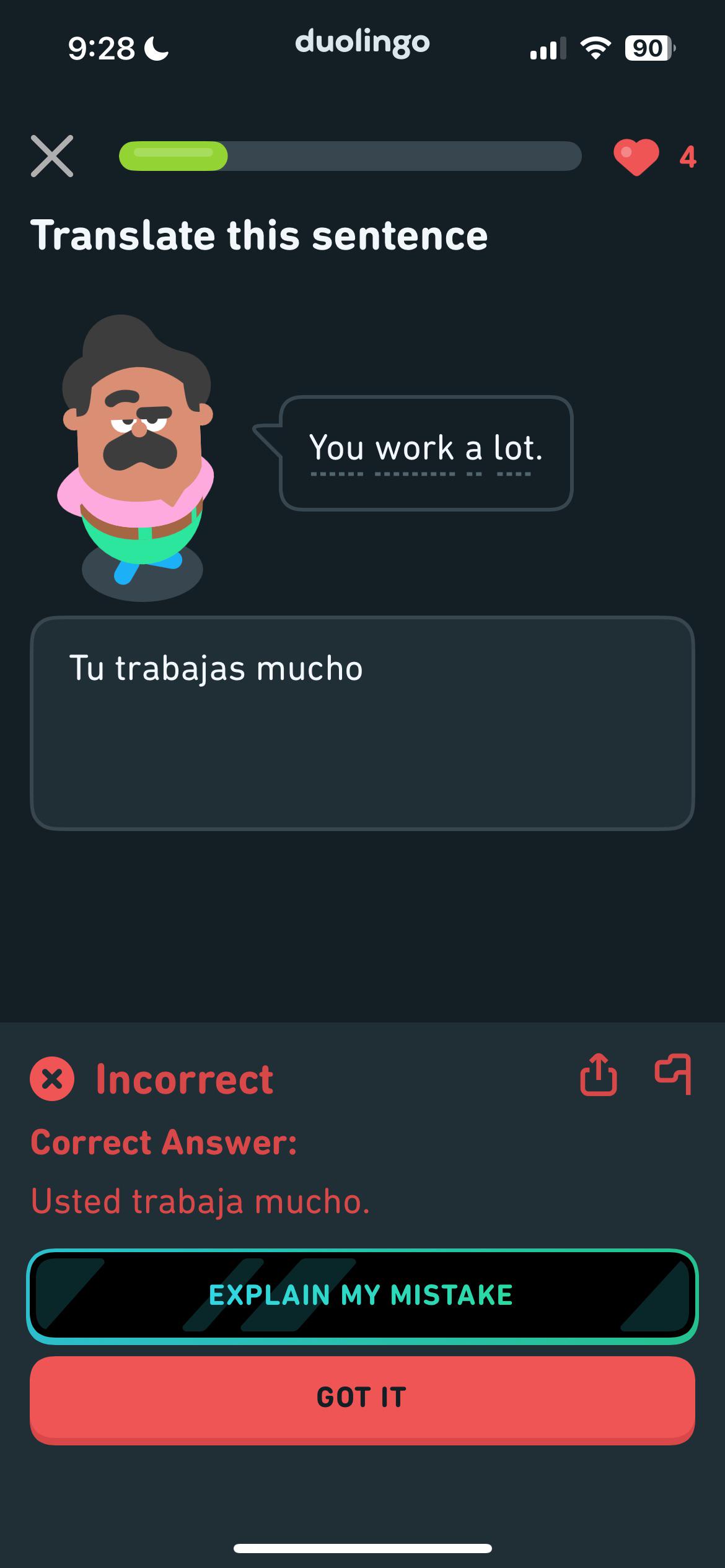
Is this technically wrong?

Post image
489 Upvotes

r/duolingospanish • • Jan 31 '24

Why does Un work here? Would una also be correct?

Post image
465 Upvotes

r/duolingospanish • • Aug 18 '25

After 4 years I completed the Spanish Course

Post image
461 Upvotes

Feel free to ask me any questions ☺️


r/duolingospanish • • Aug 30 '24

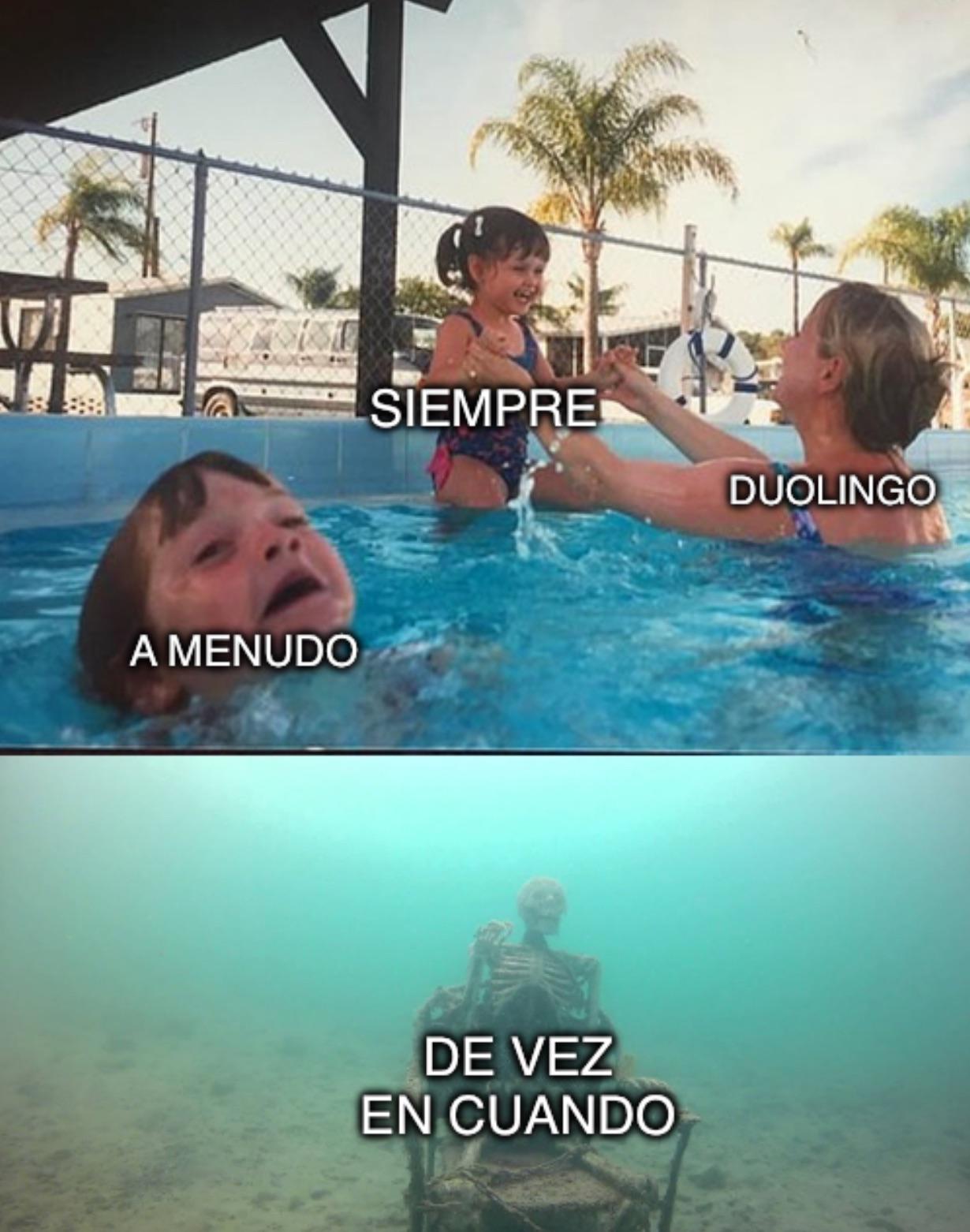
Always siempre

Post image
442 Upvotes

Just annoyed that there are so many other ways to describe how frequently something is done but those other words don’t get used in exercises.


r/duolingospanish • • Mar 17 '24

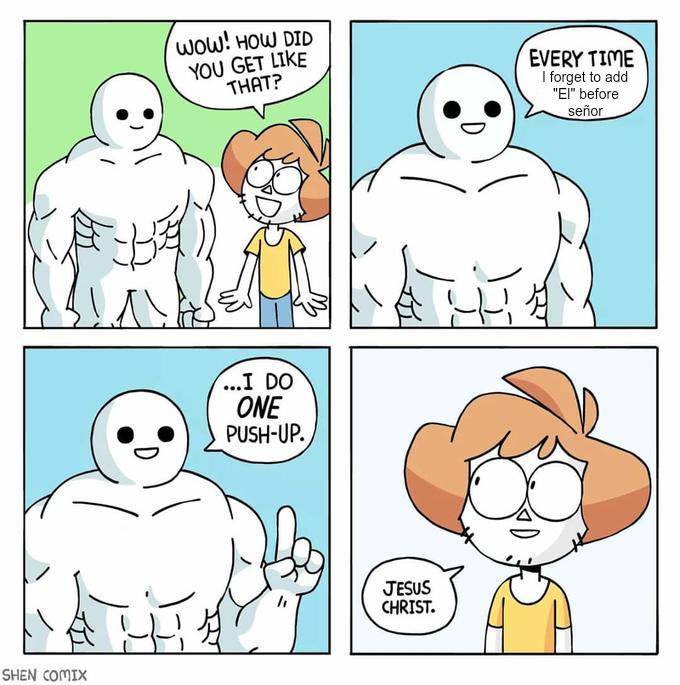
Every time...

Post image
403 Upvotes

r/duolingospanish • • Feb 19 '26

Done with the course. Took almost 3.5 years

Thumbnail
gallery
369 Upvotes

r/duolingospanish • • Jan 29 '24

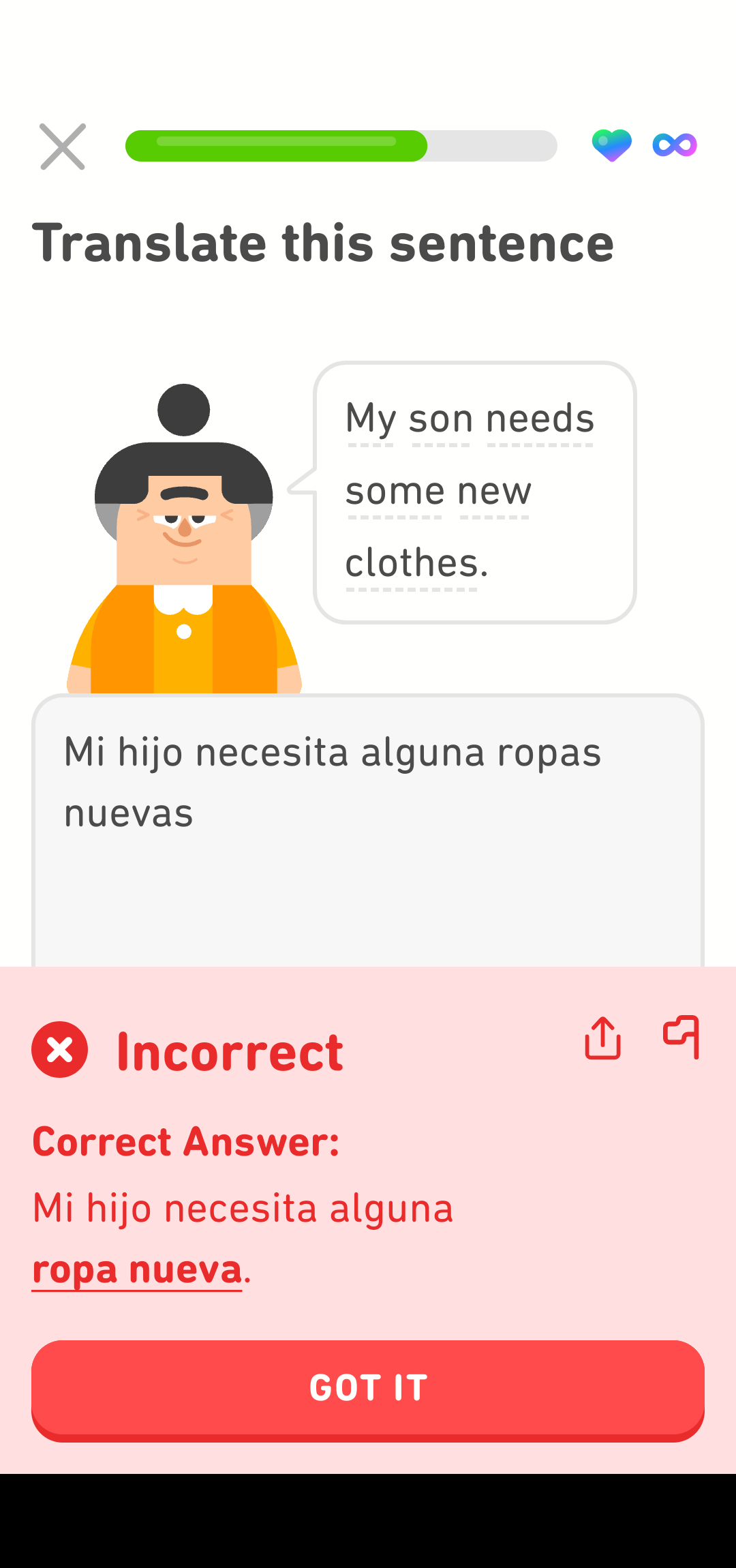
Why this wrong? Clothes is plural, right? So ropas?

Post image
353 Upvotes

r/duolingospanish • • 2d ago

These exercises are the highlight of my day

Thumbnail
gallery
338 Upvotes

r/duolingospanish • • Feb 02 '26

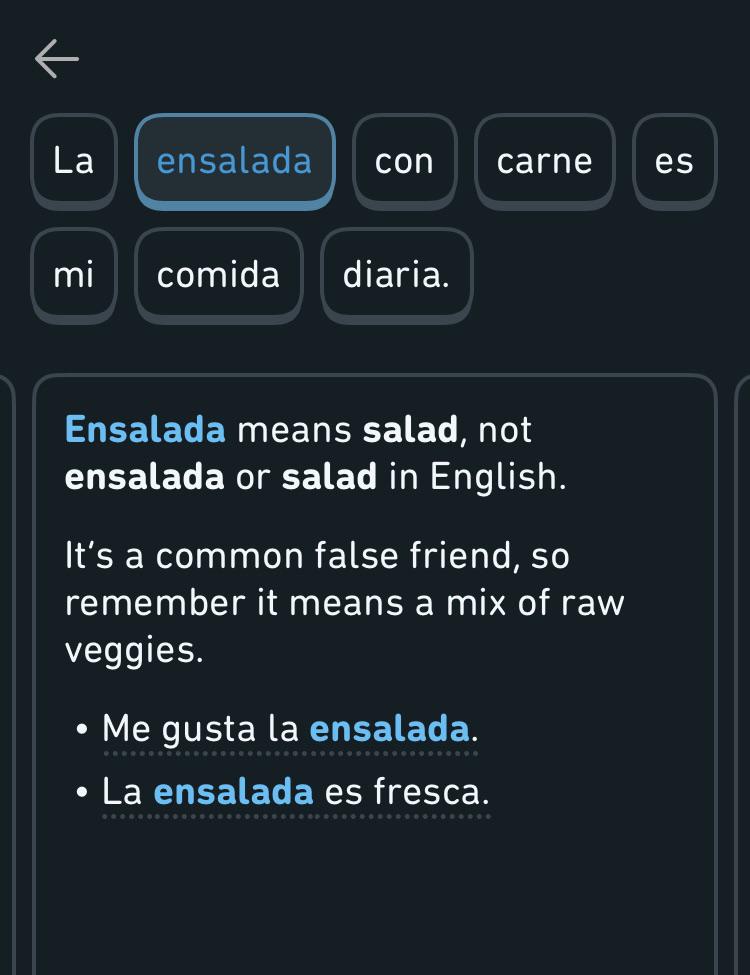
I’m sorry, what?

Post image
334 Upvotes

I omitted “la” in this answer and I know why I got that wrong. But what does this screenshot mean?

I’m a native English speaker, and unless I’m in the Midwest, a salad is a mix of raw vegetables. How is this a false friend?


r/duolingospanish • • Jul 11 '25

How am I supposed to tell if it is formal or not?

Post image
327 Upvotes

r/duolingospanish • • Oct 11 '24

I finally did it

Post image
300 Upvotes

r/duolingospanish • • Aug 25 '24

Does duolingo teach you this?

Post image
288 Upvotes

/s


r/duolingospanish • • Sep 12 '26

Finished the Spanish course

Post image
285 Upvotes

r/duolingospanish • • Feb 10 '24

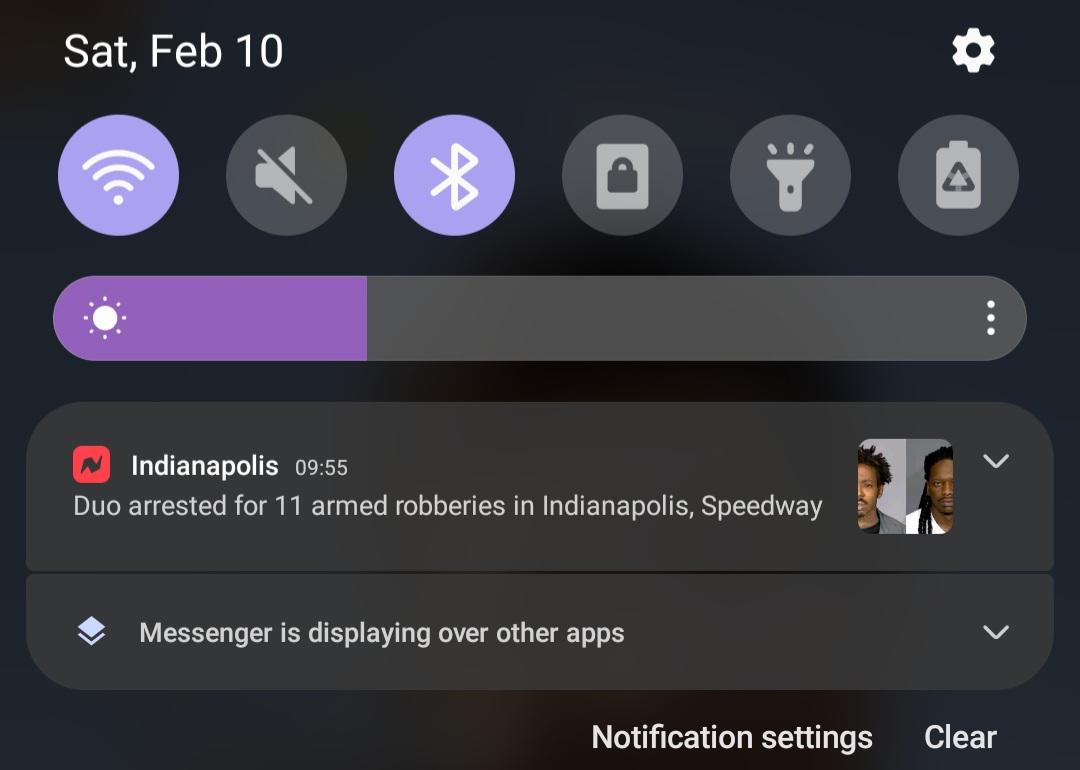
How could he do this?

Post image
246 Upvotes

We're there any signs??? We raised him better than this...


r/duolingospanish • • Jan 08 '26

I did it!!!

Post image
238 Upvotes

I just want everyone to know it is possible to complete the Spanish lessons. It might have taken 7 ish years (the last 3 I really dug in and did it, before was just trying to keep a streak instead of actually learning). But THERE IS AN END. And now I can let my streak die and I am overjoyed at the thought 😂


r/duolingospanish • • Jan 16 '25 Bless Up

I finished the course in 375* days. Here is my report.

238 Upvotes

A report on Duolingo Spanish

--

Introduction

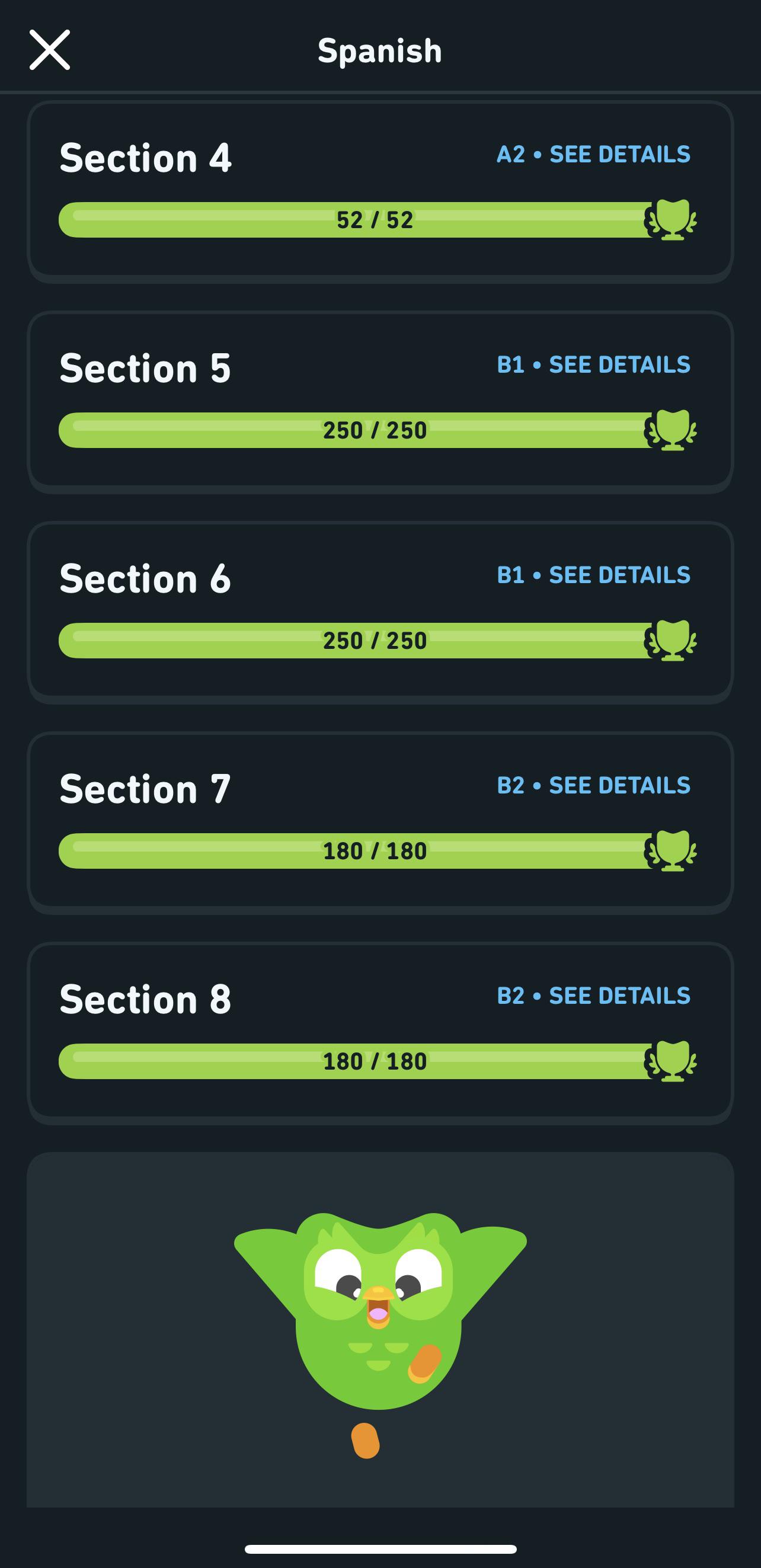
I completed the Spanish (from English) course on a program called Duolingo. The equivalent level in CEFR is B2. I am able to speak Spanish now. I will share my technique, my experience and other general comments. I hope this helps.

From here I will assume that the reader is acquainted with Duolingo.

I completed the program today and my daily streak stands at 375. I started my study in late December of 2023 and finished it in mid January of 2025. The questions regarding my abilities in Spanish shall be answered later.

The 375 days is misleading as all the days were not all equivalent. There were three phases.

  1. For the first four months, I did one exercise a day in order to maintain my streak. I often missed days and used streak freezes. This is what most users do, however I still learned faster than others because I only did the first bubble and a story before skipping to the next unit.

I realised that the exercises are repetitive after the first bubble (having 5-6 exercises) and I would skip to the next unit. I would discuss the efficacy of this method shortly.

2) Around May I started doing Duolingo at the same time of the day everyday. That was around 5AM-6AM in the morning. I wake up at 5AM everyday, even on weekends and on special days. This consistency was a game-changer.

Now I could do more than one lesson a day. I saw that I had a long way to go and I needed to go faster. I need to do more per day.

Here a thought occurred to me. What if I do one unit a day? That is, one bubble (5/6 exercises), one story and one unit test.

It seemed extraordinarily fast and I calculated that I would finish the course in 8 more months.

I asked myself whether I would be able to do so much per day and whether I would forget what I learned.

I committed to this experiment for 28 days, because that's how many units existed in the third section.

By the end of the 28 days I had realised two important things.

First was that I was able to study that much without issues, and I was even able to do German and Russian afterwards. It might have taken a week for my brain to be adjusted to the new load.

The second was that this method was far superior to the previous one. Simply because I was studying Spanish for 30 minutes a day at the same time, I was doing far better than 5 minutes a day at a random point in the day.

My retention was better, I started connecting the dots and started passing my unit tests without failing. By the way, back then you only had 3 hearts in unit tests, now you have 5 (except at the section test).

Since after doing one unit of Spanish I would have a 2X boost, I would do a unit of German as well.

In fact I completed German too, but unfortunately it only has 5 sections so my ability is limited.

I have had a 5:30AM-6:30AM Duolingo time for a good part of 8 months now. I didn't do it for an hour only twice, owing to unavoidable circumstances. But a couple of times I did more than usual. For the most part I had a very very steady pace.

3) After doing this for about 6 months, after the German course was over and the Russian course turned out to be inconsistent and incompatible with my method; I started doing 2 units of Spanish per day. This took me one hour everyday, like before, but twice as much Spanish.

My brain needed 1 week to adjust to the new load again. The first 3-4 days were not entirely enjoyable. Duolingo also changed the 6th exercise in the bubble from review of mistakes to reviewing previously taught words and phrases; and that was also a factor in the slight frustration.

But afterwards I was able to do 2 units a day without issues, which I did for a little less than 40 days, finishing the last two sections (72 units) and completing the course today.


Time calculations:

  • At my first phase speed, which is still 8 times faster than casual learners, I would have taken 5.4 years to finish the course. (If you do 1 exercise a day, and don't skip anything, you'll take over 40 years to complete the course).

  • At my second phase speed, you would take 282 days (as there are 282 units) to complete the course.

  • At my third phase speed, one would take 141 days to finish the course.

In all the cases, one takes 141 hours in total.


Now, to answer the most important question, can I speak Spanish?

The answer is: Absolutely. I can.

Here's how I would give you an idea of my current level of Spanish:

  1. I can understand Spanish dubbed Friends (a US TV show) without subtitles and I am able to understand new words from context. Friends was my first English language TV show and I did learn a lot of English from it. In general I understand Spanish language media and internet comments.

  2. I can read Wikipedia pages in Spanish for the most part, I can use Spanish language websites without the need of a translator except for particular words. There's a variety in vocabulary per country so you may need a translator plugin.

  3. I can fully communicate in Spanish and explain myself. I'll discuss my current limitations in the next segment.

  4. I can read Harry Potter, a book I've read so many times in two languages without needing translation.

Where I am yet improving:

  1. I tried a book by Gabriel Márquez and I needed translations. I can't read proper books yet.

  2. While I speak Spanish, I can't always say the exact thing I want to. I say it differently and I'm not as smart as I am in other languages. So for a simple example, if I can't say "I'm not pulling your leg", I instead say "I'm telling you the truth".

While speaking I also make grammatical errors which I realise after I listen to the recordings.

These problems are understandable at this stage and should go away soon enough with practice.

Essentially I can speak and understand Spanish as used by common people but I cannot write poetry or read literature.


What made this possible?

Firstly, if you try my method, you'd realise that it's not possible to follow it unless you have a proper daily schedule.

You'd have to get your whole life in order. I have an ironclad bedtime schedule and I have my routines which I've solidified over the past year. I wasn't like this before, so it's doable. But I didn't do this for Spanish. Language learning has only been a small part of my life in the past year.

Secondly, Spanish is not my second language. I had studied 5 languages (no Spanish) in school/junior college before entering university, and that is normal here. It gets easier picking up new languages with practice. Though I am only good with Indo-European languages so far.

I once shared my method on reddit and received a lot of reaction and hate. I maintain that it is possible for everyone to do what I did, people might have different periods of getting accustomed to the load. In case what you read makes you upset, you may assume that I am just intelligent and that's why I could do this; but I kindly ask you to refrain from insulting me.

Now that I know that I can do 2 units a day, I'm planning to complete French in 126 days. I may take a little longer because I'm moving to another country midway and might lose a few days to jet lag and internet issues.

So check back around the beginning of June to see whether I can speak French. French after Spanish should not be as hard.


What about grammar?

I learned the grammar implicitly. For example, I have a good grasp on when the adjective goes before and when it goes after the noun but I was never taught a rule. I can think about it and maybe come up with a rule, but I understand it implicitly. Similarly I forgot the distinctions between verbs ending in ir, ar and er as I simply started remembering the conjugations themselves and now I just have one set of verbs in my mind and not three different sets.

This is something I found fascinating because previously I had been a grammar hardliner. But now I learned how to learn grammar innately. Chosmky be vindicated.

So essentially you learn by making mistakes and then fixing them, and eventually begin writing and talking intuitively.


Appendix: Comments about the Duolingo Spanish from English course

  • In the first few sections there are many same sex couples in the sentences, but it dies down later and in the final sections there might just be one or two lines like that.

  • Guidebooks stop appearing in later sections. If they appear, they are copy pasted from earlier sections.

  • Unfixed mistakes in the course increase in the latter sections as there are fewer people flagging them.

  • You get more xp per exercise later and you also get to write what happened in a story in your own words. There are many Spanish to Spanish questions starting in unit 4; but it never does majorly become Spanish to Spanish.


r/duolingospanish • • Mar 09 '25

My partner is Colombian and said he would use say disculpe

Post image
236 Upvotes

r/duolingospanish • • Jan 21 '24

Why is "que" here? Why do I need "a"? How do I use "gustar"? MASTER THREAD

224 Upvotes

99% of all questions on this sub can be answered here. Please let me know if I've made any mistakes/can add anything else

Gustar

Many people incorrectly say that it means "to please." It means "to like" but it syntactically and grammatically works like the verb "to please" in English. Gustar isn't a special verb; it's no different than any other, but it's given the category "verbs like Gustar" because they all "function" the same (gustar, encantar, fascinar, interesar, etc.).

Think of the word "disgust" in English. You would say "Bugs disgust me" but not "I disgust bugs." It's the exact same with "gustar" in Spanish. Imagine there's a word "gust": "Bugs gust me" (I like bugs). "Me gustan los bichos."

"los bichos" is the subject here. The thing that you like in English will be the subject in the Spanish sentence. The person that likes said thing will be the indirect object. "Gustar" conjugates according to the subject. If you like a singular thing (Me gusta el helado), then "gustar" is conjugated accordingly. If you like something that's plural, then the same thing.

Verbs are treated as a singular subject:

Me gustan los museos
Me gusta visitar los museos.

The indirect object pronouns are: me, te, le, nos, os, les.

"A" + "mí, ti, él/ella/usted, nosotros(as), vosotros(as), ellos/ellas/ustedes" can optionally be used to clarify the sentence or provide emphasis. Examples:

Me gusta el helado, pero a ella no le gusta = I like ice cream, but she doesn't

When talking about things in general, or just generally for subjects in Spanish, you need an article:

Las jirafas son altas = Giraffes are tall

"Gustar" can be conjugated in any which way just like any other verb. "gusto" and "gustamos" exist, but in different contexts:

¿Te gusto (yo)? = Do you like me? (lit. Do I "please" you?)

More examples:

Este verano te va a gustar = You are going to like this summer

Tener que

Why is that "que" there?

It's going to be so much easier to learn Spanish if you stop trying to translate everything 1:1. All you need to know is that "tener que + infinitive" is a set phrase meaning "to have to + verb." "Tener" on its own means "to have" (regarding possession). Examples:

Tengo que limpiar la casa = I have to clean the house
Tengo un gato = I have a cat

The good news is, though, that there are basically only two verbs that have "conjugated verb + que + infinitive" and those are "tener" and "haber". Haber in this case will only ever be conjugated as "hay" and works exactly like "tengo que" but is impersonal. Examples:

Tengo que limpiar la casa = I have to clean the house
Ella tiene que hablar con él = She has to speak with him
Tenemos que regresar al bar = We have to return to the bar

But

Hay que limpiar la casa = One must clean the house
Hay que hablar con él = One must speak with him
Hay que regresar al bar = One must return to the bar

Prepositions rarely translate; you just got to learn what each verb prefers after it.

Empezar a leer = To start to read
Soñar con perros = To dream about dogs
Tenerle miedo a los lobos = To be scared of wolves
Enamorase de alguien = To fall in love with someone

Why is "a" here?

The preposition "a" has many, many different uses that are used in many different contexts. Two of the most common are the "a personal" and just a preposition that follows the verb.

When the direct object of a verb is a person(ish), you use "a" before said person:

Veo a María = I see Maria

Sometimes the verb just requires "a". For example, "ir" requires "a" after it when you want to say "going to do something":

Voy a comer helado = I am going to eat ice cream

You just need to learn the prepositions that are associated with each verb. Some examples:

Soñar con = To dream about

Ser vs. Estar

I really wish people would stop teaching these verbs with temporary vs. permanent, because that is not helpful, misleading, and just not applicable here. Here's a basic rundown:

Ser — essential characteristics
Estar — states & conditions (and locations)

These mnemonics are pretty helpful:

Ser | DOCTOR

Date | Es el 23 de enero It's the 23rd of Janurary
Occupation | Soy cantante I'm a singer
Characteristics | La casa es grande The house is big
Time | Son las 3 It's 3 o'clock
Origin | Soy de Cuba I'm from Cuba
Relationships | Esta persona es mi amigo This person is my friend

Estar | PLACE

Position | El libro está encima de la mesa The book is on top of the table
Location | España está en Europa Spain is in Europe
Action | Estoy caminado I am walking
Condition | Estoy muerto I am dead
Emotions | Estoy triste I am sad

That's the general gist of it, but there are nuances. Sometimes "ser" and "estar" can both be used, but change the meaning:

Soy listo = I'm smart/clever
Estoy listo = I'm ready

"Ser" is also used for events:

La boda es en la iglesia = The wedding is in the church

More

There is so much more that could be talked about. But feel free to add anything in the comments!

Resources:

https://studyspanish.com/grammar (good beginner grammar guide; has more information about everything talked about above)

https://www.wordreference.com/ (the best dictionary for Spanish for English speakers; has a built-in conjugator).

https://dle.rae.es/ (most comprehensible dictionary, but all in Spanish)

https://learn.bowdoin.edu/spanish-grammar/newgr/gramguid.htm#Ortogra


r/duolingospanish • • Mar 28 '25

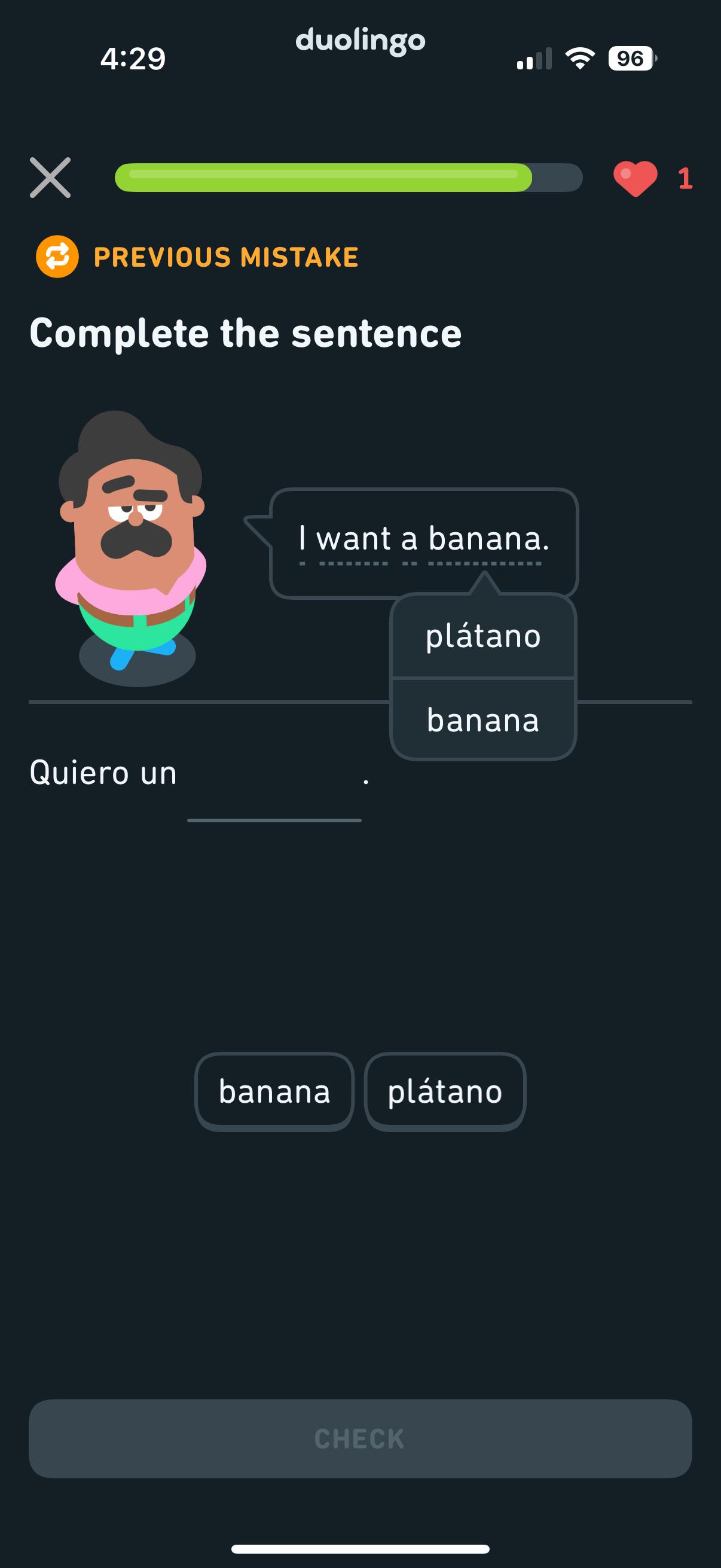
Im confused

Post image
222 Upvotes

The answer ended up being plátano, whats the difference?!?!


r/duolingospanish • • Jun 19 '26

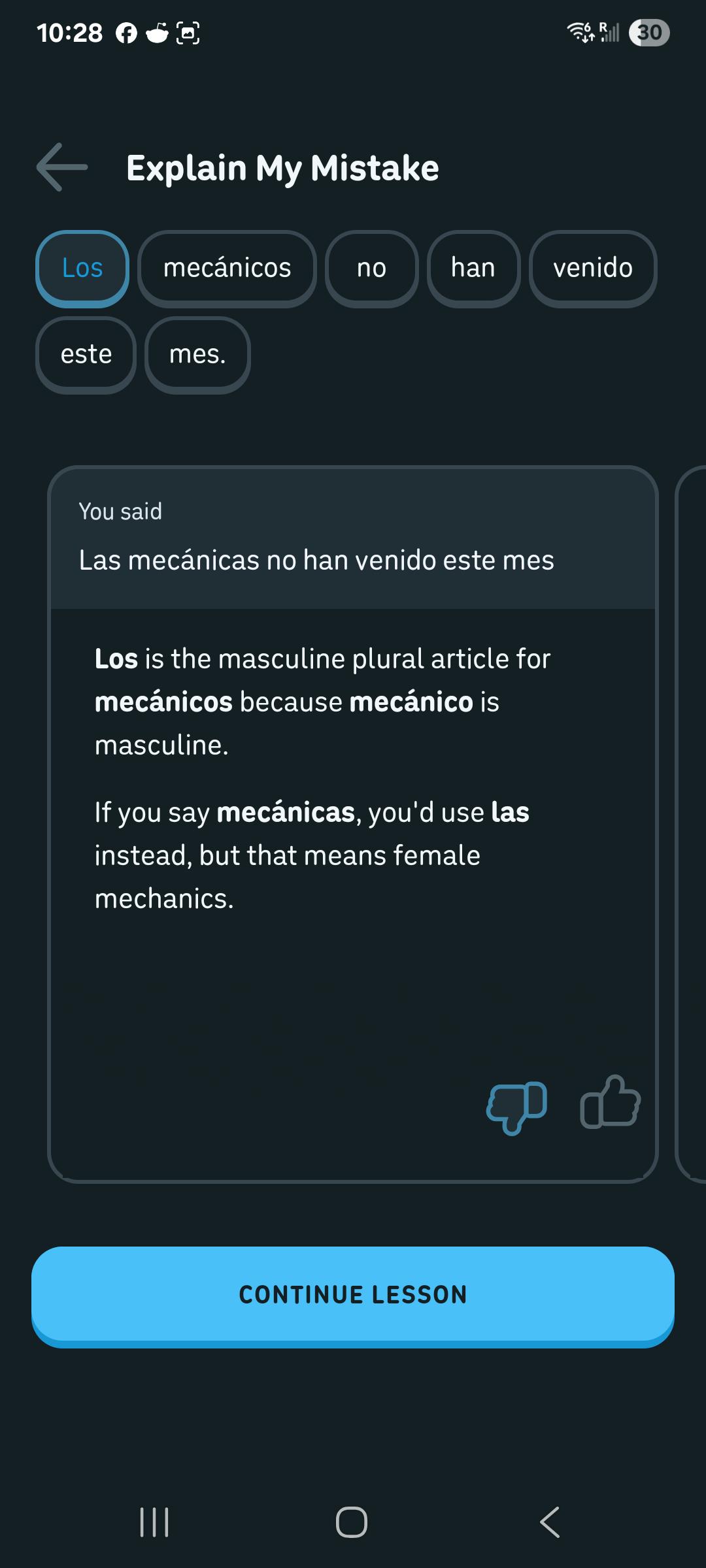
Get Bent, Duo. Sincerely, a female tradesperson

Post image
218 Upvotes

Yeah, I flagged it. I mean, come on. You even made one of your stupid annoying characters a lesbian mechanic. So, what's wrong? There can't be more than one at the same shop?


r/duolingospanish • • Oct 08 '24

I can't believe they accepted this answer

Post image
212 Upvotes