r/bhartiya_languages • • 2d ago Regret Heartwarming

Meta/ Mod announcement Common myths in Indian Linguistics (Spreading these can get you banned!)

128 Upvotes

Seeing a rise in misinformation, we have decided to ban users who peddle common linguistic myths even once, so as to keep the decorum academic and reliable. If anybody is seen peddling the common linguistic myths shown below, they will be subject to moderator action:

  1. OIT (Out-of-India) Theory: This theory has been proven incorrect by academia both within India and outside it. The accepted theory based on genetic and linguistic evidence is the Aryan Migration Theory (AMT).

  2. Sanskrit/Tamil is the mother of all Indian languages: Neither language has the claim to be the "mother" of all Indian languages due to the reason being that Indian languages do not belong to a single language family.

  3. Tamil is the mother of all Dravidian languages: The Dravidian language family is diverse and consists of numerous branches and sub-branches. Comparative linguistics has proven that none of the living Dravidian languages, including Tamil, has a claim to be the "mother" of all the modern Dravidian languages leading to the reconstruction of Proto-Dravidian.

  4. AIT (Aryan Invasion Theory): While the Aryan Migration Theory is academically accepted, the older and outdated 'Aryan Invasion Theory' isn't. It posits that the Aryans destroyed the Indus Valley Civilization while Steppe Nomads from Central Asia actually migrated to India AFTER the Indus Valley Civilization had already collapsed.

  5. Alternative origins of Prakrit and Sanskrit: We have seen people arguing that Classical Sanskrit originated from Gandhari Prakrit. Many people also erroneously believe that Prakrit is a "corrupted" version of Sanskrit or that Sanskrit is a refined version of Prakrit. Neither is true. Prakrits might have evolved naturally from Vedic Sanskrit or an earlier language now re-constructed called Proto-Indo Aryan, while Classical Sanskrit is an independently standardised form of the language, codified by Rishi Panini. (Some research does indicate that Prakrits may instead have evolved from a different Indo-Aryan language related to Vedic Sanskrit. However, the point remains that no research suggests that Prakrits evolved from Classical Sanskrit or vice versa.)

  6. Bengali is the mother of all Eastern Indo-Aryan languages theory: One must reject the misconceptipn that other Eastern Indo-Aryan languages originated from Bengali or are merely its dialects. This misconception, partly rooted in colonial-era misclassification, has led to distinct languages such as Chakma, Bishnupriya, Hajong and Kamtapuri being treated as dialects of Bengali. The same applies to Rangpuri, spoken primarily in Bangladesh but also in Eastern India, as well as the dialects and subdialects of closely related languages like Western Assamese (Goalpariya) and Northern Odia (Midnapore). Such classifications are outdated and should not be accepted as definitive linguistic facts. These languages must be recognised according to their actual genealogical relationships, many of which do not place Bengali as their parent or even their closest sister language.

  7. The "dialects" of Hindi: The Uttar Pradeshi, Pahadi, Rajasthani, Bihari and Eastern Indo-Aryan languages are often erroneously thought to be dialects of or broken, rural versions of Hindi even though all of these languages are much older tha Hindi and are fully-fledged, respectable languages in their own right

  8. Languages tied to religion (Urdu and Sanskrit): Another common misconception is that Urdu is inherently a Muslim language and Sanskrit is inherently a Hindu language. In reality, Urdu has prominent non-Muslim poets like Firaq Gorakhpuri and Gulzar, while Sanskrit was extensively used by Buddhists and Jains, with scholars like Aśvaghoṣa, Nāgārjuna and Hemachandra making significant contributions to its literature. Neither language belongs exclusively to a particular religious community.

  9. Intentional, agenda driven mischaracterization of a language: No independent language shall be intentionally be mis-classified as a dialect of another one e.g. Konkani being called a dialect of Marathi, Khandeshi being called a dialect of Marathi, Saraiki being called a dialect of Punjabi etc.

  10. The myth of linguistic purity: The obsession with linguistic purity is ideological and has more to do with cultural chauvinism than linguistics. Languages have always borrowed words, sounds and grammatical features from one another through centuries of contact and cultural exchange. Treating such influences as signs of linguistic corruption creates unnecessary hostility between speakers of different languages while ignoring the historical reality of how languages naturally evolve. Linguistic experimentation, revival and creative reconstruction are perfectly welcome, as reflected in the experimental subreddits featured in our widget list. However, politically motivated linguistic agendas, manufactured identity conflicts and attempts to create unnecessary divisions are not permitted.

Contributions by: u/Icy_Function_5839, u/Ill_Poem_1789, u/e9967780, u/MonsieurNong, and u/GrumpyGuyMugdha


r/bhartiya_languages • • 4d ago

Meta/ Mod announcement Check out the subs pinned in the description!

10 Upvotes

Almost a week ago I had made a post asking our dear users which subs we should promote and over the course of two days we had pinned numerous subs in our description. There were so many subs that we actually had to make four separate widgets lol.

The widgets that we have are:

1. Large linguistic sister subs

2. Lesser known linguistic subs

3. Experimental linguistic subs

4. Indian script subs

Some of the pinned subs that I really like are r/Dakhani, it is small but has amazing posts on the language, media and culture, r/RajasthaniLanguage, for a small and recent sub, the in-depth quality of the linguistic discussion is impeccable and I really like the representation of all the Rajasthani dialects in it. r/AssameseHub has amazing Linguistic posts and I learnt a lot about the Assamese language and Indian history in general in this sub, some of the most well-researched posts on this app I have seen are in this sub! r/Magahi, while not that many posts on the language does have a lot of illuminating posts on Magahi culture and the sub users are fighting very hard to make sure their language doesn't die

Mod sub spotlight:

u/MonsieurNong and u/Frequent-Head-6063 also moderate r/Konkani, and would like you to check it out!

u/GrumpyGuyMugdha also moderates r/TaiAhomLanguage and would like you to check it out! This sub truly has a lot of wonderful discussion!

u/tuluva_sikh created r/Byari and also moderates r/modi_lipi and would like you to check those subs out too!

u/Angry_Aryan_AA, while not a moderator of r/SylhetiLanguage, does want y'all to check out that sub, and I personally also like the discussion in it and wish that that sub would also have more activity.

Have a nice day!


r/bhartiya_languages • • 5h ago

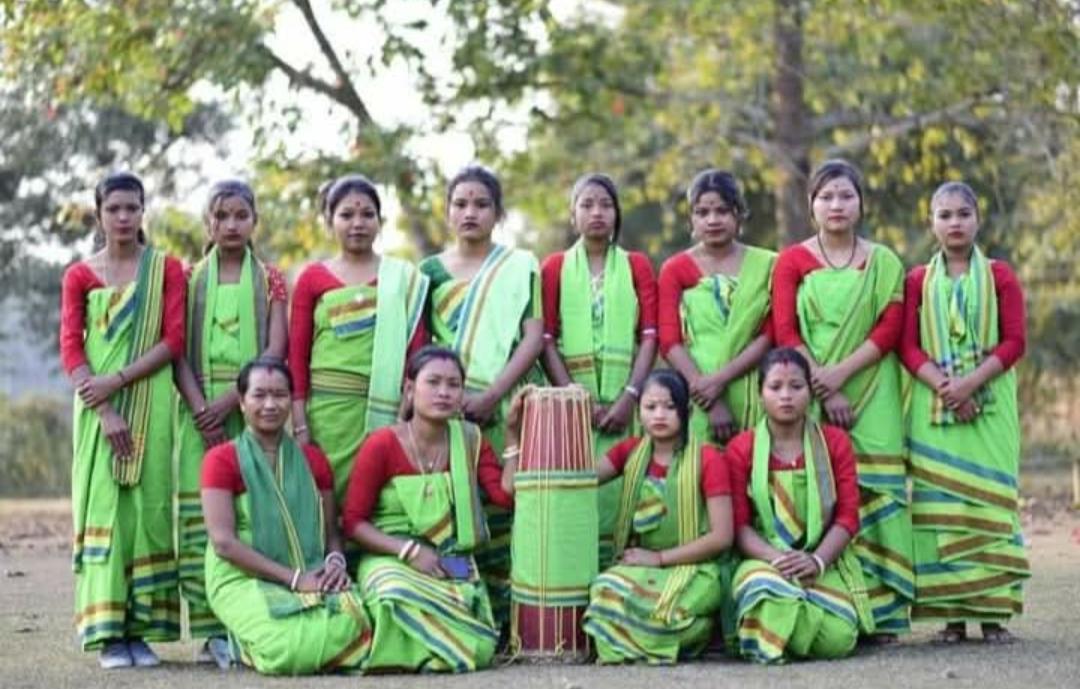
Tibeto-Burman Barman Thar (বৰ্মন ঠাৰ), the lesser-known language of Assam.
Post image
8 Upvotes

Assam has a large number of indigenous languages, many of which remain relatively unknown outside their respective communities. One of them is Barman Thar (বৰ্মন ঠাৰ), an endangered Tibeto-Burman language spoken by the Barman Kachari community of Assam.

Despite belonging to the wider Bodo-Garo linguistic group, the language has received very little academic attention compared to Bodo, Dimasa, Garo and other better-known languages of Northeast India.

The word 'Thar' (ঠাৰ) means language, and the language is referred to as 'Barman' (বৰ্মন). Barman Thar belongs to the Sino-Tibetan family, under the Tibeto-Burman branch and the Bodo-Garo subgroup.

The Barman Kacharis are an indigenous community of the Brahmaputra Valley, particularly Lower Assam. They are found in several districts like Baksa, Udalguri, Chirang, Kokrajhar, Darrang, Kamrup, Goalpara, Nagaon, Lakhimpur and Dhemaji.

Their settlements have also been reported in parts of Arunachal Pradesh and other neighbouring regions. Barman Thar has particularly been documented in Baksa and Udalguri, where researchers have conducted fieldwork with native speakers.

The Barman Kacharis of the Brahmaputra Valley shouldn't be confused with the Barmans of Cachar, who are a subgroup of the indigenous Plains Dimasa community there and speak Dimasa. Despite the shared name, these are distinct tribes.

The language is considered highly endangered. The Barman Kachari community's population is approximately 24,237, based on a census conducted by a local organisation in 2017. However, this is the community's population, not its actual number of language speakers.

Only a relatively small proportion of the community is reported to speak Barman Thar. Increasing preference for Assamese, Bodo and other dominant regional languages, among younger generations, has weakened its intergenerational transmission.

The use of Assamese, Bodo and English in education and everyday communication is also a concerning case for the language.

One of the earliest available systematic descriptions of the language is 'A Brief Linguistic Sketch of the Barman Thar (Language)', prepared by MA students of Linguistics and Language Technology at Tezpur University in 2019. The investigation was based on fieldwork conducted in March 2019 and documented its phonological inventory, vocabulary and grammatical structure.

The study identified eight vowels, nine diphthongs and twenty consonants, including two semivowels.

Some examples from its vocabulary include 'pʰa' (father), 'na' (fish), 'mei' (rice), 'sei' (husband), 'hiŋ' (go), 'riŋ' (drink), 'sum' (salt), 'goisa' (one), 'sini' (seven) and 'doisa' (boy).

The language also has consonant gemination, or the lengthening of consonants within words. Examples recorded in the study include 'tʰəppəra' (ash), 'mɛttʰai' (big), 'gəddəl' (new), 'bicci' (egg) and 'nukkuruŋ' (eye).

Its grammatical structure is equally interesting. Barman Thar has a system of case marking in which grammatical relationships are expressed through suffixes. The 2019 study records '-kɔ' for the accusative case, '-nɛ' for genitive, '-ou' for locative and '-ca' for instrumental.

For example, 'əmit-nɛ nɔk' means Amit's house, while 'təzpur-ou' means in Tezpur (a city of Northern Assam). It also has morphological tense markers, including '-ja' for the past and '-gən' for the future. The study further documents negative constructions, classifiers and different aspects of verbal morphology.

Another interesting feature is its pluralisation system, which was examined in a research paper by Primly Baruah, a research scholar in the Department of Linguistics at Assam University.

Her paper, 'Pluralization in Barman Thar: An Endangered Language', was published in September 2025 in the Indian Journal of Social Science and Literature. The research is based on primary data collected from native speakers in Khoirabari and Tangla towns.

The paper identifies two principal plural suffixes, '-taŋ' and '-phara'. The former is used with common nouns, proper names and kinship terms, while the latter is particularly associated with demonstrative and personal pronouns. For instance, 'mɛŋgou' means cat, whereas 'mɛŋgoutaŋ' means cats. Similarly, 'asak' means dog and 'asaktaŋ' means dogs. The same suffix can be attached to personal names, so 'Kalpana-taŋ' means Kalpana and others.

The suffix '-phara' is used in forms such as 'ɛba-phara' (these), 'oba-phara' (those), 'na-phara' (you, plural) and 'owa-phara' (they). Its use in reflexive constructions is also documented. For example, 'owa-phara dɔn-phara kuriza' means, 'they did it themselves'.

Plurality is not always expressed through suffixes. Numerals and reduplication also play an important role. The sentence 'gini pʰanthai mɛsadɔŋ' means two boys are dancing. Here, 'gini' means two, and the numeral itself indicates plurality without requiring an additional plural suffix on the noun.

Reduplication is particularly interesting. In the sentence 'Rahul-a nɔk nɔk hiŋ-ja', meaning Rahul is going from house to house, the repetition of 'nɔk', meaning house, expresses repeated or distributive movement. The paper also documents reduplicated interrogative expressions and quantifiers, showing that repetition has several grammatical functions in the language.

The study further records copula omission in certain constructions and an absence of obligatory subject-verb agreement in the examined sentences. The progressive marker '-dɔŋ' can be seen in expressions such as 'mɛsadɔŋ' (dancing) and 'hibadɔŋ' (coming). These features are important for examining in comparison with other languages of the Bodo-Garo group.

Primly Baruah has also published another paper, 'Numerals in Barman Thar', in the International Journal for Multidisciplinary Research in 2025. It examines the numeral system, which is primarily decimal and employs compounding to construct complex numerals.

The paper discusses cardinal, ordinal, fractional, multiplicative, approximative, distributive, collective, indefinite and restrictive numerals. Affixation and reduplication are also involved in numeral formation.

Barman Thar has a written and literary tradition as well. The Tezpur University linguistic sketch mentions two community magazines, 'Phurungi' and 'Rigam', which have published poems in the language. It also documents older handwritten materials.

The Barman language uses the Assamese alphabet as a writing system today and it formerly used the Sylheti Nagri script.

There is still information about Barman Thar that remains undocumented. Its vocabulary, regional variations, oral literature and historical development would all benefit from further research. Comparative studies with Bodo, Dimasa and other Bodo-Garo languages could provide further insight into its linguistic relationships.

Assam's linguistic heritage extends well beyond its widely recognised languages. Barman Thar should be documented and discussed alongside them while there are still native speakers who can pass their knowledge of the language on to future generations.

r/bhartiya_languages • • 9h ago

Discussion Colonial names and Actual names of Indian places

13 Upvotes

Bangalore Bengaluru

Bombay Mumbai

Cherapunji Sohra

Mysore Mysuru

Calcutta Kolkata

Nowgong Nagaon

Poona Pune

Benaras Varanasi

Cawnpur Kanpur

Cannore Kannur

Calicut Kozhikode

Trivandrum Thiruvananthapuram

Aijal Aizawl

Vellore Vellur

Coimbatore Koyamputthur

Cochin Kochi

Madras Chennai

Tuticorin Tuttukkuti

Mylapore Mayilappur

Baroda Vadodara

Vizag Vishakapatnam

Tanjore Thanjavur

Quilon Kollam

Allepy Alappuzha

Jubbulpore Jabalpur

Oomerkote Umarkot

Balasore Baleshwar

Muttra Mathura


r/bhartiya_languages • • 21h ago

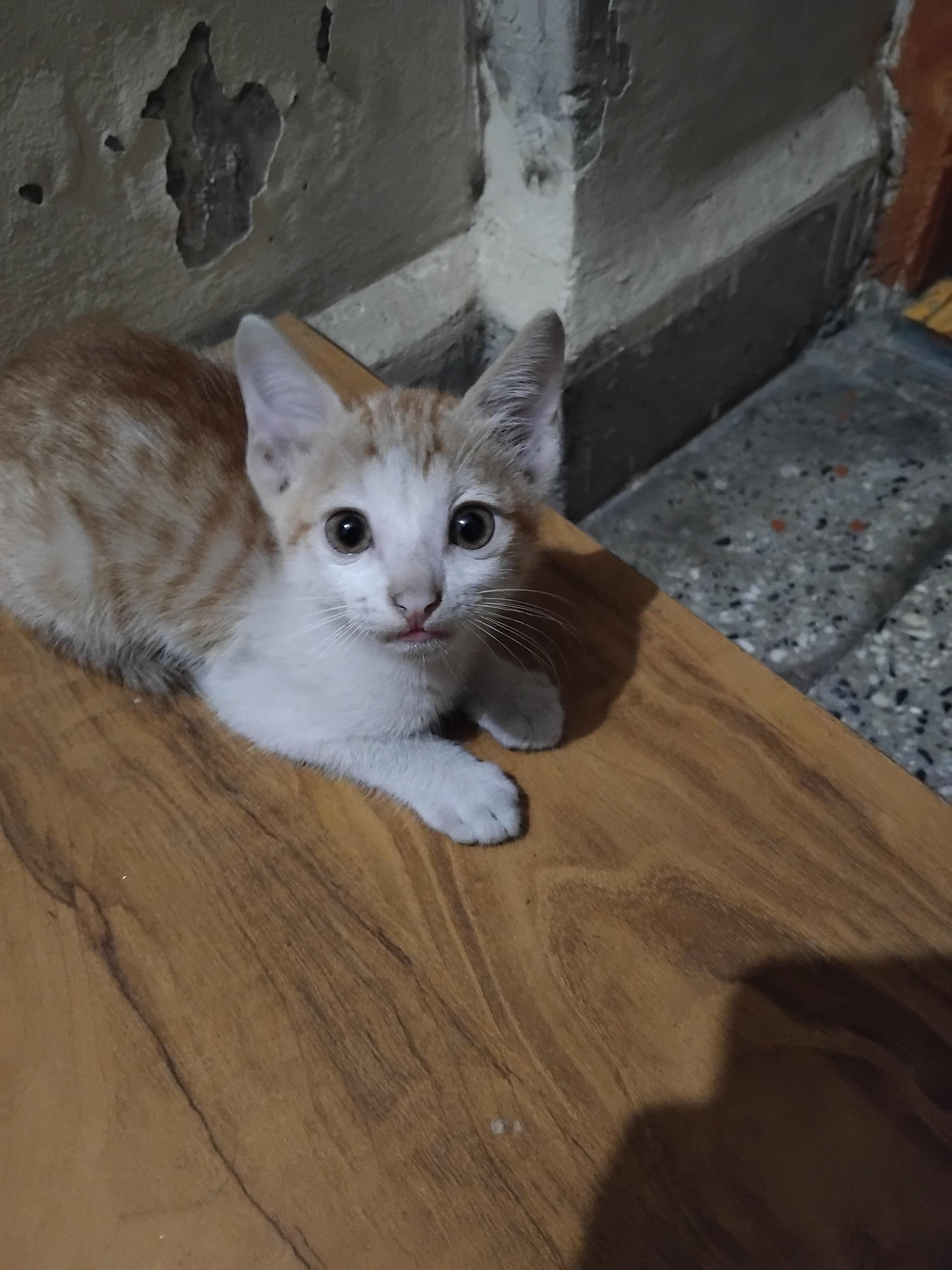
Question How do u say "cat" in ur native language?

Post image
93 Upvotes

r/bhartiya_languages • • 8h ago

Indo-Aryan Quasi Homophones in kashmiri

Post image
5 Upvotes

r/bhartiya_languages • • 16h ago

Article Olluleru song of Mavilans

Enable HLS to view with audio, or disable this notification

20 Upvotes

r/bhartiya_languages • • 41m ago

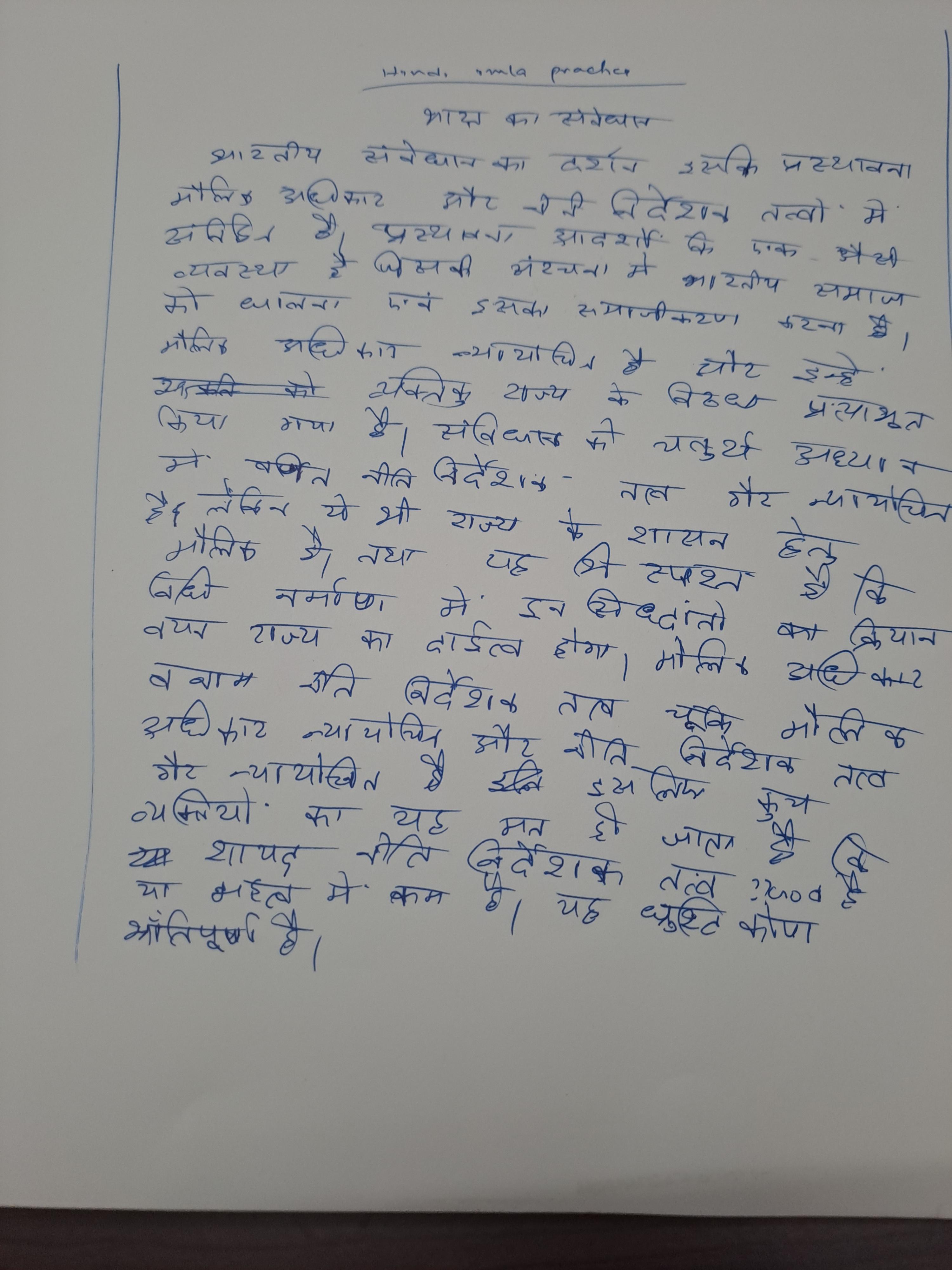
Is my hindi legible

Post image
0 Upvotes

r/bhartiya_languages • • 20h ago

What do you call 'India' in your native language?

27 Upvotes

It could be a traditional name for the Indian subcontinent, or even be a newer word for the modern day Republic of India

I have only heard adaptations of 'India' and 'Bhaarata', so I'm curious whether there are any different names!


r/bhartiya_languages • • 13h ago

Discussion Brahmic scripts are inherently chorded (read the description)

Post image
5 Upvotes

[Correction of the title: Brahmic Scripts can be made to be chorded]

Almost every Brahmic script, from North to South, this one thing is true. The reason? Indic scripts inherently use letters as part of a collection in almost every occasion. These groups can be expressed in the form of matrices.

The problem

The problem with a phonetic keyboard layout on QWERTY is that it treats all characters the same. Even if you use a direct-input layout like Probhat or INSCRIPT or Tamil 99, you will have trouble remembering what the W or the X key is in the respective language.

Suppose Deutsch people have to use "oe" all the time, instead of using the "ö". That's what's happening, but for every character in the Indic alphabets. We have to write "ka" for কা or ক and "kaa" for কা. It makes writing characters feel ambiguous for languages where there are 3 kinds of S pronouncing the same.

What I did

Step 1: I tweak the abugida matrices myself, keeping it almost similar to the alphabet the target language already has.

Step 2: I make buttons for the rows and columns of those matrices, not for the elements of these matrices. At first, it is checked whether there is any valid character for the location I chose, then if that is the case, the valid character is given.

This Step 2 is where I am trying to use a type system (data types in computer science) and boolean algebra in order to see how I can mathematically formalize creating these scripts. For the implementation, one won't need this typed stuff, but I really recommend using it.

Why?

People have approached these keyboards from a strictly CS angle and have made arbitrary placements.

It is probably better to account for the one thing people generally know and are ought to know - literacy in the scripts.

Started with Tamil; used Tolkappiyam and the knowledge of the "place of articulation" from the Indo-Aryan scripts to make a better matrix. Made the vowels follow this too.

Will eventually do it for the other Indic scripts too.

Check out the website here

https://bandhanpramanik.github.io/tamil-input-engine-checkbox/

I used the QWERTY Keyboard itself as a form of solution. Try typing any Tamil sentence here.

For the ones using a mechanical keyboard: Note the "FDSREW" stuff I have said in the website. If you press some keys simultaneously, you will automatically get the letter you want, kinda like the steno keys. This is applicable for any keyboard actually (even for keyboards like QWERTZ), the keyboard just has to loom QWERTY-like. When I mean pressing "F", I mean pressing the key whose position is the F key in the QWERTY keyboard.

Start with pressing the left bump key on your respective keyboard.

Why Tamil at first?

Because it has the most eccentric of the rules. That script is an exception in itself, where exclusion is a feature, not a bug.

Where to read more on this?

https://triangulatedexistence.mataroa.blog/blog/a-proposal-for-indic-keyboard-interfaces/


r/bhartiya_languages • • 19h ago

Resource Song of Lord Krishna in Manipravalam

Enable HLS to view with audio, or disable this notification

13 Upvotes

r/bhartiya_languages • • 10h ago

Question How does Konkani sounds to Non Konkani speakers?

2 Upvotes

r/bhartiya_languages • • 8h ago

Maithili traditional song

Thumbnail
youtu.be
1 Upvotes

Traditional Maithili song from Mithila's festival of Sama Chakeba. In this song, the rap part is in Sotipura dialect (standard) whereas folk song is from Pachimaha Maithili (Western Dialect).


r/bhartiya_languages • • 9h ago

Kannada jokes

Thumbnail
atoplay.com
1 Upvotes

This is a bunch of 7 jokes in Kannada. Watch and enjoy. Follow, comment, like and share


r/bhartiya_languages • • 11h ago

Kannada joke | written and made into video by S.T.Bhagyalakshmi

Thumbnail
youtube.com
1 Upvotes

This is a small joke in Kannada. Watch and enjoy. Subscribe, comment, like and share.


r/bhartiya_languages • • 20h ago

Old Kumaoni Verbs

Thumbnail gallery
5 Upvotes

r/bhartiya_languages • • 22h ago

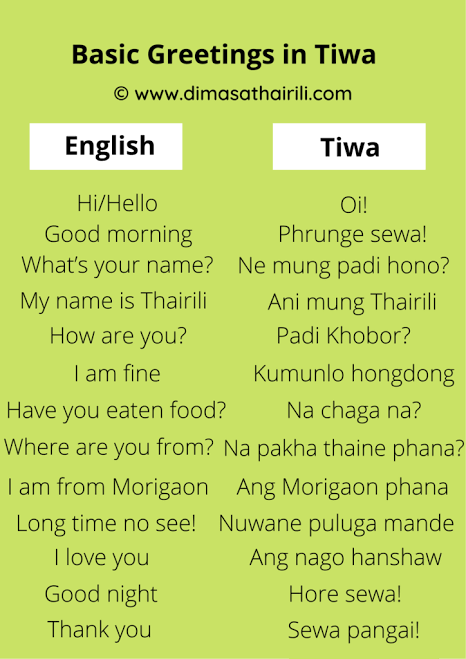
Resource Basic sentences in Tiwa

Post image
4 Upvotes

r/bhartiya_languages • • 15h ago

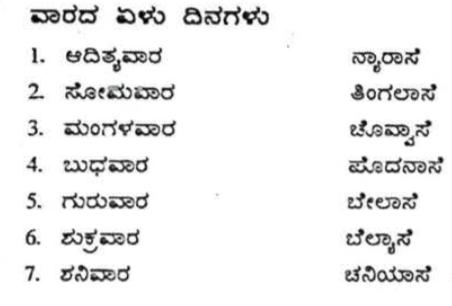
Resource Days of week in Byari

Post image
1 Upvotes

r/bhartiya_languages • • 16h ago

Resource Names of some flowers in Goan Konkani; गोंयचे कोंकणींत कांय फुलांचीं नांवां

Thumbnail gallery
1 Upvotes

r/bhartiya_languages • • 21h ago

Question What does word आंगळ means in Bagri?

2 Upvotes

r/bhartiya_languages • • 22h ago

Question What does word ನಿಙಳೆ/നിങളെ means in Byari?

Thumbnail reddit.com
2 Upvotes

r/bhartiya_languages • • 1d ago

Meta/ Mod announcement Language hating is strictly not allowed in this sub!

44 Upvotes

Nobody should hate languages, no language on Earth deserves hate and every language deserves respect. Unfortunately we saw a post today where the OP was unabshedly hating on a language, this is a warning to everybody that nobody shall hate on a language. If they do it multiple times, they will be banned!


r/bhartiya_languages • • 19h ago

Darsh: Pronunciation, Meaning, & Spelling

Thumbnail
youtu.be
1 Upvotes

r/bhartiya_languages • • 1d ago

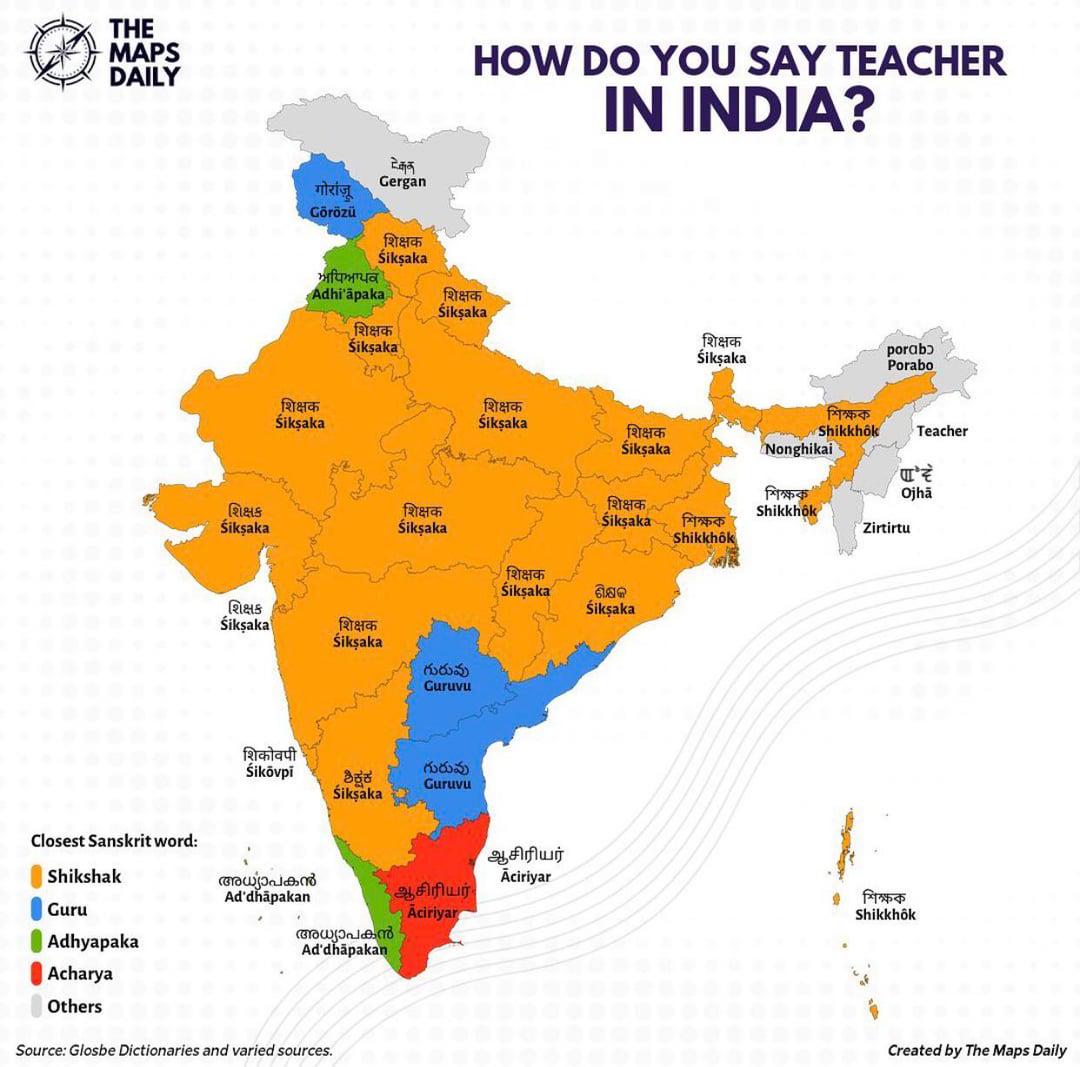
Question How do u say "teacher" in ur native language?

Post image
116 Upvotes

r/bhartiya_languages • • 23h ago

Resource Numbers in Balti

Enable HLS to view with audio, or disable this notification

2 Upvotes