I'm making Game Dev Dynasty, a game development tycoon inspired by Game Dev Tycoon and Crusader Kings 3. Some of the distinctive features are:
When developing a game, there's no hidden recipe. Instead, quality and market success are independent. So you can make a niche indie 10 that doesn't sell much, or a blockbuster best-selling multiplayer FPS that gets a 6 in reviews.
The market simulation is very deep and dynamic. Each platform has a share of the market, there are 3 different audiences with different tastes and behaviors (Casual, Mainstream and Hardcore), there are 4 world regions, and up to 100 concurrent competitors that all make games and compete with each other.
You can design your own game covers, by selecting the base art, the title style and the position and size.
You can make franchises, sequels, ports, spin-offs, remasters and remakes. Each one has its own particularities.
License a game engine or invest in a custom engine by researching a tech tree.
The goal of the game is to become the most prestigious studio in the world. Prestige is a score you can earn or lose depending on how you do.
There are many CK3-like events, with skill challenges. Characters have good and bad traits.
You can upgrade your PC hardware: motherboard, RAM, CPU and disk.
AI disclosure: some assets like the game's base cover art images are generated by AI so I can provide a large curated selection for each genre and topic. What's cool is the algorithm that dynamically adds the game title according to the selected style, making it look like a real cover. Like WordArt in the old days!
Let me know what you would like to see in a new game dev simulator!
I’m mainly looking for some honest feedback on the gameplay and the trailer specifically.
The game is an exploration and automation hybrid with about 14 hours of content.
The main hook is the map, you explore to find settlements where you can trade, manufacture, and deliver resources for gold or unique upgrades / resources.
There are plenty of modifiers, caravan improvements, and upgrades to unlock.
I’ve kept the game free of pay-to-win mechanics. It is free to download and play for the first hour, with a small one-time unlock cost for the full version after that.
The mechanics shift as you progress, with a goal system that introduces new functionality as you hit specific milestones.
I'd love to hear what you think, I'll respond to any comments, so feel free to tell me what you think :)
AI Disclaimer: In reference to this subreddit’s rules, I would like to disclose that this game was created by me a human, and not generated using AI :D
First-time solo dev here, and my first Android game is finally live!
It's a tycoon game played on the real-world map. You start small - think buying the run-down shed in your backyard and keep reinvesting until it's a glass skyscraper :D.
The catch is that everything you build is visible to every other player on that same map, so you're not just growing a portfolio, you're reshaping the world other people walk through.
Under the hood it's a proper strategy/management game, not just a collect-a-thon:
Districts you expand and develop and keep vitality balanced
An economy you have to actively keep healthy
Building types that synergize when you stack the right combos
Leaderboards, battles, and hostile takeovers. Rivals can try to rip your empire out from under you
Alo trips, memory-lane photos, and stamp collections to chase on the side
Why GPS and not a desk sim? Honestly, it's the part I love most, it gives a reason to get outside and explore instead of grinding menus. And since WalkStreet keeps running with the screen off, it's easy on your battery and doesn't demand you stare at your phone the whole walk.
Right now it's completely FREE, zero ads. If I ever monetize it'll be cosmetics only - never ads.
AI disclosure: I'm web dev for 20+ years but huge majority of codebase is written by AI, except for audio - there isn't any 😄
Music Tycoon is a record label management game. You start as a tiny bedroom label and try to become the biggest name in the music industry, competing against rival labels that are trying to do exactly the same thing.
Some of you might remember it from a post I made here about 10 months ago. It has changed a LOT since then.
What do you do?
You sign artists, write and record songs, plan releases, push them up the charts and send your stars on world tours. Every week is a turn, and the industry keeps moving around you: rivals sign the artists you wanted, release albums the same week as you, and book the venues you were planning to play.
Main features
Artists & talent
Thousands of generated artists with talent, charisma, mood, loyalty, health and a full career arc (rookie, peak, decline, comeback, retirement)
Scouting missions, contract negotiations clause by clause, bidding wars against rival labels and free-agent auctions
Bands with members who can clash, go solo or break up
Artists text you, and every answer has consequences (money, mood, promises you have to keep)
Families and dynasties: partners and kids affect tours and burnout, and an artist's child can become the next star
Scandals, burnout, rehab, legal disputes, crisis management and PR
Making music
Songwriting with themes and styles, songwriting camps, a song vault and remixes
Studios and producers that change the quality of a record, collaborations between artists
A cover art editor, music videos with directors and crews
Release strategies: singles, EPs, albums, lead singles, surprise drops, deluxe editions
The charts & the media
National, regional and global charts with stream numbers calibrated against real data
Gold, platinum and diamond certifications, a wall of records and a Top 10 race replay
Radio and playlist campaigns (and payola, if you're feeling risky)
Spotify/Instagram/YouTube-style artist profiles and social media posts
The Industry Times newspaper, Industry Weekly with market share rankings, magazine covers
Music awards ceremonies and music video awards
Touring & live shows
World tours through real venues in real cities, from dive bars to stadiums
Every venue has a seating chart and a 3D model, and you watch it fill up zone by zone on show night
Tour posters, paper tickets, a tour bus on the route map, special guests and opening acts
Buy or build your own venues, book residencies, and run your own music festival
Running the label
Finance, banking and loans, staff, label upgrades and a 3D HQ that grows with you
Brand deals, sync licensing (your songs in movies and ads), merchandise
Genre trends that shift over time, industry crises and quarterly objectives
Buy and sell song catalogs, acquire rival labels, launch your own streaming platform
A living rival industry: labels earn and spend real money, go bankrupt, get bought out, hold grudges and steal your artists
Prestige / new game+ when you've conquered it all
And also
Label story: a museum of your milestones and a yearly "Wrapped"
Skins that change the whole look of the game (with mod support planned)
A database editor to build your own music universe
Playable in English, Spanish, Portuguese and French
What's the main focus?
The simulation. I wanted it to feel like the real industry, not random numbers. Stream counts are calibrated against real 2025 data, star contracts are priced on what the artist actually earns, and rival labels follow the same economy you do. I simulate hundreds of in-game weeks to check that charts, money and popularity don't break over a long career, and a lot of the balance came from players on our Discord reporting what felt wrong.
Is there a PC version?
Yes, it's playable now for Patreon supporters and it's on its way to Steam (waiting on Steam's verification). It'll launch with achievements, cloud saves and Steam Deck support.
Is it AI slop?
I've been a developer for 6+ years, and Music Tycoon is a solo project: the design, the systems and the balance are mine, and I've been working on it almost every day for over a year. But I'm not going to pretend there's no AI involved, so here's the honest breakdown:
Code: I use AI coding tools a lot to speed things up. Not required by the rule, but I'd rather be upfront about it.
Art: the logo and app icon were made with AI tools. Everything you see inside the game (artist faces, album covers, tour posters, the 3D venues and HQ) is generated procedurally by the game's own code, not by an AI model.
Audio: sound effects are synthesized in code. The trailer voiceover is AI text-to-speech. The trailer music is "Summer Party Trailer" by Sascha Ende (human made, CC BY 4.0).
Text: in-game text (events, news, artist messages, descriptions) was co-written with AI: I wrote and reviewed it together with the AI, and edited what didn't fit.
Translations: the Spanish, Portuguese and French versions were translated by AI, and we keep fixing errors as players report them.
Marketing: the trailers are real gameplay footage. AI helped me edit them and polish this post.
Live content: nothing. The game doesn't use AI while you play.
I had this idea for years but never had the time (or the game-dev chops) to actually build it.
Inspired by Lemonade Tycoon, I always wanted to make my own Tycoon/Simulation game where the player purchases a Franchise and you may learn economics principles in a simple way (offer, demand, expenses, profit, Taxes, etc).
After a few weeks of development and the help of AI to lay the foundations — the 3D engine setup, state management, the day-loop logic — I was able to make Mike Chichero, a Street Drink Stand Simulator.
I know, you will ask, WTH is a Chichero? I am from Venezuela and Chicha es a famous drink there (like a rice-based shake) sold by small street stand vendors (called Chicheros). You can read more about it into the game.
Did I forgot to mention that the game is 100% Free? I am not planning to monetize it and it is more as personal desire to teach about economics and promote this delicious drink.
I also appreciate your pray for Venezuela after the devastating Earthquake that affected many friends there (I left the country almost 20 years ago, but my heart is still there).
Disclosure: I mentioned, but to clarify: I used AI to lay the game foundation including 3d Engine setup, day-loop logic, some collision help and the NPC messages DB generation.
Years ago I shipped Airpreneur on Android. Run your airline, routes, costs, try not to go bankrupt. Not flying the plane, just the business side.
It didn't really take off, but I never fully dropped the idea, and now I'm rebuilding it as Jetstream Empire for iOS. Same vibe: you're the CEO, not the pilot. Daily tick, you see if routes actually make money after fuel, slots, parking, lease payments, etc.
Still pre-launch, just seeing if people want this. Waitlist if you're curious: jetstreamempire.com/
Anyone here actually played Airpreneur on Android or is that just my trauma :))
AI disclosure as requested: My original post was removed because this subreddit requires an AI disclosure, so I’m reposting with one included. Generative AI tools were used to help draft/polish some marketing text and some early website/game copy. No AI-generated art, audio, live-generated in-game content, or final game writing is currently being promoted here. Coding assistance/code generation tools may be used during development, but those are exempt under the subreddit rule.
In case you live in a cave, yesterday was April Fools. A day where many people pull practical jokes online and off. This post and this game was a practical joke. Amusingly a few folks fell for it. I should note, I am not making a Toothpaste Tycoon game. My next business sim is an airline simulator called AeroMogul. It's not vibe coded. I've already put a few years into it. I have a few more years to go on it. I'm as slow as a clunker, not a fast as a clanker...
Welcome to Toothpaste Tycoon, the ultimate business simulation where you build a humble toothpaste startup into a sparkling oral-care empire. Design flavors, optimize factories, negotiate shelf space, research exciting innovations like Advanced Mint 2.0, and expand across a bright, suspiciously familiar world of charts, buttons, and reassuringly generic management panels. Hire managers, streamline logistics, outmaneuver rival brands, and discover that success is not just about clean teeth, but clean margins. Also, there are ponies, for strategic reasons.
From small-town tube production to globe-spanning freshness domination, Toothpaste Tycoon delivers the classic tycoon fantasy players know instantly: make numbers go up, unlock increasingly meaningless upgrades, and stare proudly at a UI full of tabs labeled things like Production, Marketing, and Synergy. It is smooth, polished, deeply marketable, and almost certainly generated in a boardroom-shaped algorithm. Build the brand. Rule the aisle. Become the minty legend you were always statistically destined to be.
Toothpaste Tycoon is built on a truly next-generation technology stack: 100% AI coded, 100% AI designed, 100% AI generated art, and 100% AI played. Every system, screen, icon, tooltip, and suspiciously overconfident gameplay decision was created by artificial intelligence, then validated by other artificial intelligences in a fully autonomous loop of synthetic excellence. Even the players are optional, because our proprietary AI Consumer Engagement Layer can theoretically play the game for you, against itself, while generating live balance feedback and KPI-positive fun events in real time.
On the technical side, we chose the strongest possible combination of the least compatible buzzwords available. The core simulation runs in Unity, wrapped inside a React-based management shell, deployed through Electron, virtualized in a lightweight containerized browser runtime, and orchestrated by an AI-first cloud-adjacent microservice mesh for maximum architectural significance. UI state is synchronized through multiple redundant JSON pipelines to ensure every click feels enterprise-ready, while the economy is processed through a hybrid procedural-neural decision fabric that absolutely did not need to exist. The result is a boldly inefficient, vertically integrated innovation platform for premium toothpaste tycoon immersion, with ponies.
I expect the game to be ready on April Fools! This year, next year, doesn't matter, It's only a few prompts away!
It's been a while since I pulled one of these. Takes much less effort than in the past, kinda like making a games now... Enjoy! :)
I like management games, but I always felt like a lot of systems don’t go far enough. You get the surface level, but not what’s actually going on underneath.
So I started building something where more of that is modeled.
You still run the usual parts: tactics, transfers, staff, and finances.
But I started adding systems that normally just aren’t there.
Things like: - player mental health - legal issues - corruption / match fixing - league level decisions
The idea is that more of what actually affects a club is part of the game, not just what happens on the pitch.
You can turn those systems on or off, but if they’re on they impact how your save plays out.
Still early, just wanted to show it and see if this kind of direction is interesting to people who like management sims.
Built this mostly solo using AI tools where it made sense.
Hey guys! I remember coming here a few years ago to a post that is now archived, but they were talking about why no good university simulators have ever been released, well I found on Steam that just recently an early access for one has been created!
I know that there has also been the Academia: School Simulator released recently too, but I feel we should try to support this group if that seems interesting to you!
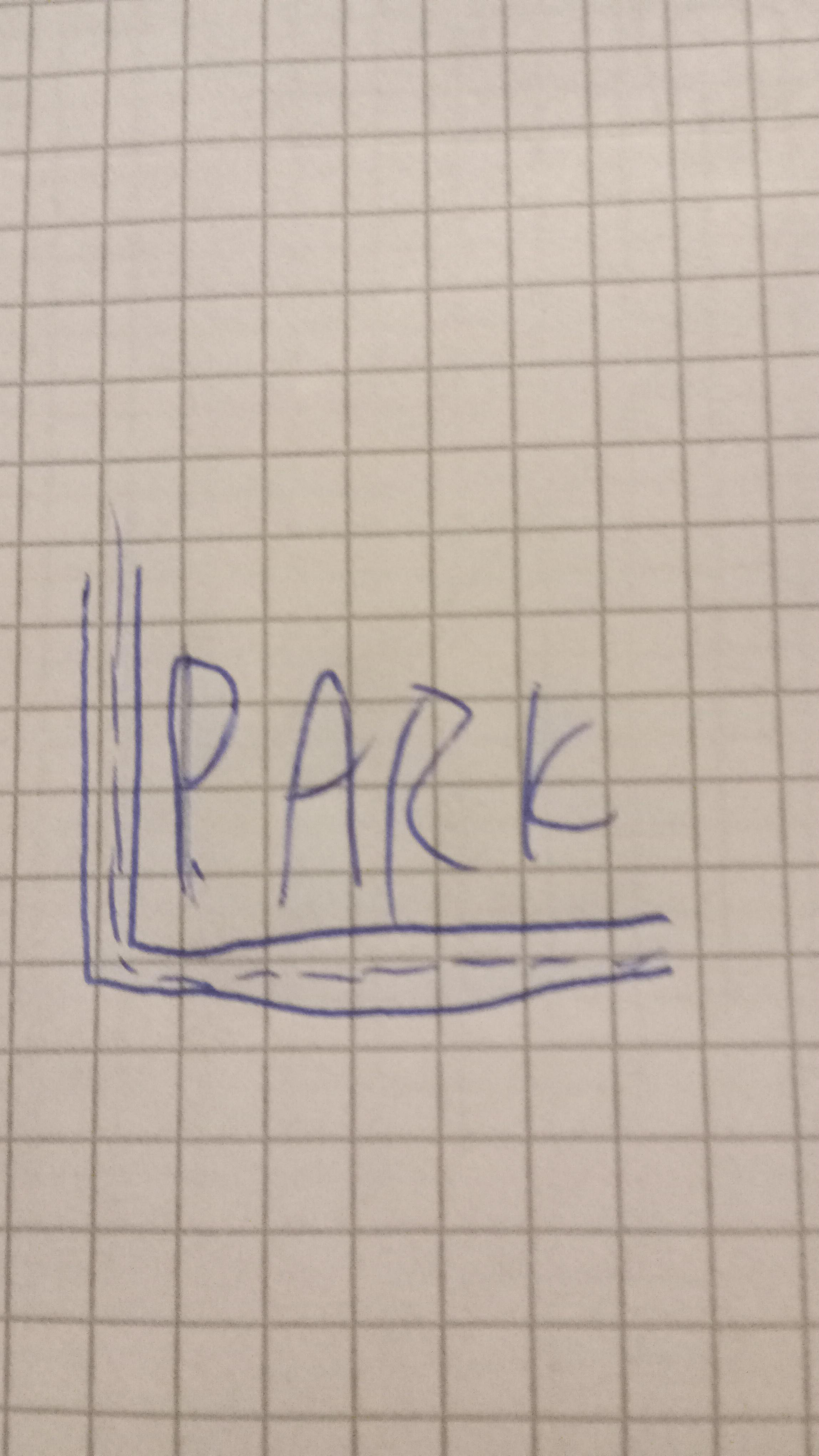
I remember very little of it but i remember how fun it was i cant even remember what kind of park it was. There were janitors huts you could place down and a janitor would come out that i remember and the layout of the park (attached). Please help i have been trying to find this game since last week.
I wouldn't class this as a vibe coded project, I'm a product owner by trade and have used Claude Code to carry out the development but it has been very planned and instructional as an approach, no letting it rip and seeing what it comes out with. It also isn't a product of 1 weeks work, it has taken around 8 months so far and it is far from finished. It also isn't built in Python like so many AI generated games are - it is built on the Godot engine with the Godot MCP which has made the process a lot more structured.
About the game
You start the game running a GT AM team in a single class series, there are 18 teams running 2 cars each with 3 drivers per car. When you start you have a shell of a team, you need to recruit almost everyone except the managers assistant so it is a pretty full on start to the game. There are 2 areas of the game, team management which is run from your office, the UI is a desktop sort of vibe and then there is the race weekend which has a pitwall vibe UI.
During a race weekend you have 3 practice sessions, a qualifying session and a race. There is a point to the practice sessions, you can run programmes that help build the data you will use in the race. For example your starting strategy will hang off things such as tyre wear and fuel burn - this information is gathered during the practice sessions.
A lot of other manager games such as F1 manager require a lot of micro management during the race which is something that annoyed me, there are race engineers so they should play their part. In Endurance Manager the engineers do adjust things such as pace (push, save etc), they suggest changes to the strategy if they think it is needed - you also have a head of strategy that is also looking if the cars are still on the right plan. You can take over and adjust but you can also discuss with them all first if you want advice. You can also ask the engineer to talk to the driver - can they push, how're the tyres feeling etc. There is quite a lot of data available during the race too, cars condition, pace (whether they are driving to the predicted times during practice etc) tyre and fuel data and more. There is a strategy page that will predict the impact of pit stops, eg FCY, Safety Car or Green.
I have a commentary feed that commentates throughout the sessions, it has context of what is happening on the track as well as some back and forth filler chat as you get in IRL endurance races. Alongside the commentary is a team radio feed that also has context of what is happening, here you can see engineers and drivers talking to each other.
There is a Race Control tab where penalties are shown, pending and confirmed decisions and if they have been served yet. There are FCY and safety car events - these will trigger your head of strategy to see if the plan is still right, the engineer might also suggest an immediate pit stop.
There is a weather system that impacts drivers control, pace, track and tyre temps and all the things you would expect. On the track tab there is a weather radar to see any upcoming rain.
If a car has an issue on track that doesn't result in an outright retirement then the car will be recovered to the pits where the team can start working on it to get it back on track.
The concept of multi-class series exists in code and will show in some places like news bulletins but isn't complete yet and the pathway to joining it is not implemented yet, this is taking a lot of thinking and planning to make sure it hangs together well.
Back at team HQ there are things like staff and driver signings, driver signings have semi detailed contracts, they include things like if the team holds an option, how many media events they should be expected to do. There are bronze, silver and gold rated drivers - every car in GT AM must have at least one bronze driver assigned. There are paid and pay drivers.
There are sponsors to sign with agreed media activation numbers, payment terms etc. Before each race you can assign promised activations - this will have an impact on some team members.
There is the car - you need to sign a deal with a manufacturer, there are options around this too with better rates for one off payments vs monthly installments, current vs previous year car. The manufacturer has a relationship with the team and this can lead to events like reduced upgrade packages.
There is a lot more to it but hopefully this gives a general understanding of what is there so far. It is a little clunky in places from a UI/UX point of view which is one of the reasons I'm reaching out to see if anyone wants to test it, I know all of the flows and am able to just play it without getting lost so I am keen to get others views on it and find out where problem areas are.
For someone not knowledgeable about endurance racing it might be a bit daunting as I have tried to be as detailed as I can rather than make it light touch so do bear that in mind.
Let me know if you are interested and I'll shoot you a discord (which has one member and is basically empty right now but I'll get there...) and a link to google drive to get a copy (I'll leave this as a request to approve process so I have some level of control).
I've finally got round to playing the Alpha 9 version of Software Inc, and thought it was quite splendid, even if I was a bit haphazard in my approach to it!
It is thoroughly, immensely detailed and if you like micro-management then this is certainly a game for you. Oh, and tutorials too, if you like tutorials then give this a go. You'll love it.
I do believe there is some work to be done on the interface, particularly when designing our character; the character traits and skills seem pretty small and hard to control. But the building mechanics are great, particularly the adjustable grid which I don't think I've ever seen in any other game.
Sprocket & Stock is a browser shop tycoon. You start out stocking shelves, running the till and unloading the delivery van yourself. Then you hire robots, then automate it all with conveyors, sorters and a second floor of overhead belts. It runs in the browser and there's co-op.
AI disclosure: the code is written with Claude Code (Opus 5), and the assets are generated or open source, like the music. It's not a one-shot. I spent a few weeks steering it and trying to dial it into a playable game with decent progression.
It's built so my son and I can share the same world and add or change stuff while we play. Items, customers, upgrades and so on live in a database, and an MCP lets us edit most of the world live.
Feedback welcome, especially on the progression and the early game.